
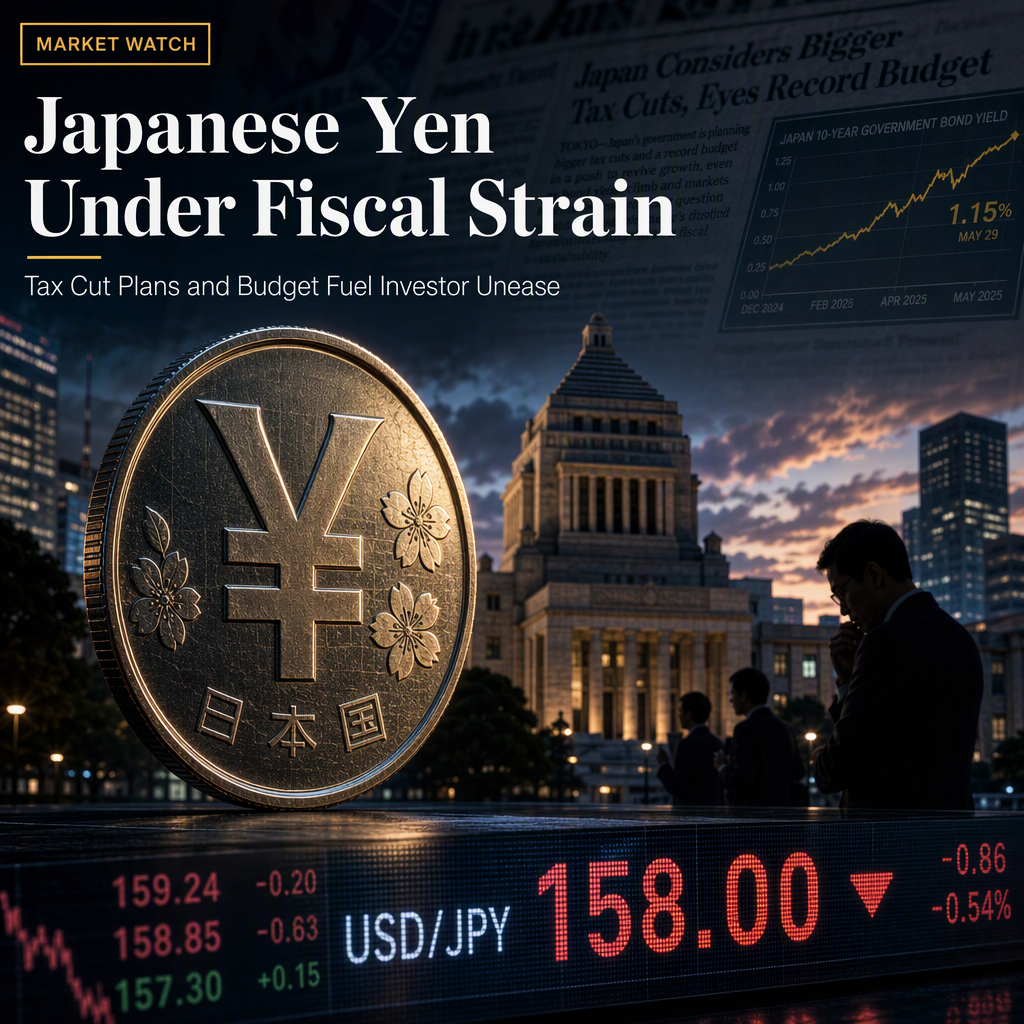
DBS Group Research economist Chang Wei Liang reports that the Japanese Yen (JPY) could experience a slightly weaker bias as the Japanese government is reportedly considering a second supplementary budget, with USD/JPY trading around the mid-158 level [1]. The market has shown unease regarding renewed fiscal spending, particularly as earlier guidance indicated that no further supplementary budget was planned and that reserve funds would be reserved for disasters and emergencies [1].
A key concern highlighted is the planned consumption tax cut for food, scheduled for April 2027, which is expected to cost JPY5 trillion annually, equivalent to approximately 0.7% of GDP [1]. This, combined with the prospect of increased fiscal spending, has raised worries among Japanese Government Bond (JGB) investors, especially in the context of rising yields [1].
Wei Liang also notes that the Bank of Japan (BoJ) should remain vigilant regarding any rise in inflation expectations. If the supplementary budget is perceived as inflationary, the BoJ could adopt more hawkish guidance in response [1].
CONCLUSION
The Japanese Yen is facing downward pressure due to concerns over increased fiscal spending and a planned tax cut, which could impact investor sentiment and inflation expectations. Market participants are closely watching for potential shifts in Bank of Japan policy should inflation risks materialize.