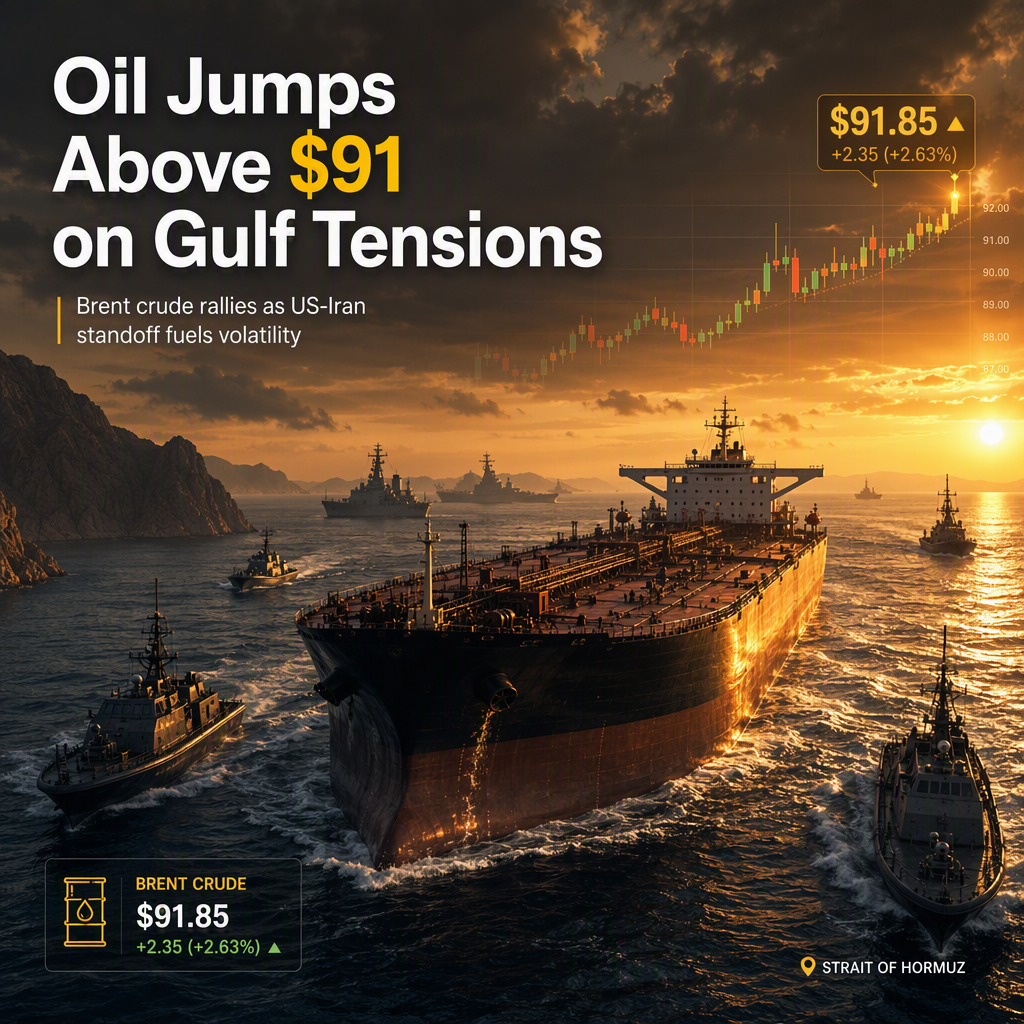
Brent crude oil prices have rallied to $91.85 per barrel, marking their highest level in over three weeks, as tensions between the US and Iran over the Strait of Hormuz continue to escalate, according to Brown Brothers Harriman’s (BBH) Elias Haddad [1]. BBH highlights that crude oil is currently driving the broader war narrative, with price volatility expected to influence the risk of further escalation or de-escalation in the region [1].
BBH projects that Brent will remain broadly within a $70 to $100 per barrel range, reflecting ongoing geopolitical uncertainties [1]. The recent upswing in crude prices is also exerting upward pressure on bond yields and exacerbating already fragile fiscal dynamics, BBH notes [1]. In response to these developments, equity markets have declined, and the US dollar has recovered its previous losses [1].
BBH further observes that the risk of additional dovish Federal Reserve repricing will likely keep any rebounds in the US dollar shallow and short-lived [1]. While some market participants argue that the dollar is increasingly vulnerable to an equity market correction as foreign investors reduce their US stock holdings, BBH disagrees, suggesting that a broad stock market sell-off would instead prompt foreign investors to rotate into safe-haven US Treasuries, thereby supporting the dollar’s defensive appeal [1].
CONCLUSION
Brent crude’s surge above $91 reflects heightened geopolitical risks tied to the US-Iran standoff, with BBH expecting prices to remain range-bound between $70 and $100. The move is pressuring bond yields and equity markets, while BBH maintains that the US dollar retains its safe-haven status despite market volatility.