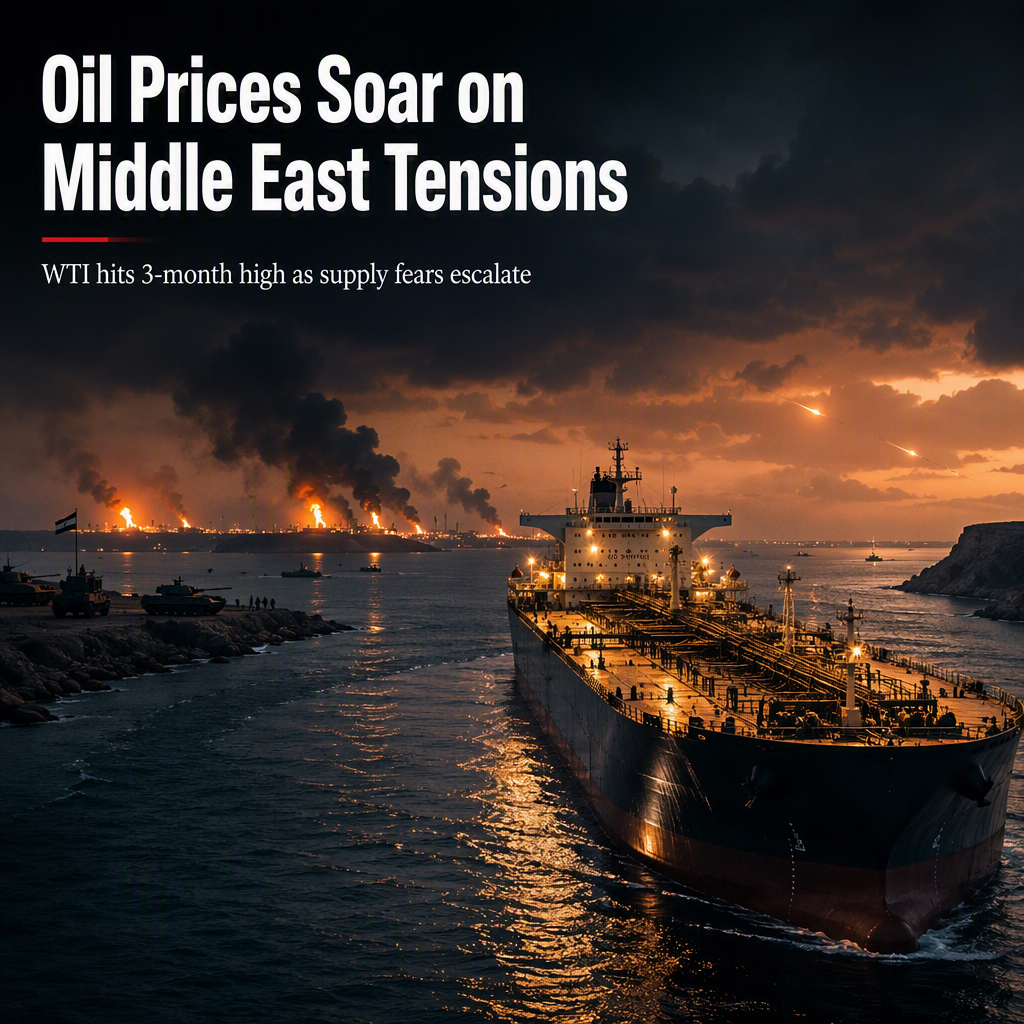
West Texas Intermediate (WTI) crude oil extended its rally on Wednesday, trading around $93.85 per barrel, up 1.77% on the day and reaching its highest level in three months. This surge is attributed to escalating hostilities in the Middle East, which have heightened concerns about potential disruptions to global oil supply [1]. The conflict has intensified following an exchange of attacks between the United States and Iran on Tuesday. Additionally, Iran-backed Houthi forces have targeted oil facilities in Saudi Arabia, prompting retaliatory strikes by Riyadh against targets in Yemen. These developments have increased the risk of the conflict spreading across the region, embedding a significant geopolitical premium in oil prices [1].
Tensions are particularly acute around the Strait of Hormuz, a strategic waterway that previously handled about 20% of global oil supply before the conflict began. Ongoing attacks on vessels in this area continue to restrict oil traffic, raising the possibility of significant market disruptions if these conditions persist [1]. The current tightness in energy markets amplifies the risk of higher transportation costs and renewed inflationary pressures, especially if logistical challenges worsen. The ability of tankers to navigate the Strait of Hormuz remains a key factor influencing the future direction of WTI oil prices [1].
According to TD Securities, crude prices are likely to continue their upward trajectory as there appears to be "no end to conflict in sight." The firm notes that the market remains tight overall, despite some easing in the crude deficit due to higher dark flow volumes. TD Securities warns that further market tightness could emerge amid renewed attacks and increased activity from China in the oil market. They argue that tapping Chinese refining capacity could alleviate product market pressure but would shift tightness to the crude market, suggesting that the path of least resistance for crude oil prices remains to the upside, even as prices approach triple digits again [1].
CONCLUSION
WTI oil prices have surged to a three-month high, driven by escalating Middle East tensions and concerns over supply disruptions, particularly around the Strait of Hormuz. Market analysts see continued upward pressure on prices, with geopolitical risks and tight market conditions likely to keep oil elevated in the near term.