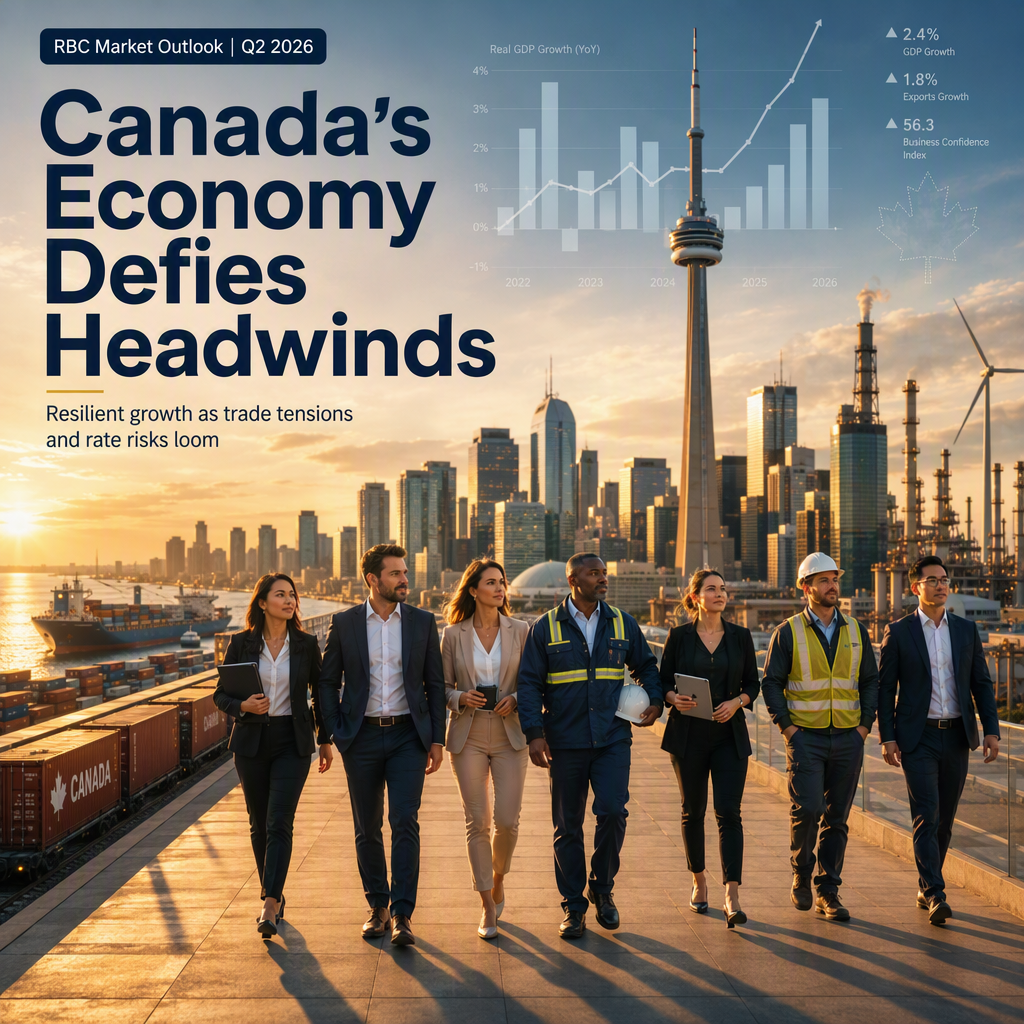
According to analysts at the Royal Bank of Canada (RBC), Canada's economy has demonstrated notable resilience in the face of ongoing headwinds, with Gross Domestic Product (GDP) growth rebounding in Q2 2026. Per-capita growth has improved significantly when adjusted for demographic pressures, and the unemployment rate has dropped to a two-year low, despite elevated trade tensions and rising energy costs [1].
RBC notes that the escalation of U.S. tariffs remains contained, with new 50% tariffs imposed on 5% of Canadian imports. While these tariffs will have a significant impact on targeted sectors, the majority of Canadian exports and imports continue to cross the border duty free, limiting the broader impact on trade [1].
Consumer spending remains firm, supported by stronger labour markets and wage growth. Household savings rates increased in Q2, despite higher energy costs, aided by higher government transfers and the largest wage and salary growth in nearly two years at 1.4%. RBC card transactions further indicate resilience in consumer spending through the summer months [1].
Looking ahead, RBC projects that the Bank of Canada will likely keep its policy rate on hold throughout 2026, although risks are tilted toward potential rate hikes beginning in early 2027. High energy prices have not yet significantly affected broader inflation, allowing the central bank to remain patient for now [1].
CONCLUSION
Canada's economy is showing strength with improved GDP growth, lower unemployment, and robust consumer spending, despite targeted U.S. tariffs and rising energy costs. RBC expects the Bank of Canada to maintain its current policy stance through 2026, with possible rate hikes in early 2027. The market takeaway is cautiously optimistic, with resilience in key economic indicators supporting a stable outlook.