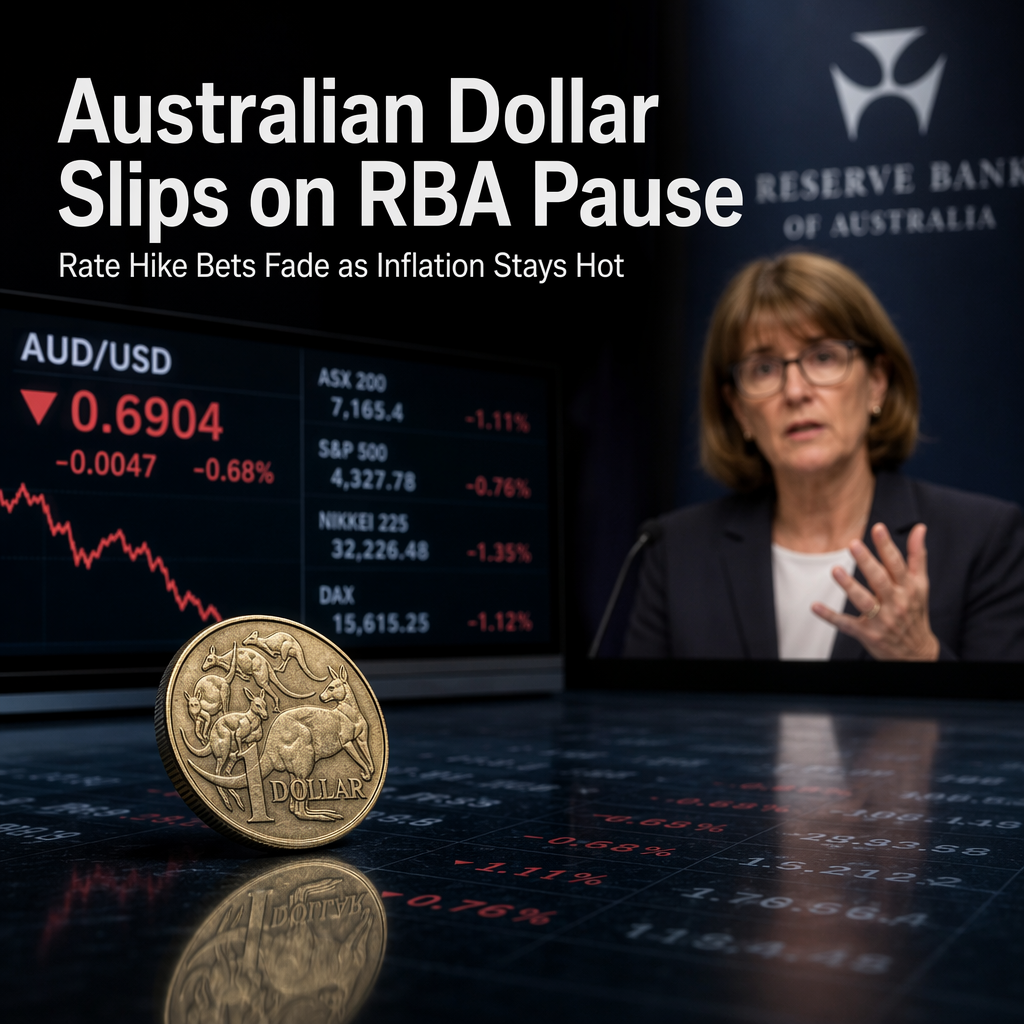
The Australian Dollar (AUD) has come under pressure following cautious remarks from Reserve Bank of Australia (RBA) Governor Michele Bullock, who balanced a hawkish bias with a message of patience, citing evidence of easing domestic demand and labor market conditions [2]. Despite elevated domestic inflation, with TD Securities projecting the RBA’s preferred trimmed mean core CPI to rise 0.9% QoQ in Q2 (up from 0.8% in Q1) and annual core inflation reaching 3.7%, headline inflation for June is expected at 4.2% YoY, above the market consensus of 4.0% [1]. Persistent housing cost pressures, including higher rents and new dwelling purchases, are seen as key drivers of upside risk for inflation [1].
RBA cash rate futures have reduced the probability of an August rate hike from about 30% to 20% after Bullock’s comments, with AUD/USD edging towards key support at the 200-day moving average of 0.6904 [2]. BBH analysts view the risk as skewed towards an extended pause in the RBA tightening cycle, citing the RBA's projection of real GDP growth below potential over the next two years and the current cash rate of 4.35% being near the top of the nominal neutral rate range [2].
Global market volatility, particularly a pullback in tech and AI-related stocks, has further undermined the AUD, as risk-off sentiment ripples through equity markets [1]. The AUD, a high-beta currency, is especially vulnerable to corrections in chip and technology stocks, and recent cautious rhetoric from Governor Bullock has tempered expectations for an immediate policy move, reinforcing market focus on a potential hike later in the year [1].
Analysts from TD Securities expect sticky core inflation and housing cost pressures to keep the RBA on high alert, leaving the door open for additional rate hikes if upcoming CPI data surprises to the upside [1]. However, BBH emphasizes that the risk is skewed towards an extended pause, which acts as a headwind for the AUD [2].
CONCLUSION
The Australian Dollar is facing downward pressure as the RBA signals patience despite persistent inflation, with rate hike expectations pushed further out and cash rate futures lowering the odds of an August move. Market sentiment remains cautious, and analysts see risks tilted towards an extended pause in the tightening cycle, keeping the AUD subdued in the near term.