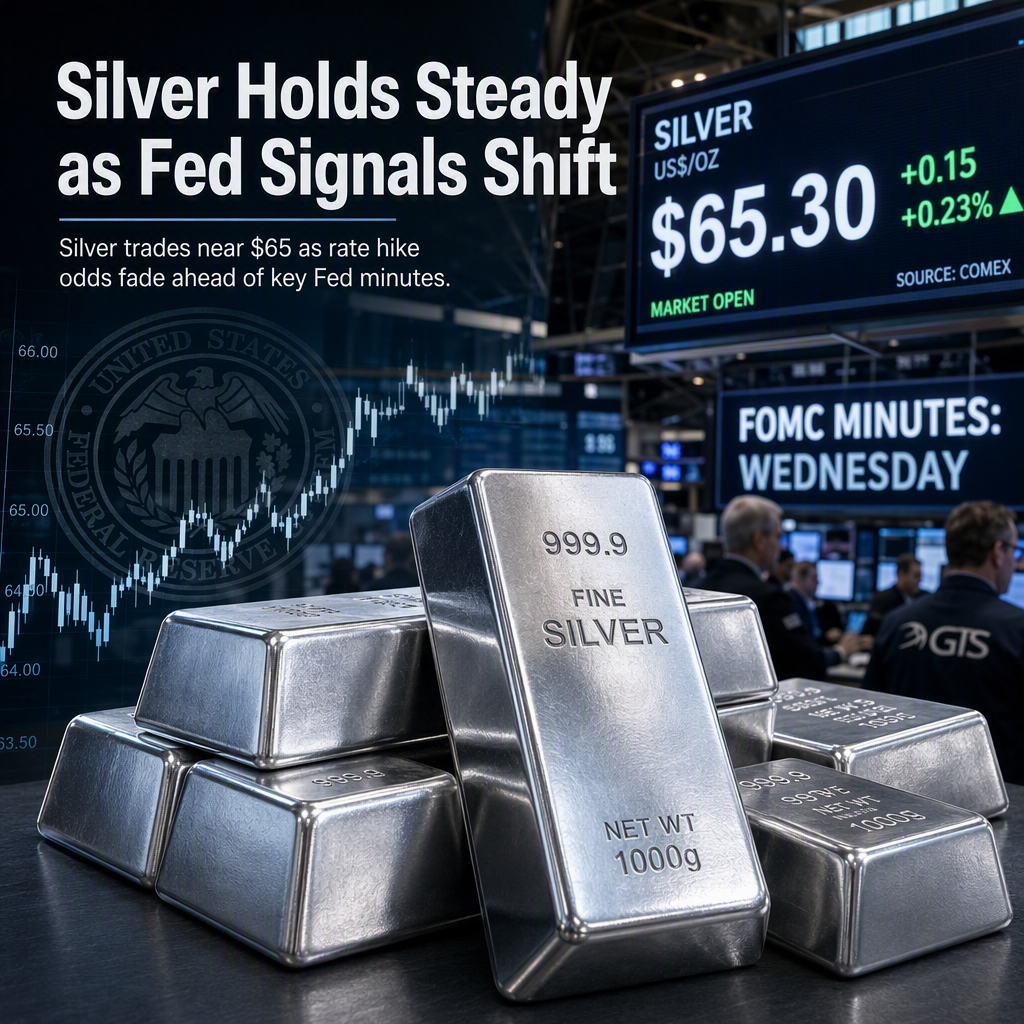
Silver (XAG/USD) continues to trade in a narrow range around $65.30 during the European session, maintaining a sideways pattern between $63.50 and $66.80 for the past week [1]. This stability comes as traders have largely priced out the likelihood of a hawkish Federal Reserve (Fed) stance, with expectations for a rate hike in the September policy meeting diminishing due to weak US economic data for July [1].
John Velis of BNY Markets notes that 'December rate hike expectations continue to recede this past week thanks to well-behaved inflation data and a surprise drop in consumers’ retail spending.' He highlights that the probability of a hike at the September 16 meeting has dropped to around 30%, down from over 70% at the beginning of August, reinforcing BNY's view of no moves this year. However, Velis cautions that upside risks remain, particularly if geopolitical tensions escalate and drive energy prices—and headline inflation—higher [1].
The non-renewal of the US-Iran ceasefire has contributed to rising oil prices, which in turn has pushed global inflation projections higher. This scenario raises concerns about potential interest rate hikes by global central banks, which could reduce the appeal of non-yielding assets like silver [1].
Technically, XAG/USD remains above the 20-day Exponential Moving Average (EMA) at $62.53, maintaining a constructive bullish bias. The Relative Strength Index (14) stands at 59.32, indicating firm upside momentum without signaling overbought conditions. Immediate support is noted at $63.50, with stronger demand at the 20-day EMA, while a breakout above the current range could see silver move towards $70.00 [1].
Looking ahead, the release of the Federal Open Market Committee (FOMC) minutes from the July policy meeting on Wednesday is expected to be the major trigger for silver prices [1].
CONCLUSION
Silver prices are consolidating near $65 as market participants await further guidance from the upcoming FOMC minutes. With Fed rate hike expectations fading but upside risks from energy prices and inflation still present, the market remains cautious. Technical indicators suggest a bullish bias, but a decisive move will likely depend on new signals from US monetary policy.