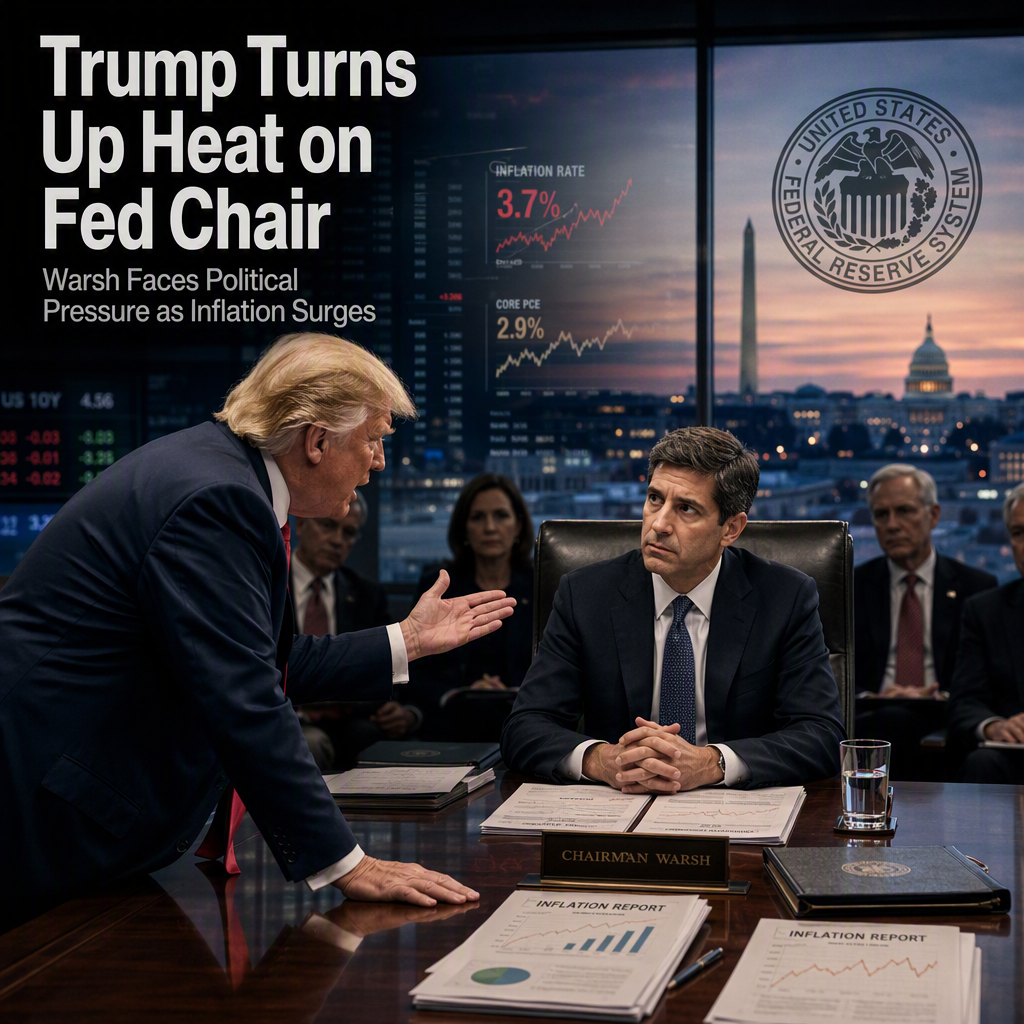
President Donald Trump has intensified his public pressure on Federal Reserve Chairman Kevin Warsh to cut interest rates, setting up a potential confrontation as the central bank prepares for a key policy decision this Wednesday [1]. Trump, who nominated Warsh earlier this year, had previously refrained from criticizing him, in contrast to his frequent public attacks on former Fed Chair Jerome Powell. However, with inflation remaining elevated and the Fed's next move imminent, Trump has become increasingly vocal, repeatedly calling for lower rates and questioning the Fed's independence [1].
Trump's calls for rate cuts have grown more urgent following the August inflation report, which showed consumer prices rising at a 3.4% annual rate—well above the Fed's 2% target [1]. Market expectations for a rate hike at Wednesday's meeting have surged, with odds exceeding 90% as of Tuesday [1]. Despite this, Trump has argued that the U.S. should have the lowest interest rates in the world, suggesting rates should be at 1% or even 0.5%, compared to the current level of 4% [1]. He has also expressed concerns that higher rates increase the cost of servicing the national debt [1].
White House adviser Kevin Hassett, chair of the National Economic Council, indicated that the president will likely comment if the Fed makes a significant move on rates, while also emphasizing respect for the Fed's independence [1]. Hassett noted, “I’m sure he believes that there’s plenty of room for interest rates to go down, and he voices that opinion while respecting the independence of the Fed” [1].
The upcoming Fed decision is seen as a critical test for Warsh, who faces the challenge of balancing persistent inflation against political pressure from the White House. Economists at UBS described the situation as a 'time to choose' for the new Fed chair: whether to hold rates steady or raise them to combat inflation, risking further conflict with the president [1].
CONCLUSION
President Trump's escalating demands for lower interest rates have heightened tensions ahead of the Federal Reserve's policy decision, with markets bracing for a possible rate hike in response to persistent inflation. The outcome will test Chairman Warsh's resolve and the Fed's independence, with significant implications for monetary policy and market stability.