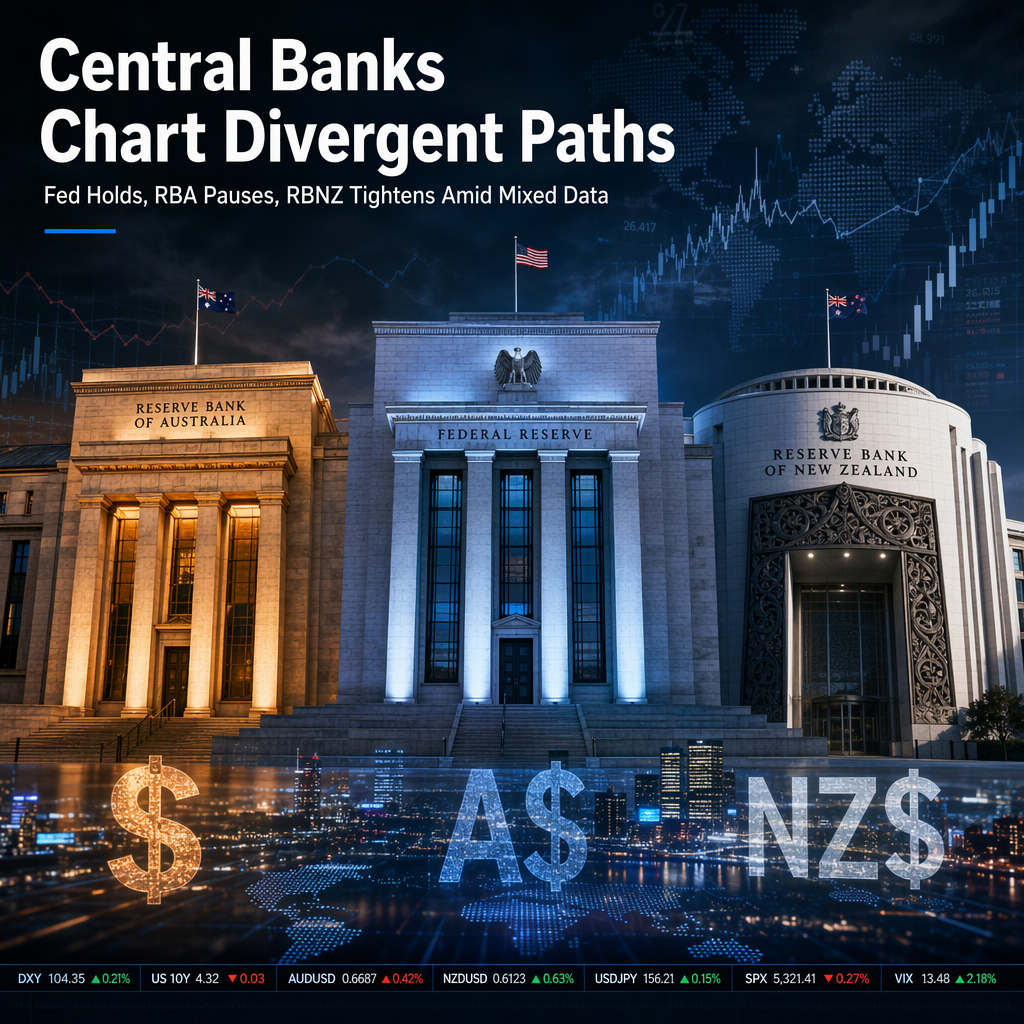
TD Securities expects the Federal Reserve to keep the Fed funds rate unchanged through 2026, citing persistent inflation above target and a stabilized labor market. The June CPI report was softer than anticipated, easing immediate inflation concerns and reinforcing expectations for a prolonged policy hold. However, TD Securities notes that if the Fed were to adjust policy this year, a hike is more likely than a cut, given the mixed signals from recent Fedspeak and a shift toward greater data dependence under new leadership. Core CPI is projected to end at 2.6% year-on-year in Q4 2026, and inflation is expected to remain elevated for the rest of the year [1].
In Australia, Brown Brothers Harriman’s Elias Haddad anticipates the June labor force report will show a modest 15,000 job gain and unemployment steady at 4.4%, slightly above the Reserve Bank of Australia's (RBA) projection of 4.2%. This outcome supports the case for an extended pause in the RBA’s tightening cycle, especially as real GDP growth is projected to remain below potential and the current cash rate of 4.35% is near the top of neutral estimates. Futures imply a 60% chance of one final 25 basis point hike to 4.60% by year end, but Haddad sees risks skewed toward a longer pause, which could weigh on the Australian Dollar [2].
HSBC strategists report that New Zealand’s growth is strengthening, with retail sales rebounding, consumer sentiment improving, and the PMI rising to 59.7 in June. The Reserve Bank of New Zealand (RBNZ) delivered its first rate hike in July, raising the cash rate by 25 basis points to 2.50%. HSBC Economics projects quarterly 25bp hikes, reaching 3.50% by Q3 2027, while markets are pricing a faster path. The RBNZ’s aggressive stance is seen as NZD-positive, with the currency expected to benefit from being priced for the most hikes in the G10 over the next year. However, risks remain due to NZD’s high sensitivity to global growth and potential spillovers from Middle East conflicts, given New Zealand’s high oil-to-GDP intensity among G10 net energy importers [3].
According to [1], the Fed is likely to remain on hold, with a bias toward hiking if policy changes occur, while [2] reports the RBA is expected to pause further tightening, and [3] highlights the RBNZ’s ongoing aggressive hiking cycle. This divergence in central bank policy reflects differing economic conditions and outlooks across the US, Australia, and New Zealand.
CONCLUSION
Central banks are taking divergent approaches: the Fed is expected to hold rates steady with a slight bias toward hiking, the RBA is likely to pause amid modest labor gains and subdued growth, and the RBNZ is set to continue its tightening cycle. These policy paths reflect varying economic conditions and are likely to influence currency movements and investor sentiment in their respective markets.