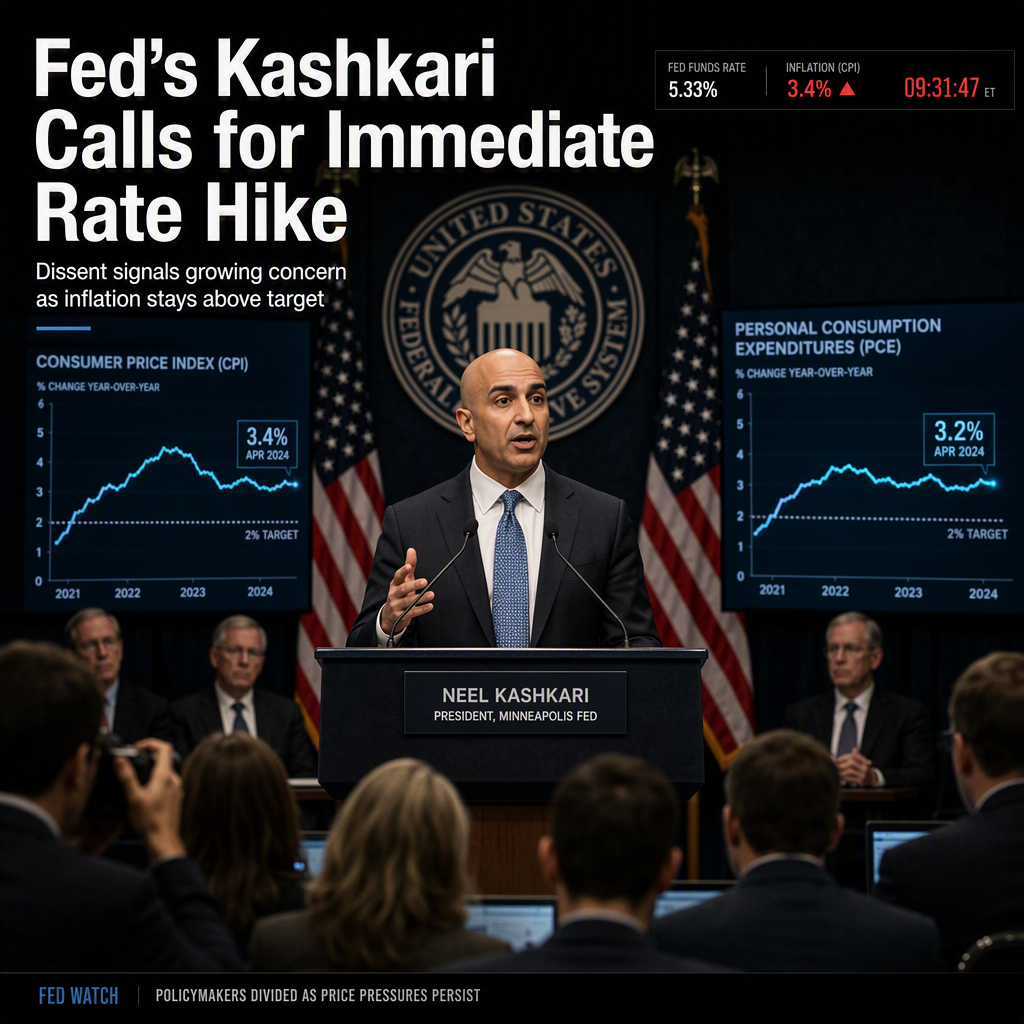
Minneapolis Federal Reserve President Neel Kashkari has publicly advocated for an immediate increase in interest rates to address persistent inflation and avoid the risk of more aggressive monetary tightening in the future [1]. Kashkari was one of three dissenters at last week's Federal Reserve meeting, voting in favor of a 25-basis-point hike while the majority opted to keep rates unchanged. He emphasized that current economic conditions—including robust corporate earnings, resilient consumer spending, and a strong labor market—do not indicate that monetary policy is restricting activity, supporting his call for a gradual rate increase [1].
Kashkari clarified that he is not seeking a dramatic rate hike but believes incremental increases are necessary to prevent inflation from becoming entrenched, which could force the Fed to take more drastic action later [1]. He cited inflation metrics, noting that both the consumer price index (CPI) and the personal consumption expenditures (PCE) index remained above 3% in June, with CPI at 3.5% and PCE at 3.7% year-over-year [1]. These figures are well above the Fed's 2% target, reinforcing concerns among Kashkari and fellow dissenters Dallas Fed President Lorie Logan and Cleveland Fed President Beth Hammack about persistent inflation pressures [1].
Kashkari also mentioned that Federal Reserve Chair Kevin Warsh did not pressure him regarding his dissenting vote, encouraging him to act in the best interest of the economy [1]. The upcoming release of July CPI and PCE data later this month will be closely watched by policymakers and could influence the Fed's next decision on interest rates [1].
CONCLUSION
Neel Kashkari's call for a rate hike highlights ongoing concerns about inflation remaining above the Fed's target, despite strong economic fundamentals. The dissent among Fed policymakers signals a potential shift in future monetary policy, with upcoming inflation data likely to play a critical role in shaping the central bank's next steps.