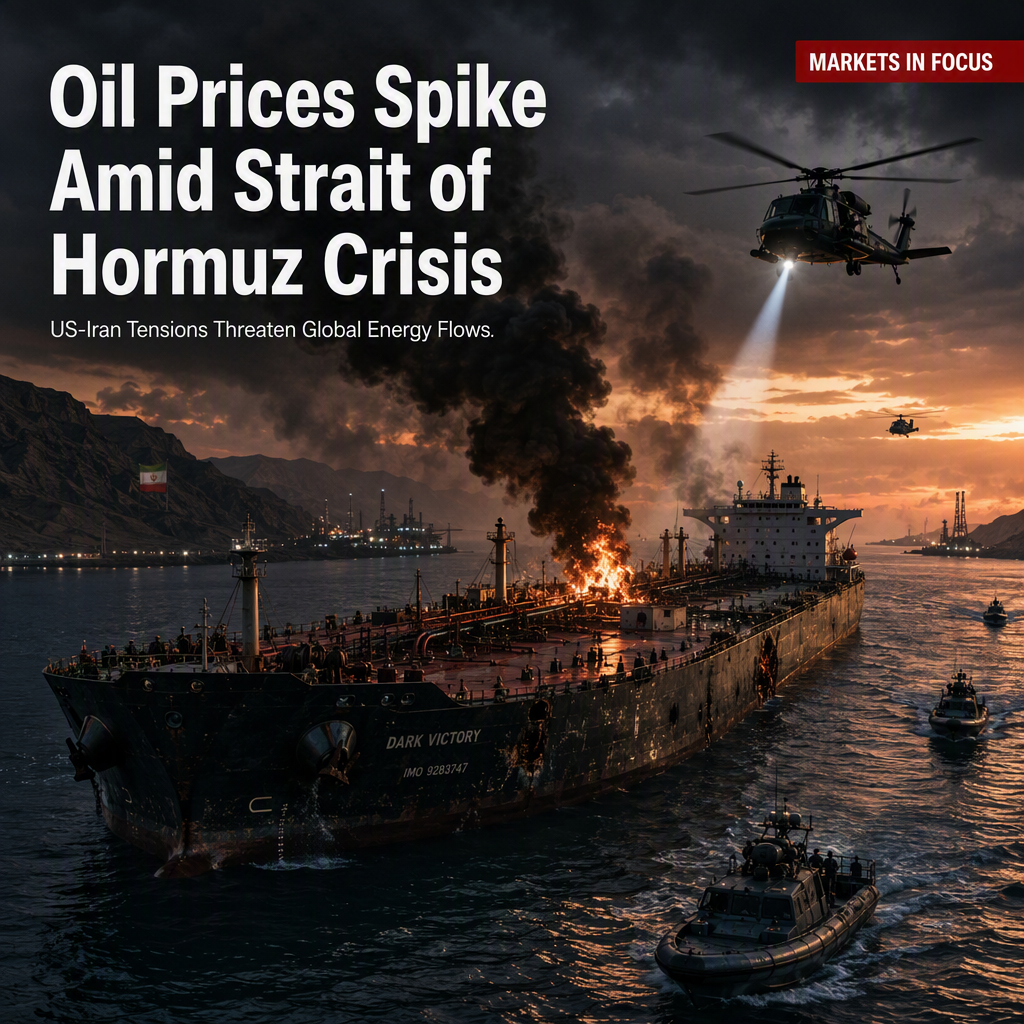
West Texas Intermediate (WTI) crude oil prices rallied sharply on Monday, climbing more than 3% to trade at $85.50 per barrel, approaching one-month highs of $87.38, as renewed geopolitical tensions in Iran stoked fears of global oil supply disruptions [1]. The surge followed a US military strike on the Iranian island of Larak, where the Islamic Revolutionary Guard Corps (IRGC) was allegedly preparing missiles to deploy sea mines in the Strait of Hormuz. US President Donald Trump stated that the US had cleared mines from the waterway and warned that any ship attempting to place new mines would be 'immediately and systematically destroyed' [1].
In response, Iran retaliated by targeting US airbases in Jordan and the United Arab Emirates. Iranian President Masoud Pezeshkian asserted that Tehran is 'not looking for war' but would not 'sit still' in the face of US attacks [1]. Later, Iran’s Revolutionary Guards reported that an oil supertanker attempting to cross the Strait of Hormuz without permission was struck by two mines and caught fire, warning that other vessels violating security rules would face similar consequences [1].
Analysts at Danske Bank commented that while the latest military exchange was 'limited,' it marks the first US strike on Iranian forces in over a month and significantly heightens geopolitical risk around key energy routes. The bank emphasized that the return of US action against Iranian assets materially revives market sensitivity to further escalation, reinforcing concerns about potential disruptions to oil flows through the Strait of Hormuz [1].
CONCLUSION
The escalation of US-Iran tensions has driven WTI oil prices sharply higher, reflecting renewed fears of supply disruptions in a critical energy corridor. Market participants remain highly sensitive to further developments, with analysts warning that any additional escalation could have significant implications for global oil markets.