
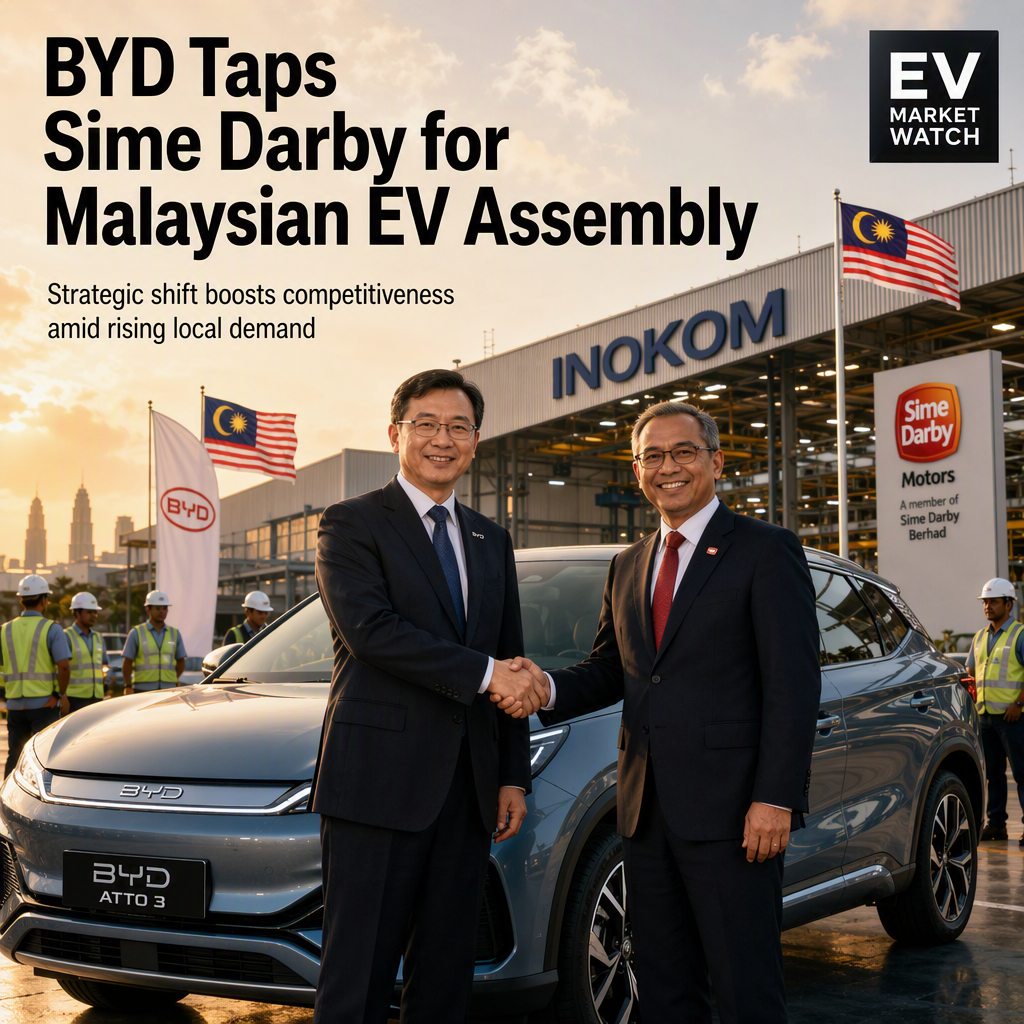
Chinese auto giant BYD has decided to abandon its original plan to build a manufacturing facility in Malaysia, instead appointing Sime Darby’s Inokom unit as its local partner to assemble knocked-down parts into completed electric vehicles [1]. This strategic shift is aimed at bypassing various taxes and maintaining competitiveness in Malaysia’s increasingly competitive automotive market [1]. The move comes as local rules made BYD’s own plant plan unfeasible, prompting the company to leverage local assembly options for more favorable tax treatment and cost savings [1].
Industry analysts highlight that BYD’s decision aligns with broader trends among foreign automakers seeking to remain competitive amid Malaysia’s shifting automotive policy environment and the rising adoption of electric vehicles in Southeast Asia [1]. The local assembly arrangement is expected to help BYD contain costs and offer more competitive pricing to Malaysian consumers, which is crucial as EV sales continue to rise in the region [1].
No financial details regarding the agreement with Sime Darby’s Inokom unit were disclosed in the announcement [1]. However, the partnership is anticipated to improve BYD’s supply chain efficiency and accelerate delivery times for customers in Malaysia [1]. The competitive landscape for electric vehicles in Southeast Asia has intensified, with global and regional carmakers ramping up their presence. BYD’s decision to utilize local assembly is viewed as a strategic move to safeguard its market share amid increased competition from both established players and new entrants in the EV sector [1].
CONCLUSION
BYD’s shift to local assembly through Sime Darby’s Inokom unit is a tactical response to regulatory challenges and rising competition in Malaysia’s EV market. While financial specifics remain undisclosed, the move is expected to enhance BYD’s cost competitiveness and supply chain efficiency. This strategy positions BYD to better compete as electric vehicle adoption accelerates in Southeast Asia.