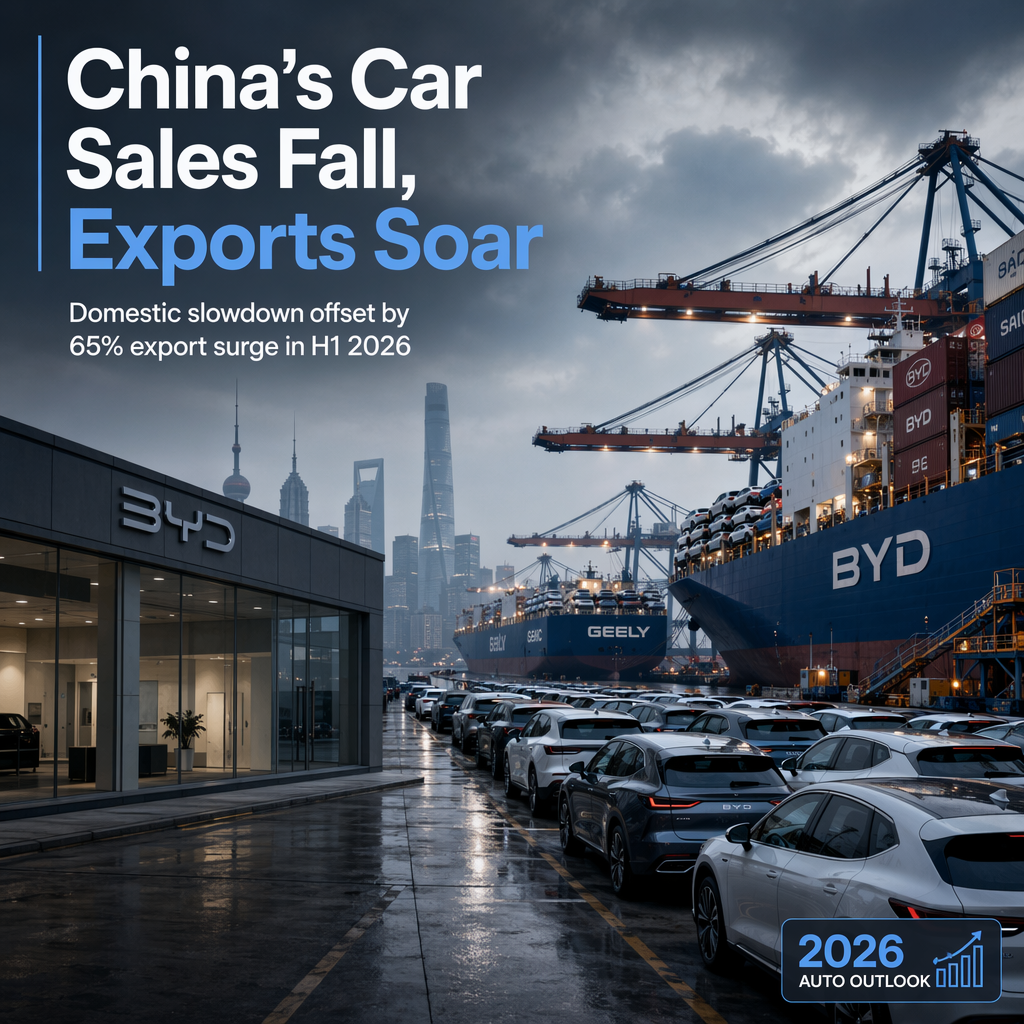
In the first half of 2026, China's new car sales declined by 21% compared to the same period last year, according to the China Association of Automobile Manufacturers. This significant decrease is attributed to a slowing Chinese economy, weakened consumer sentiment, and intensified competition in the electric vehicle (EV) market [1].
Despite the domestic downturn, Chinese automakers saw a 65% year-on-year increase in new car exports during the same period. The surge was particularly notable in shipments to Southeast Asia and European markets. Major manufacturers such as BYD and Geely are expanding their overseas presence, focusing on EVs and strengthening collaborations with local partners, including expanding local production [1].
Industry analysts highlight that while domestic market growth is slowing, the expansion of exports is having a substantial impact on automakers' performance. Looking ahead, the Chinese auto industry is expected to further intensify its export orientation. Analysts also note that currency fluctuations and the potential for stricter regulations in various countries will be key factors to watch [1].
CONCLUSION
China's auto industry is experiencing a marked shift from domestic sales to export-driven growth, with exports offsetting a sharp decline in local demand. The sector's future performance will depend on its ability to navigate global market conditions and regulatory environments.