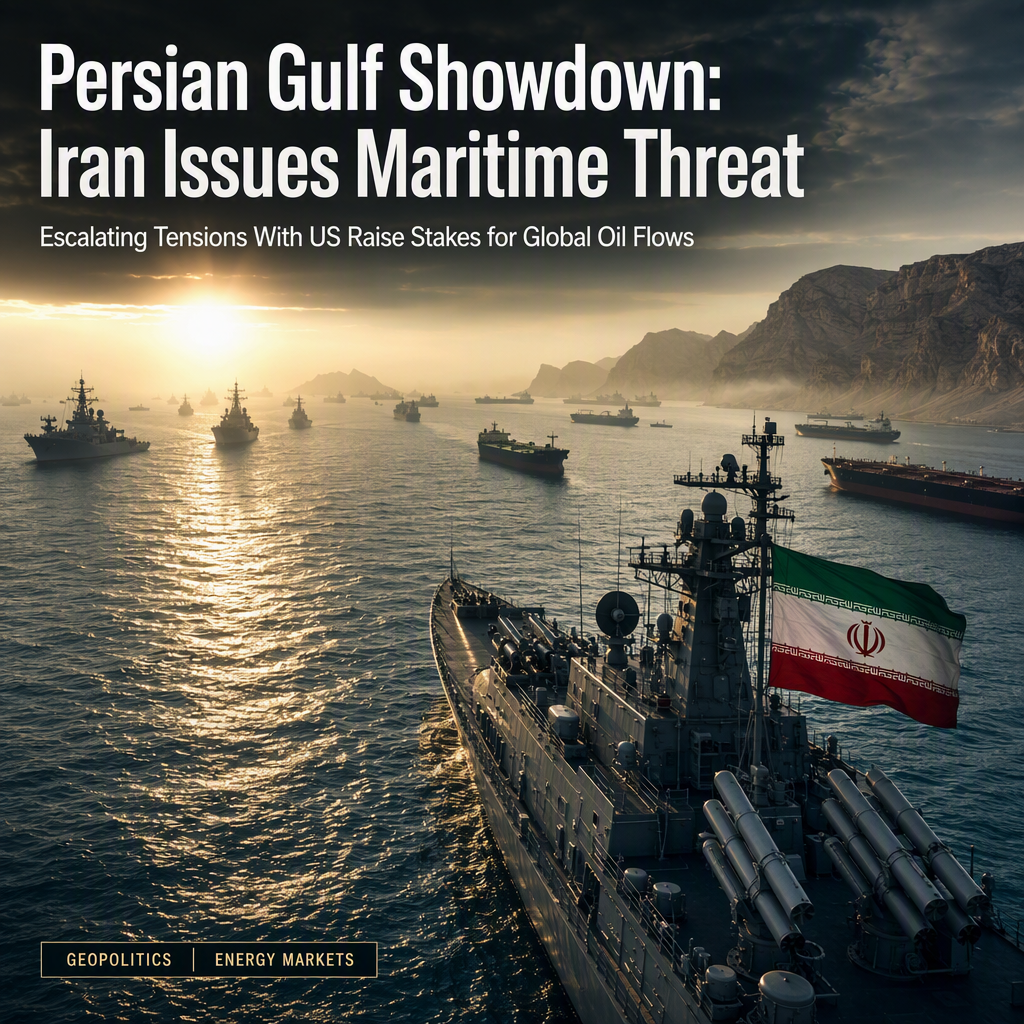
Iran's Secretary of the Supreme National Security Council, Mohsen Rezaei, issued a warning on Tuesday that Tehran would respond to what it describes as US 'economic warfare' by imposing a maritime exclusion zone across the Persian Gulf, extending to the edge of the US naval blockade currently in place around Iranian ports [1]. Rezaei emphasized that 'economic warfare will be met by a maritime exclusion zone across the Persian Gulf to the blockade perimeter,' signaling a significant escalation in Iran's posture toward American forces [1].
Rezaei also referenced recent missile activity, stating that Washington had received a 'clear warning from Iran's new missiles.' He was likely referring to the Qassem Basir ballistic missile, which Iranian media reported was fired at US warships near the Strait of Hormuz. However, the US military stated its warships evaded any missile attacks [1]. Rezaei further noted that Iran's military posture toward American forces had been 'fundamentally recalibrated,' suggesting a shift in strategy and readiness [1].
While the article does not provide specific market reactions or price movements, it highlights that geopolitical instability, such as the threat of a maritime exclusion zone in the Persian Gulf, is a key driver of WTI Oil prices. Disruptions in supply routes or heightened tensions in the region can significantly impact global oil markets [1].
No forward-looking statements or analyst opinions are included in the article, and there are no specific figures, dates, or ticker symbols mentioned beyond the general context of oil market dynamics [1].
CONCLUSION
Iran's threat to impose a maritime exclusion zone in response to US 'economic warfare' marks a notable escalation in regional tensions, with potential implications for global oil supply routes. Although no immediate market reaction is reported, such geopolitical developments are historically significant drivers of oil prices. Investors and market participants should monitor the situation closely for further updates.