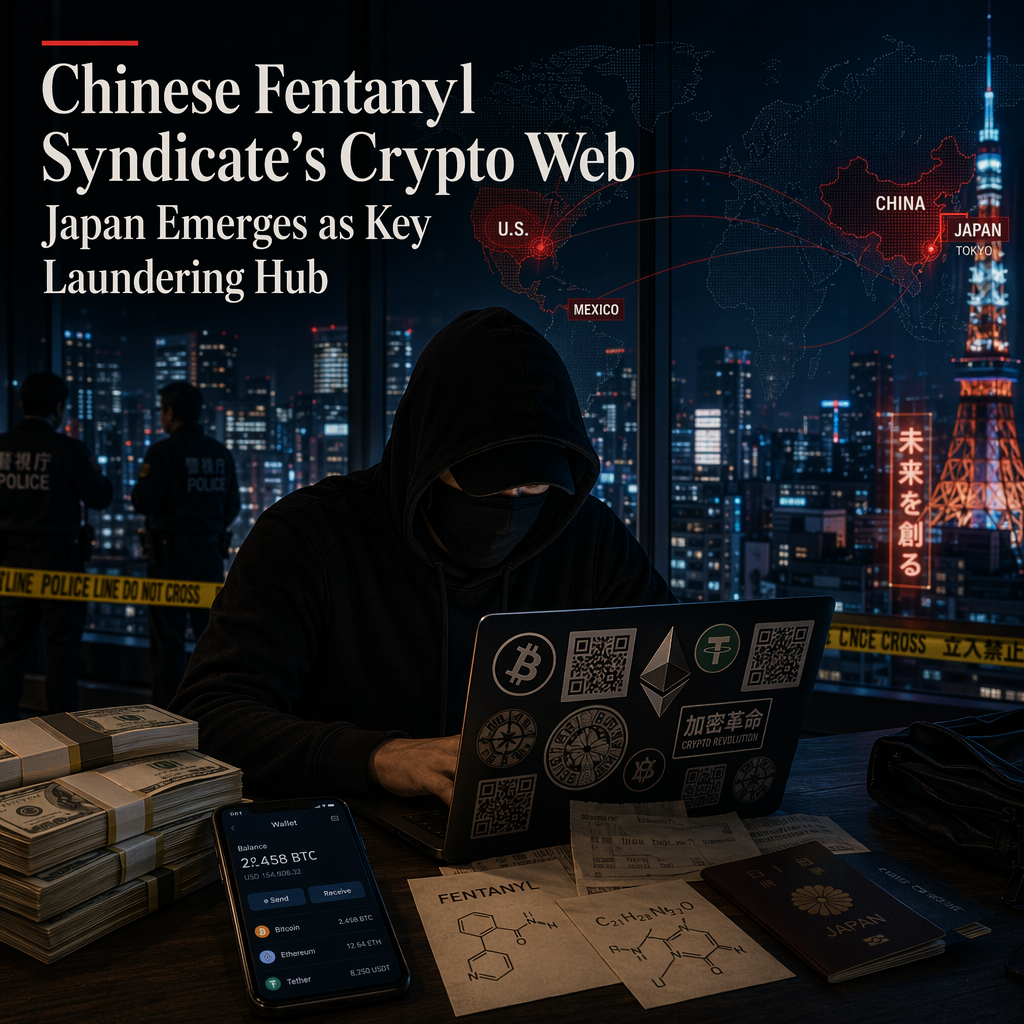
An independent investigation by Nikkei has uncovered that a Chinese organization, already suspected of illegally exporting chemical precursors for the synthetic opioid fentanyl, appears to have engaged in large-scale cryptocurrency fraud using a base in Japan [1]. The probe revealed connections to entities sanctioned by U.S. authorities and found evidence suggesting that the group laundered money tied to fentanyl trafficking through Japanese financial infrastructure and cryptocurrency exchanges [1]. Investigators have tracked illicit fund flows between China, Japan, and other countries, indicating that the proceeds from fentanyl sales were moved and obscured using these channels [1].
The investigation further identified that the network's operations in Japan are linked to broader international fentanyl smuggling routes, which span China, Mexico, the U.S., and other regions [1]. There are also possible ties between this organization and previously identified drug trafficking groups that have been targeted by U.S. sanctions [1]. The U.S. Drug Enforcement Administration (DEA) has been actively working to stop the smuggling of fentanyl, which has contributed to a surge in overdose deaths in the United States [1].
These findings highlight the significant challenges faced by law enforcement agencies in combating both the physical smuggling of fentanyl and the use of sophisticated financial schemes, such as cryptocurrency, to launder the proceeds of illegal activity [1]. Authorities are continuing to monitor cross-border transactions and are collaborating with international partners to disrupt these criminal networks [1].
CONCLUSION
The Nikkei investigation exposes the complex and international nature of fentanyl trafficking and associated financial crimes, including cryptocurrency fraud and money laundering. Law enforcement faces ongoing challenges in tracking and disrupting these networks, which leverage global financial systems and digital assets to conceal illicit proceeds.