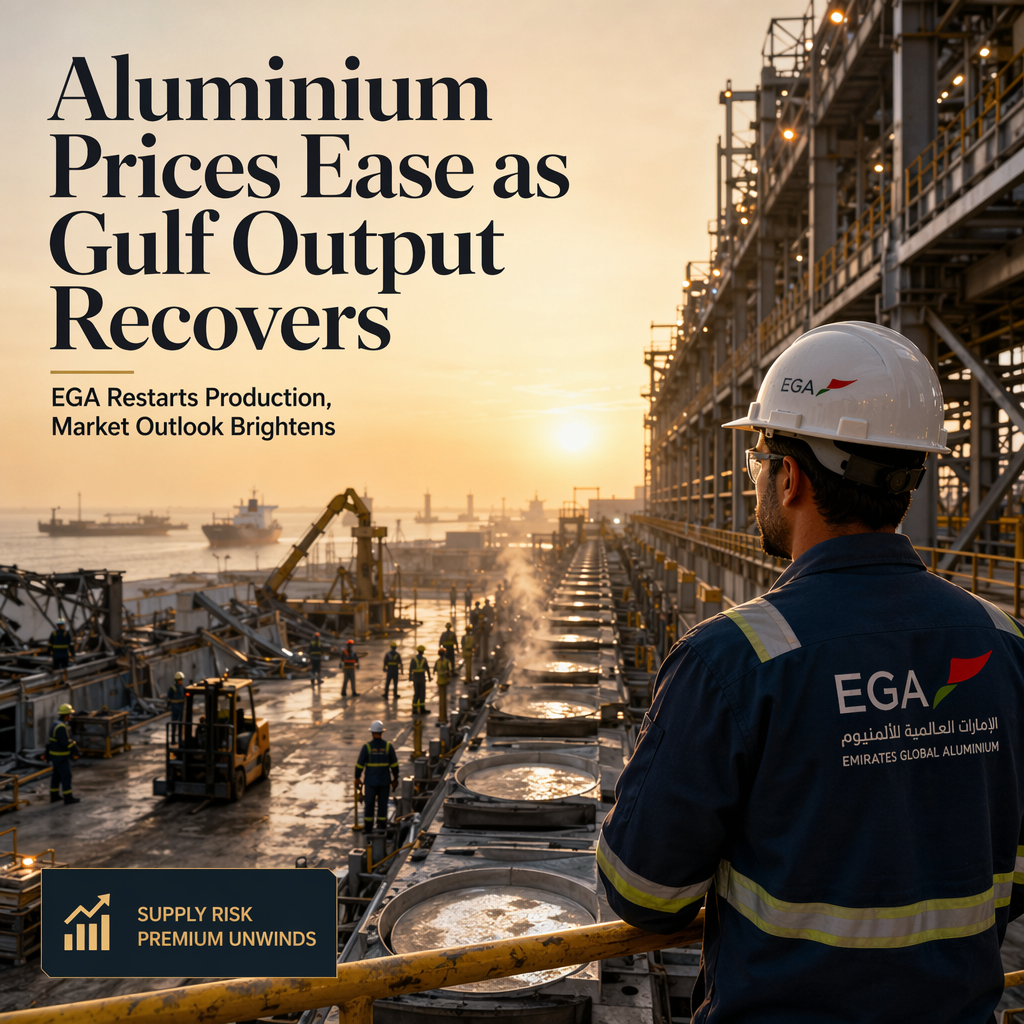
LME aluminium prices declined towards $3,000 per tonne as the market continued to unwind the geopolitical risk premium that had built up during earlier Middle East tensions [1]. According to ING analysts Warren Patterson and Ewa Manthey, this price movement was influenced by an update from Emirates Global Aluminium (EGA), which reported that approximately 7% of production pots at its Al Taweelah smelter have been restarted [1]. This development signals steady progress in restoring output following missile and drone attacks earlier in the year [1].
The EGA update has reinforced market expectations that supply disruptions in the Gulf region will be temporary, with lost production expected to gradually return and ease concerns over aluminium availability [1]. Earlier in the year, concerns over lost Middle Eastern production and shipping disruptions through the Strait of Hormuz had contributed to a sharp rise in aluminium prices [1]. However, the combination of recovering output and easing regional tensions has improved the supply outlook [1].
While a significant portion of Al Taweelah's capacity remains offline and a full recovery will take time, the latest progress update supports the view that lost supply will return to the market over time, further alleviating fears about aluminium shortages [1].
CONCLUSION
The restart of production at EGA's Al Taweelah smelter and improving regional stability are easing concerns about aluminium supply disruptions. As a result, aluminium prices have fallen, and the market outlook has become more optimistic regarding the restoration of lost production.