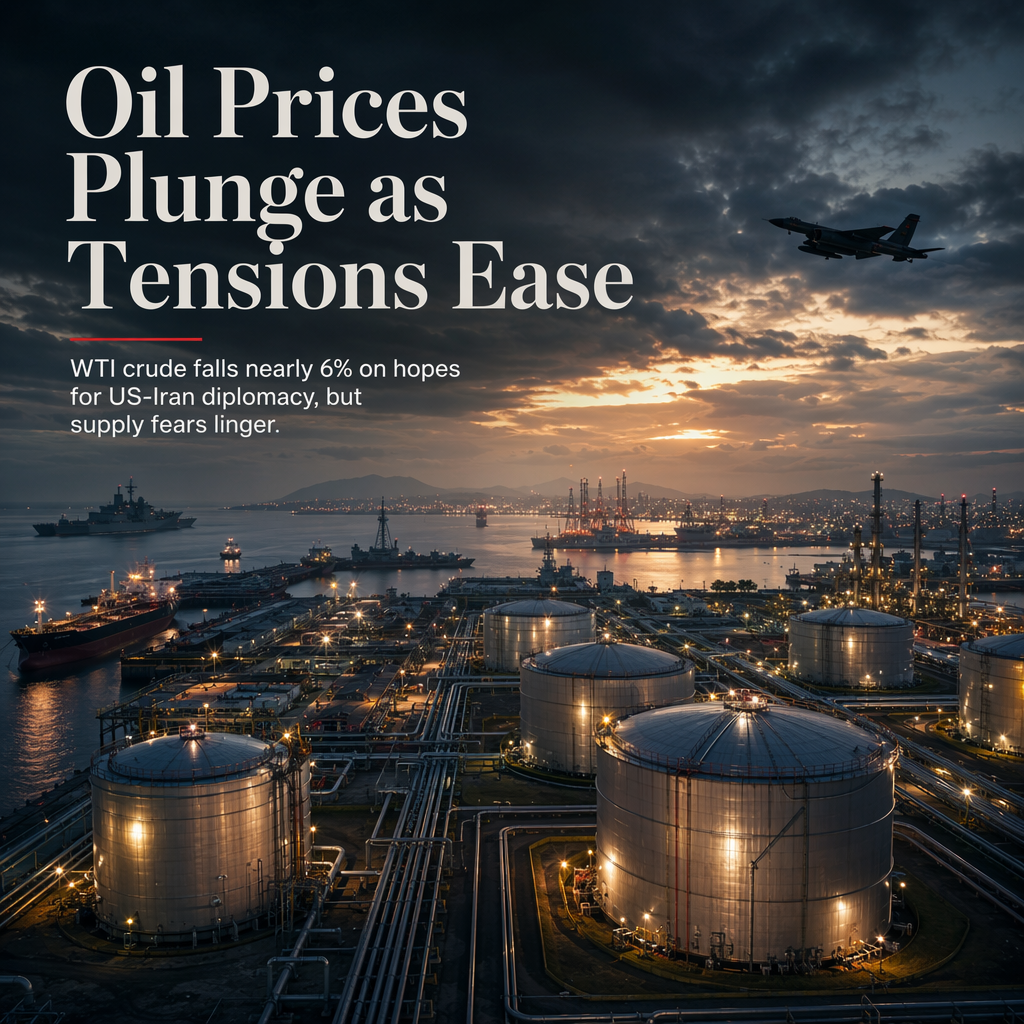
West Texas Intermediate (WTI), the benchmark US crude oil price, opened the week with a bearish gap and continued to retreat from its recent high of approximately $92.25, which was reached last Thursday. During the Asian session, WTI touched a four-day low but has since recovered slightly to trade near $84.00, representing a decline of nearly 6% for the day [1].
The decline in oil prices follows the US decision to pause its bombing campaign after 13 consecutive nights of strikes on Iranian targets late on Friday. This move prompted Tehran to suspend its retaliatory attacks against Washington's allies in the Middle East. According to US ambassador to the United Nations Mike Waltz, US forces remain 'locked and loaded,' but President Donald Trump is allowing room for negotiations. This development has revived hopes for a diplomatic resolution to the five-month-old US-Iran conflict, leading to an unwinding of the geopolitical risk premium and exerting downward pressure on crude oil prices [1].
Despite the de-escalation, concerns about global oil supply disruptions persist. Traffic through Bab el-Mandeb fell on July 26 after Iran-backed Houthis in Yemen attacked Saudi oil installations along the Red Sea coast. This incident, along with restricted transit through the Strait of Hormuz, continues to raise fears of significant disruptions to global oil supplies, limiting the downside for crude oil prices as traders remain cautious [1].
Analysts at Rabobank’s RaboResearch Global Economics & Markets team noted that crude benchmarks, including Brent and WTI, have surged recently due to renewed supply concerns. They cited overlapping disruptions such as Hormuz transit issues, intensified Russia-Ukraine strikes, CPC terminal outages, and record-tight diesel markets as factors reigniting worries over the durability of global oil supply. These geopolitical flashpoints and logistical bottlenecks have driven the latest leg higher in the oil complex, even as the immediate risk premium unwinds on hopes of US-Iran de-escalation [1].
CONCLUSION
WTI crude oil prices have fallen sharply, nearly 6% on the day, as hopes for a diplomatic resolution to the US-Iran conflict reduce the geopolitical risk premium. However, ongoing supply concerns and regional disruptions continue to limit further downside, keeping market participants cautious. The market remains highly sensitive to developments in the Middle East and broader supply chain risks.