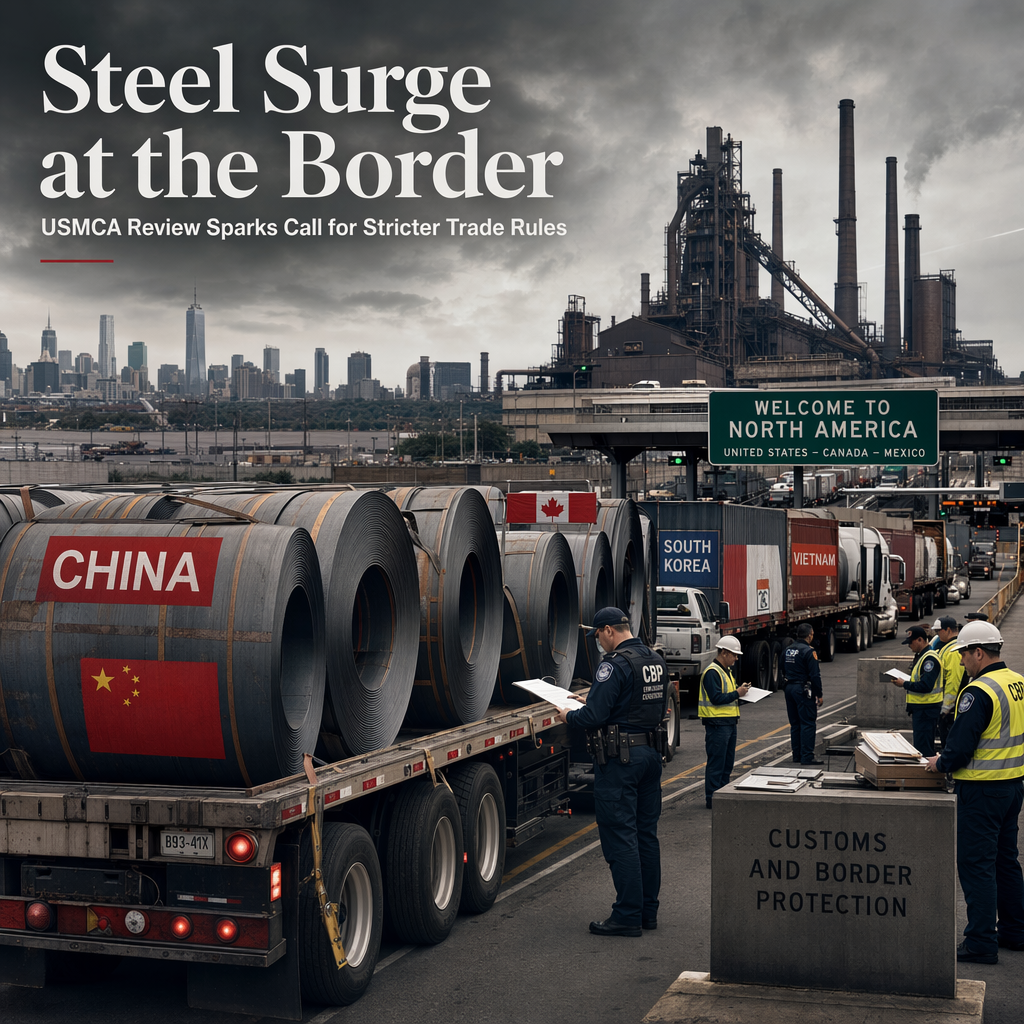
The United States-Mexico-Canada Agreement (USMCA) is currently under review, with significant concerns raised about the influx of steel imports from countries such as China, South Korea, and Vietnam entering North America through Mexico and Canada [1]. The article notes that between 2020 and 2024, Mexican steel imports from South Korea, China, and Vietnam increased by 44%, 59%, and 39% respectively, resulting in an overall 45% rise in steel imports into Mexico during that period [1]. These imports have gained preferential access to the North American market, despite originating from countries accused of distorting global markets through subsidies and overcapacity [1].
The impact on the U.S. steel industry is evident, with imports of Mexican rebar in 2024 reported to be approximately 1,148% above their average level before the implementation of USMCA [1]. This surge occurred even as U.S. steel demand declined by more than 11 million tons since the agreement was negotiated, while imports from Mexico remained elevated [1]. Similarly, Canadian imports of Chinese steel rose by about 75% from 2020 through 2024, further exacerbating concerns about the displacement of domestic production, depressed prices, and job losses in manufacturing across North America [1].
The article argues that these trends are inconsistent with the intended purpose of USMCA, which was to strengthen regional manufacturing and ensure fair competition among North American partners [1]. It suggests that Canada and Mexico should implement border measures similar to the United States’ Section 232 steel tariffs to prevent unfairly traded steel from entering the region through alternative routes [1]. Additionally, the article calls for restrictions on investment by non-market economies in strategically important industries and for USMCA to strengthen steel-related rules of origin, including a "melted and poured" requirement to ensure that steel receiving preferential treatment is genuinely produced in North America [1].
The review process is portrayed as a critical opportunity for policymakers to address these unresolved issues before extending the agreement for another 16 years, emphasizing that a thorough evaluation is necessary to maintain the United States' leverage and protect its manufacturing sector [1].
CONCLUSION
The USMCA review has brought to light significant increases in steel imports from China and other countries entering North America via Mexico and Canada, raising concerns about the agreement's effectiveness in protecting regional manufacturing. The article advocates for stronger trade measures and stricter rules of origin to address these challenges before any extension of the agreement is considered.