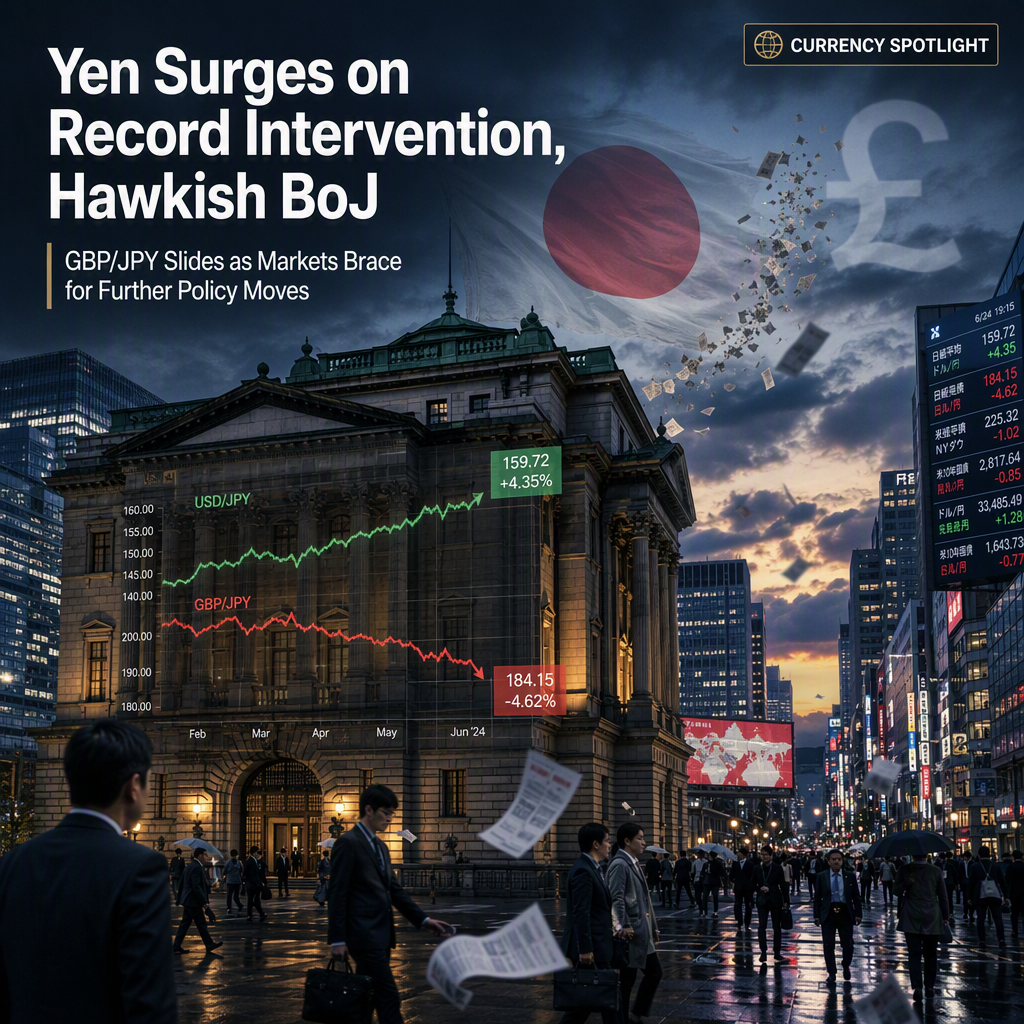
On Monday, the Pound Sterling (GBP) retreated against the Japanese Yen (JPY), with GBP/JPY trading around 216.40 after pulling back from an intraday high near 216.85. The move was driven by renewed strength in the Yen, which attracted buyers following a brief surge in USD/JPY above the psychologically significant 160.00 level—a threshold that has previously prompted intervention by Japanese authorities in the foreign exchange market [1].
Finance Ministry data released on Friday revealed that Japan spent a record ¥15.4 trillion (approximately $96.5 billion) to support the Yen between July 30 and August 26, after USD/JPY hit a 40-year high near 164.00 [1]. This intervention underscores the authorities' commitment to stabilizing the currency amid persistent depreciation pressures. Additionally, hawkish expectations for the Bank of Japan (BoJ) are lending further support to the Yen. OCBC FX strategists noted that a potential rate hike in September would break from the BoJ's established pattern of raising rates every six months, with the last hike occurring in June. The rates market is currently pricing in an 85% chance of a September hike, with expectations for the policy rate to rise from 1.00% to 1.75% by July 2027 [1].
Despite these hawkish bets, OCBC cautioned that the BoJ may struggle to exceed market expectations, given the aggressive positioning of the rates curve. They suggested that additional measures, such as policies encouraging the repatriation of overseas assets, may be necessary to counter persistent Yen depreciation, as the pace and extent of rate increases alone may not suffice [1].
On the UK side, the Bank of England (BoE) is widely expected to keep interest rates unchanged in the coming months, even as inflation remains above the 2% target. Policymakers at the latest BoE meeting judged that the tightening in financial conditions since the onset of the Middle East war was sufficient to guard against inflation risks from higher energy prices [1].
Looking ahead, the economic calendar is light for both Japan and the UK this week. However, Japanese data released earlier on Monday showed Retail Trade rising 4% year-on-year in July, surpassing the 3% forecast, while Large Retailer Sales increased 1.4%, rebounding from a previous 1% decline [1].
CONCLUSION
The Japanese Yen's recent strength is underpinned by record government intervention and rising expectations for a BoJ rate hike, while the Pound Sterling remains subdued amid a lack of domestic catalysts and an expected BoE pause. Market participants are closely watching for further policy actions from Japan, as rate hikes alone may not be sufficient to sustain Yen gains. The outlook remains cautious, with both currencies facing headwinds from their respective economic and policy environments.