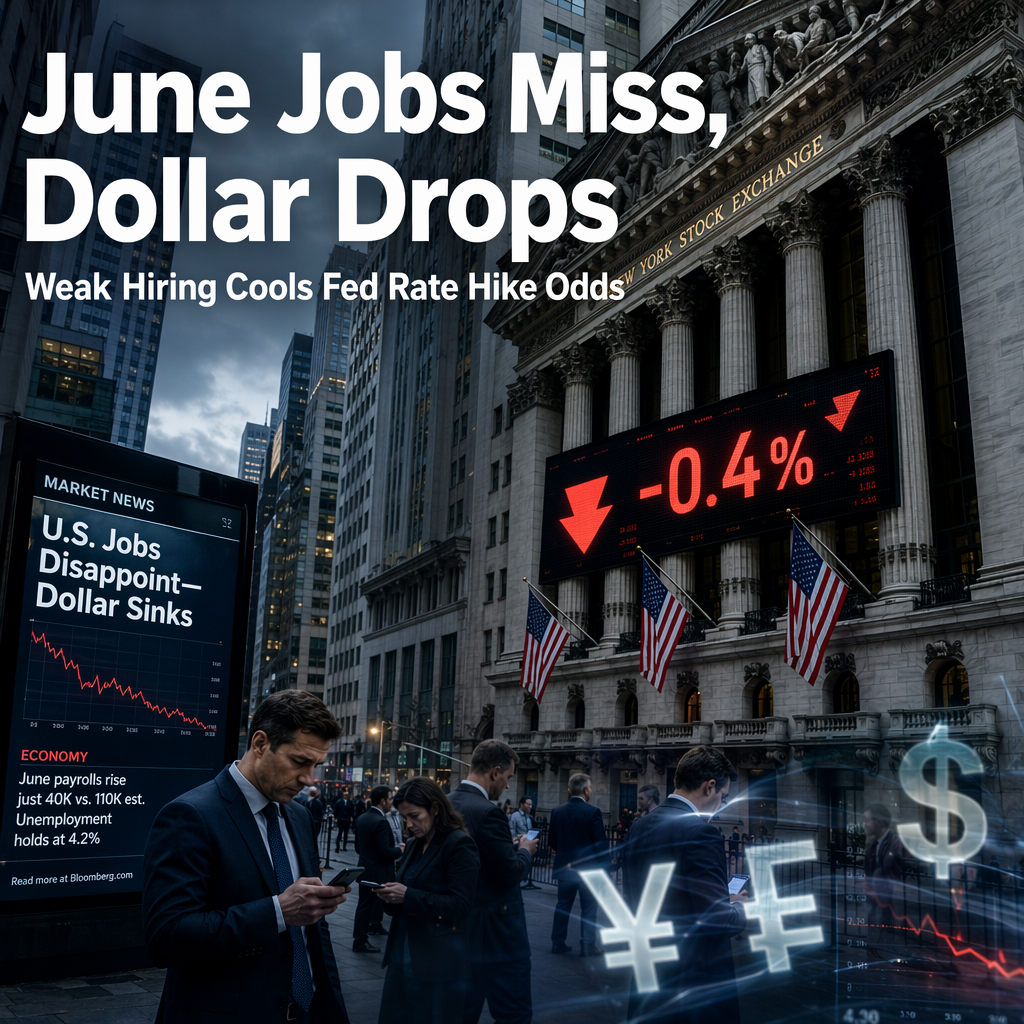
The June 2026 U.S. nonfarm payrolls (NFP) report delivered a significant downside surprise, with payrolls rising by just 57,000 compared to consensus expectations of 110,000 to 113,000 new jobs [1]. Additionally, prior months' figures were revised downward by 74,000 jobs, further highlighting labor market weakness [1]. The unemployment rate fell to 4.2% from 4.3%, but this improvement was attributed to a decline in the labor force participation rate, which dropped to 61.5% from 61.8%, indicating fewer people were looking for work rather than genuine job market strength [1].
Sector-specific data showed notable weakness, with the leisure and hospitality sector losing 61,000 jobs [1]. Average hourly earnings increased by 0.3% month over month and 3.5% year over year [1]. The quality of job gains leaned towards part-time positions, and underemployment edged higher, further underscoring the softness in the labor market [1].
Market reaction was swift: the U.S. dollar, already under pressure before the report, dropped further after the release as traders scaled back expectations for Federal Reserve rate hikes in July and September [1]. While the dollar later recovered part of its initial losses, it still ended the session weaker against major currencies, with the Japanese yen (JPY) and Swiss franc (CHF) posting the strongest gains [1]. The report triggered a bearish bias for the USD [1].
The broader market context included risk-off flows earlier in the week due to concerns over AI-related tech valuations and anticipation of a firm U.S. core PCE print, which had previously strengthened Fed rate hike expectations [1]. However, the disappointing jobs data shifted sentiment, cooling those expectations and impacting currency markets [1].
CONCLUSION
The June 2026 U.S. jobs report fell well short of expectations, prompting a weaker dollar and reduced odds of near-term Fed rate hikes. Labor market softness, especially in leisure and hospitality, and a drop in participation rate contributed to the bearish USD sentiment. Markets responded with gains for safe-haven currencies like JPY and CHF.