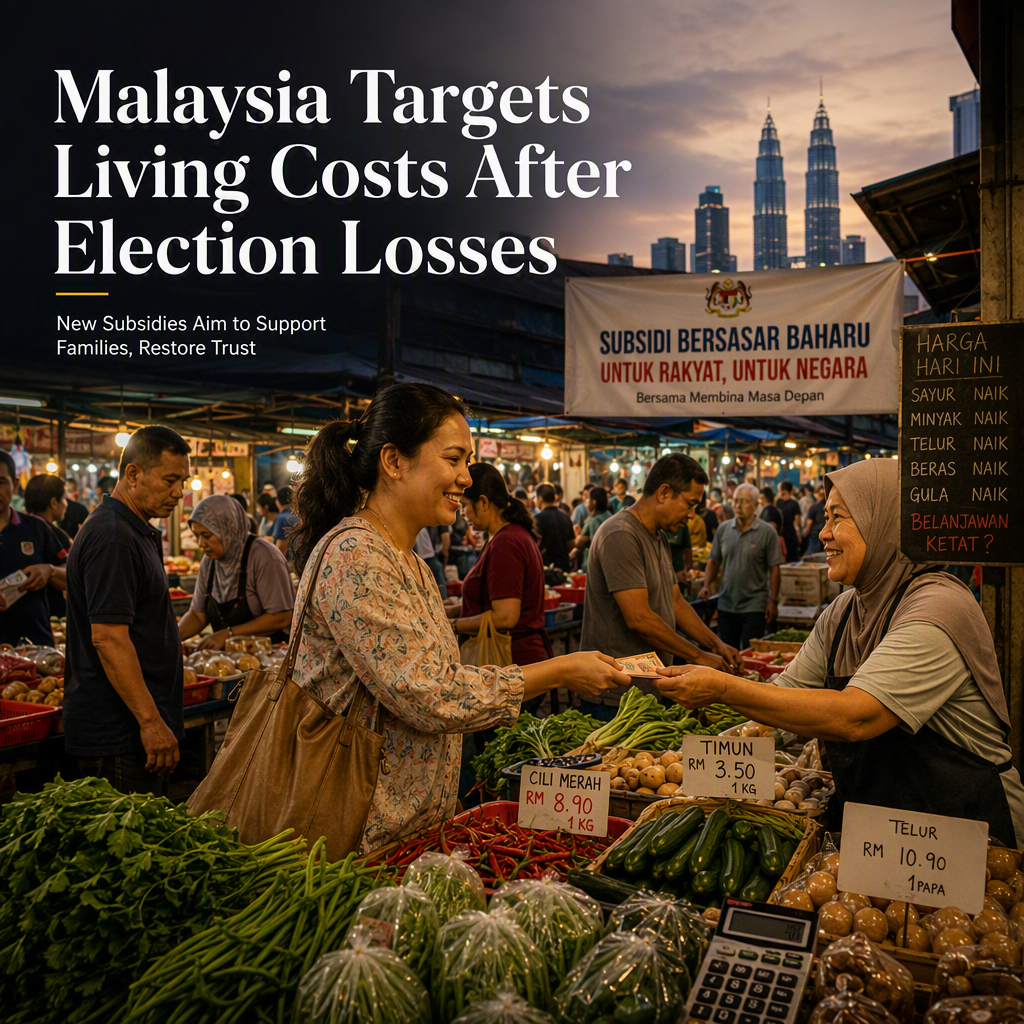
Malaysian Prime Minister Anwar Ibrahim has introduced new measures aimed at curbing living costs, marking a shift toward a more voter-focused fiscal strategy following recent election defeats, according to analysts cited in the article [1]. Despite Malaysia's robust economic growth, experts note that many households and small businesses have not yet benefited from these gains [1]. In response, the government has implemented targeted subsidies and adjustments to social welfare programs to ease the burden on lower- and middle-income families [1].
Fiscal analysts highlight that inflation, particularly in food and essential goods, continues to pressure household finances, even as GDP growth remains strong [1]. The new initiatives are also designed to support smaller businesses facing increased operating costs and subdued consumer demand, with the aim of stimulating domestic consumption and bolstering economic resilience [1].
Analysts suggest that these efforts are part of a broader strategy to regain public trust and support after setbacks in recent regional elections [1]. The administration's focus on cost-of-living issues is expected to help stabilize public sentiment and strengthen its political position moving forward [1].
CONCLUSION
Malaysia's government is responding to voter concerns by implementing targeted subsidies and welfare adjustments to address rising living costs. While the measures aim to support households and small businesses, analysts expect them to help stabilize public sentiment and reinforce the administration's political standing.