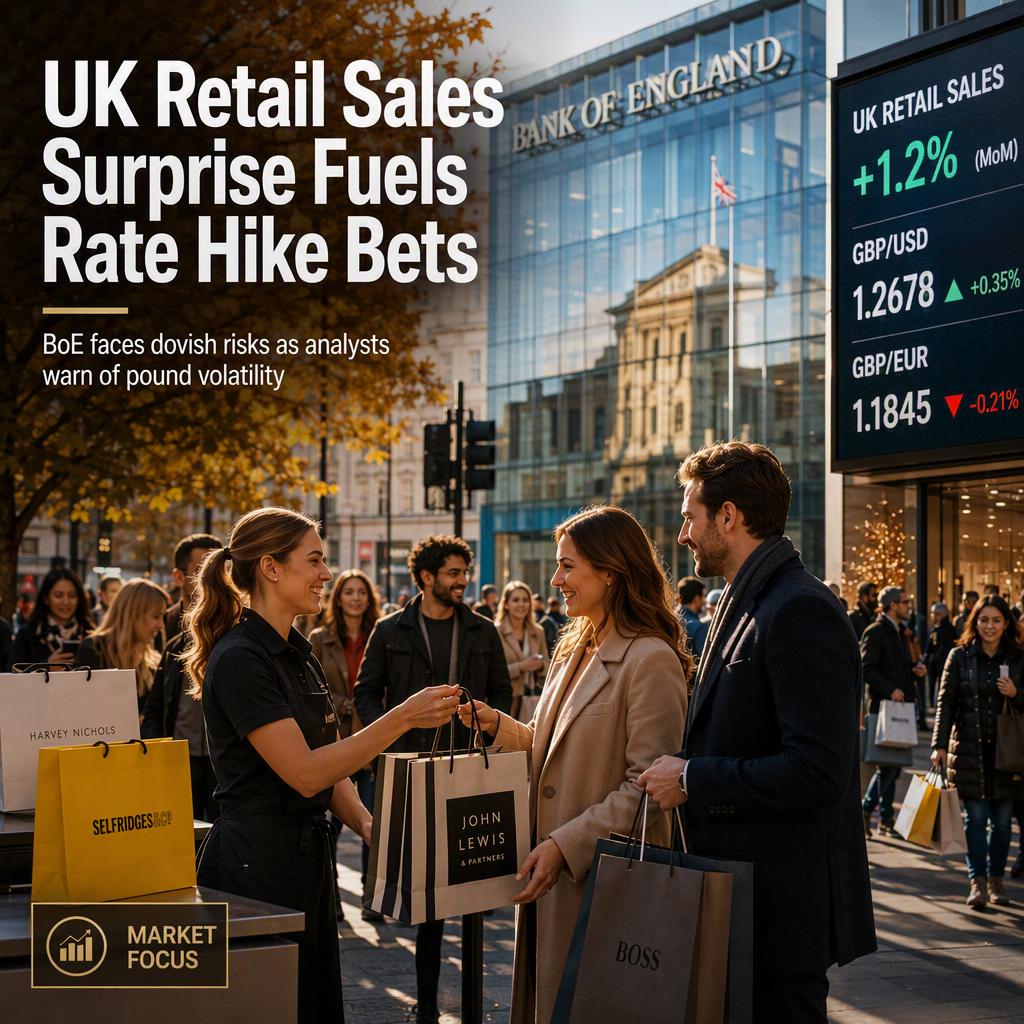
UK retail sales for August exceeded expectations, with total retail sales volumes rising 0.5% month-on-month compared to a consensus forecast of -0.2% and reversing a -0.5% decline in July. Excluding automotive fuel, retail sales increased by 0.6% (consensus: -0.2%) versus a -0.9% drop in July. This positive data has strengthened market expectations for a 25 basis point Bank of England (BoE) rate hike in November, with the probability rising to as much as 90% from 83% previously, according to swaps market pricing.
Despite the firmer odds for a rate hike, Brown Brothers Harriman’s Elias Haddad cautions that the BoE may not need to tighten policy as much as the swaps curve suggests, which currently implies about 100 basis points of hikes over the next twelve months to a rate of 4.75%. Haddad notes that the UK economy is already operating below capacity, the current Bank Rate of 3.75% is near the top of the BoE’s estimated neutral range of 2% to 4%, and fiscal policy is expected to become more restrictive.
BoE Governor Andrew Bailey has indicated that any rate hike decision will depend on whether the situation in the Middle East persists for an extended period and if the risk of second-round effects increases. As a result, the British Pound remains vulnerable to a dovish repricing if the BoE signals less aggressive tightening than markets currently expect.
CONCLUSION
While stronger-than-expected UK retail sales have boosted market expectations for a near-term BoE rate hike, analysts caution that the central bank may not deliver as much tightening as priced in. This leaves the British Pound exposed to downside risk if the BoE adopts a more dovish stance.