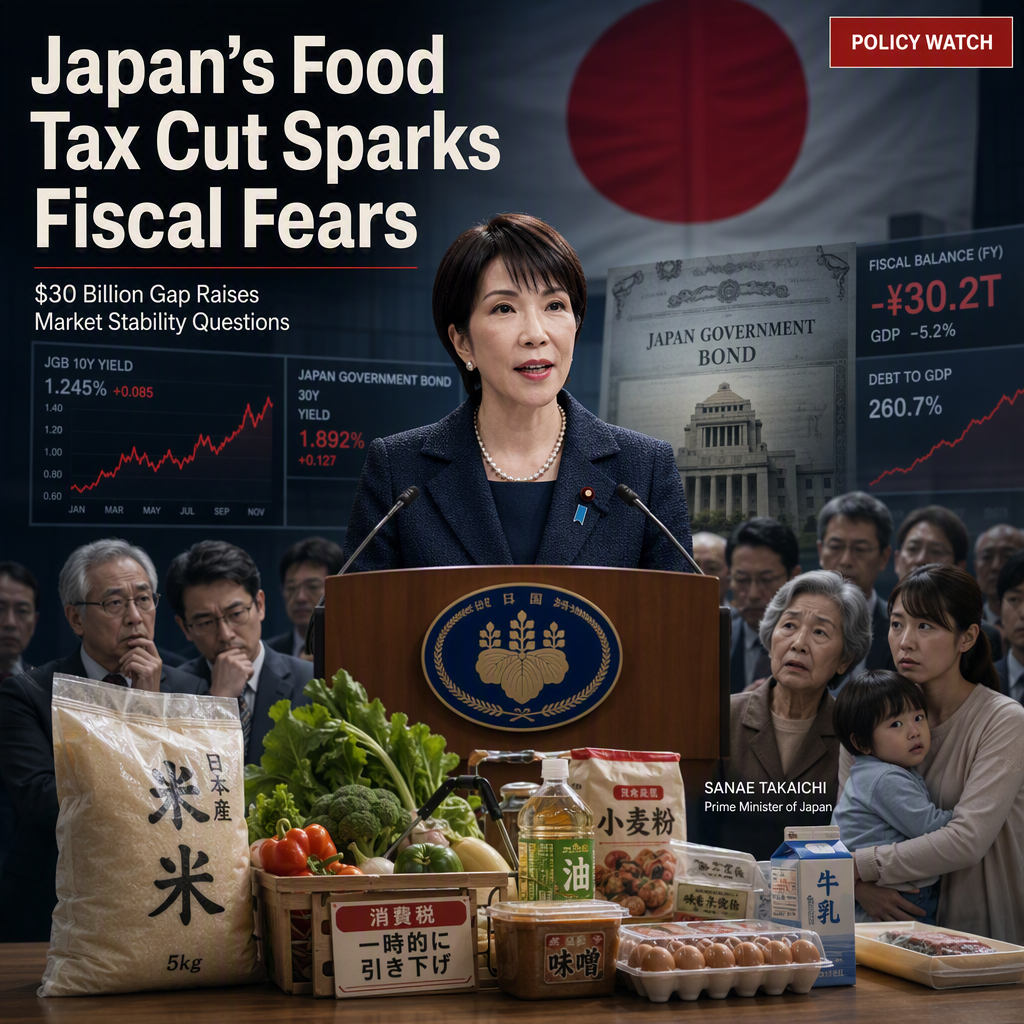
On July 30, Japanese Prime Minister Sanae Takaichi announced plans to temporarily lower the nation's consumption tax on food, a move that has sparked significant debate regarding Japan's fiscal future [1]. The government revealed this policy on Thursday, with critics highlighting that it could erode fiscal discipline and reduce funding for the nation's social security system, thereby increasing reliance on deficit-covering government bonds [1].
Market analysts estimate that the funding shortfall resulting from the proposed tax cut could reach as much as $30 billion, which would likely force the government to issue more bonds to cover the gap [1]. This prospect has raised concerns among investors about Japan's fiscal credibility and the potential for higher interest rates if market confidence is undermined [1].
The editorial further warns that while the measure may be popular among voters facing inflation, it risks Japan's long-term economic stability by shifting the burden of today's costs to future generations [1]. The article calls for responsible policymaking from Prime Minister Takaichi, urging her not to jeopardize the country's fiscal position for short-term political gain [1].
CONCLUSION
Prime Minister Takaichi's proposal to temporarily cut the consumption tax on food has triggered concerns about Japan's fiscal sustainability and market stability. With a potential $30 billion funding gap and increased reliance on government bonds, the policy is seen as a risk to long-term economic health despite its short-term popularity.