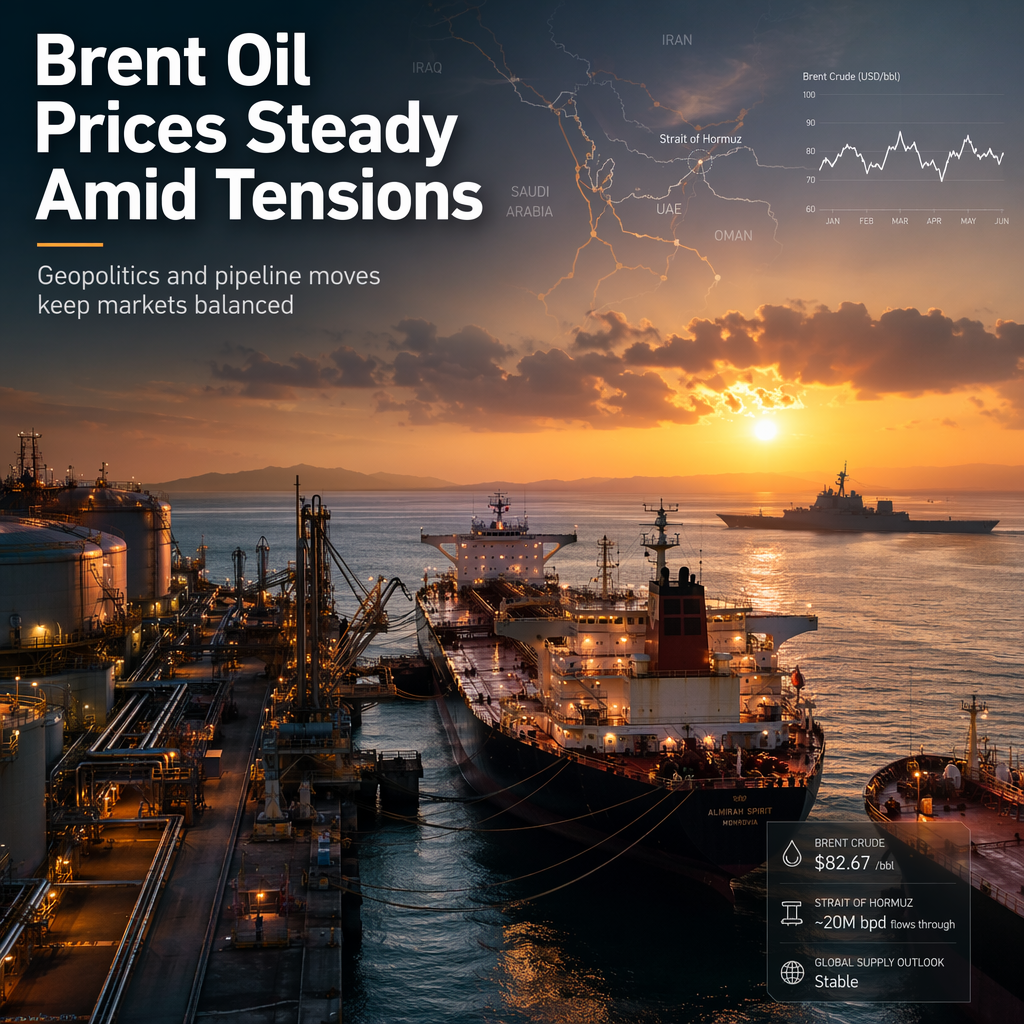
Brent crude oil prices have remained stable at approximately $85-86 per barrel following an aggressive short squeeze, according to Rabobank strategist Michael Every. This price stability aligns with the expectations of energy analyst Joe Delaura, who maintains a neutral stance on Brent and broader LNG dynamics [1].
The article highlights several geopolitical factors influencing the market, including ongoing tensions in the Middle East. President Trump has reportedly threatened to target Iranian power plants and bridges next week if no deal is reached, with Axios reporting that Trump recently held a Situation Room meeting to discuss potential large-scale strikes intended to pressure Tehran in the Strait of Hormuz. Additionally, the Houthis have announced that Saudi airspace is unsafe for overflight, and Israeli Prime Minister Netanyahu has warned Iran of a 'decisive blow' if Israel is attacked [1].
Further, Trump hosted Iraq’s Prime Minister for discussions on a final US troop withdrawal scheduled for the end of September, as well as talks on Iran and oil. The US is supporting efforts to revive an Iraq-Syria crude oil pipeline as an alternative route to bypass the Strait of Hormuz. Trump has also shifted his approach from imposing a 20% toll on Hormuz to seeking GCC foreign direct investment pledges into the US [1].
The article suggests that if the US cannot secure control over Hormuz through military means, it may focus on ensuring the strait does not remain a chokepoint, especially given the US's position as an LNG and helium exporter [1].
CONCLUSION
Brent oil prices are currently stable, supported by geopolitical tensions and strategic efforts to diversify oil transport routes. While the market remains neutral on price direction, ongoing developments in the Middle East and US policy actions could influence future volatility.