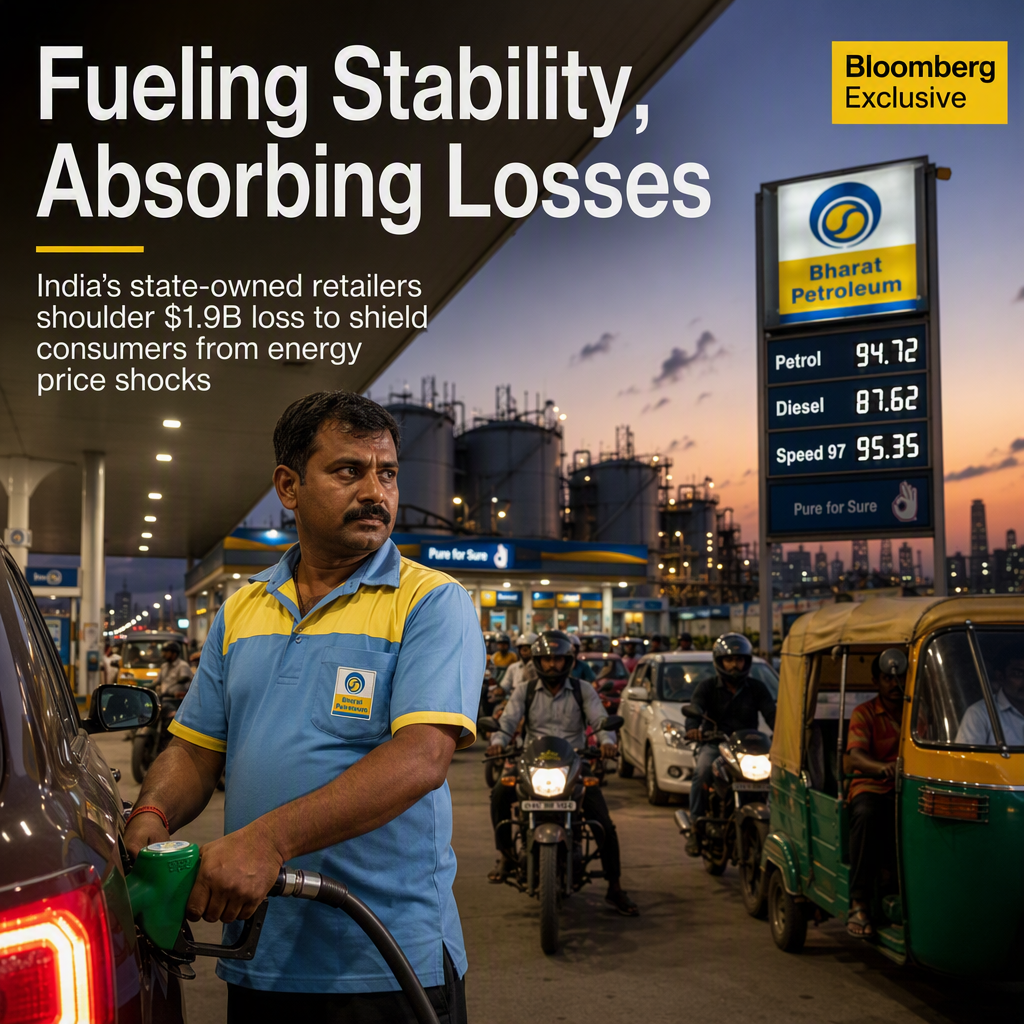
India's state-owned fuel retailers, which control approximately 90% of the domestic market, reported combined losses of about 181.49 billion rupees ($1.90 billion) for the quarter ending in June. These losses were incurred as the companies absorbed the impact of the energy price shock resulting from the U.S.-Iran conflict, shielding customers from the full brunt of rising global energy prices [1]. The oil marketing companies operate around 90,000 fuel retail outlets and typically adjust prices in tandem, effectively acting as proxies for the government in managing retail fuel prices [1].
Despite the higher prices, sales of petrol and diesel have continued to increase, highlighting the ongoing challenge for these companies. They must balance market realities with the government's objective of protecting consumers from sharp fluctuations in global energy markets [1]. The sustained rise in fuel sales, even amid elevated prices, underscores the pressure on these state-owned entities and the broader implications for India's energy sector [1].
CONCLUSION
India's state-owned fuel retailers have absorbed significant losses to shield consumers from global energy price shocks, reflecting the government's commitment to price stability. The continued rise in fuel sales despite higher prices suggests persistent demand, but also signals ongoing financial strain for these companies and potential challenges ahead for India's energy market.