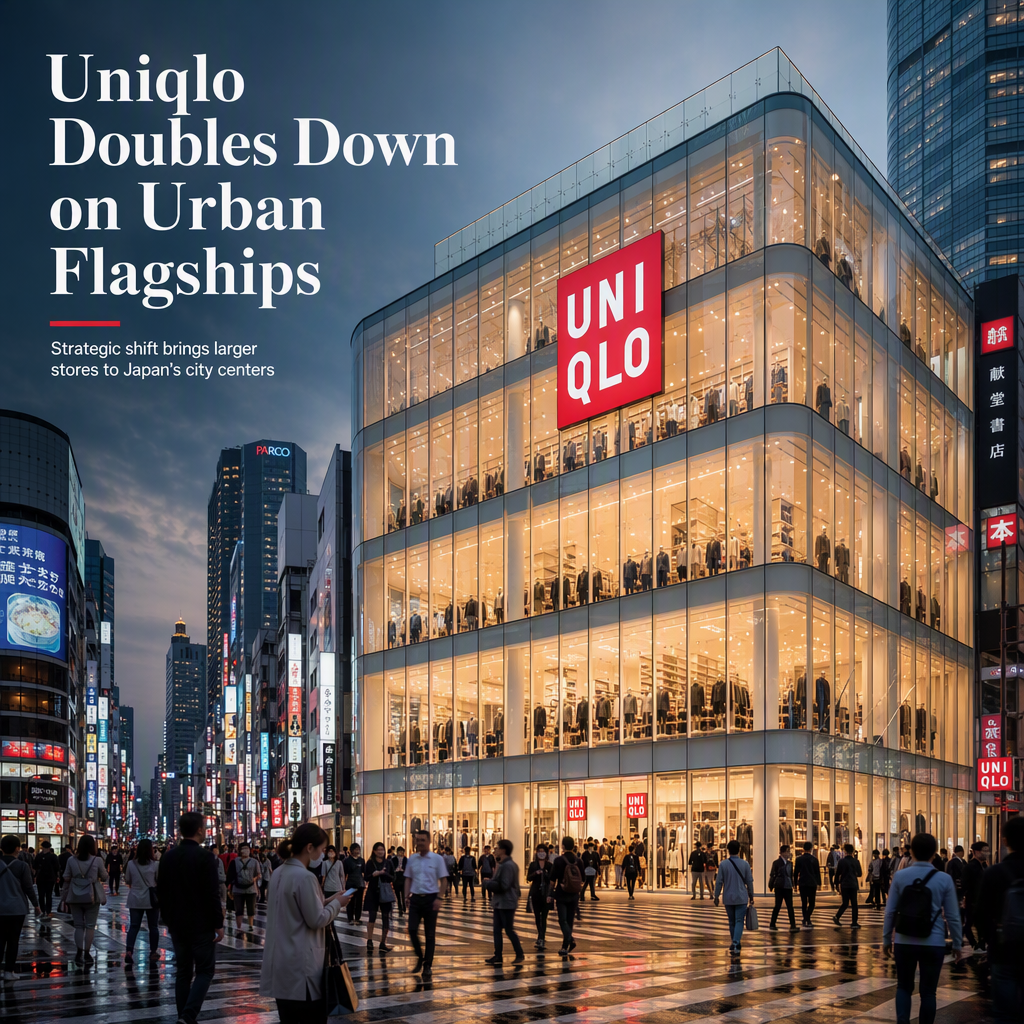
Fast Retailing-owned Uniqlo is undertaking a significant strategic shift in its domestic store expansion, moving away from standardized outlets in shopping centers to focus on flagship stores in major urban centers across Japan [1]. The flagship store in Tokyo's Ginza district is cited as a model for this new approach, with plans to open similar stores in other urban locations [1]. CEO Tadashi Yanai explained that the growth of e-commerce has reduced the need for more standard stores, prompting the company to prioritize larger, more prominent locations that complement its expanding online presence [1].
Uniqlo aims to double the number of flagship stores in Japan, targeting areas with high foot traffic and brand visibility [1]. These flagship stores are designed to offer a wider range of products and showcase the latest designs and innovations, providing customers with an enhanced shopping experience [1]. The strategy reflects Uniqlo's confidence in its brand and its ability to attract customers through larger stores in premium locations, rather than relying on smaller, standardized outlets [1].
While no specific financial data, price levels, or market analysis were provided in the article, the move is positioned as part of Uniqlo's broader strategy to maintain growth in a challenging retail environment [1]. The company is leveraging its successful e-commerce platform while consolidating physical locations for maximum impact, indicating ongoing adaptation to Japan's evolving retail landscape [1].
CONCLUSION
Uniqlo's decision to double its flagship stores in Japan signals a strategic pivot toward urban centers and enhanced customer experiences, driven by the rise of e-commerce. Although no financial figures or market reactions were disclosed, the move is expected to strengthen Uniqlo's brand presence and support growth in a changing retail environment. The market impact is likely medium, given the company's confidence and adaptation to consumer trends.