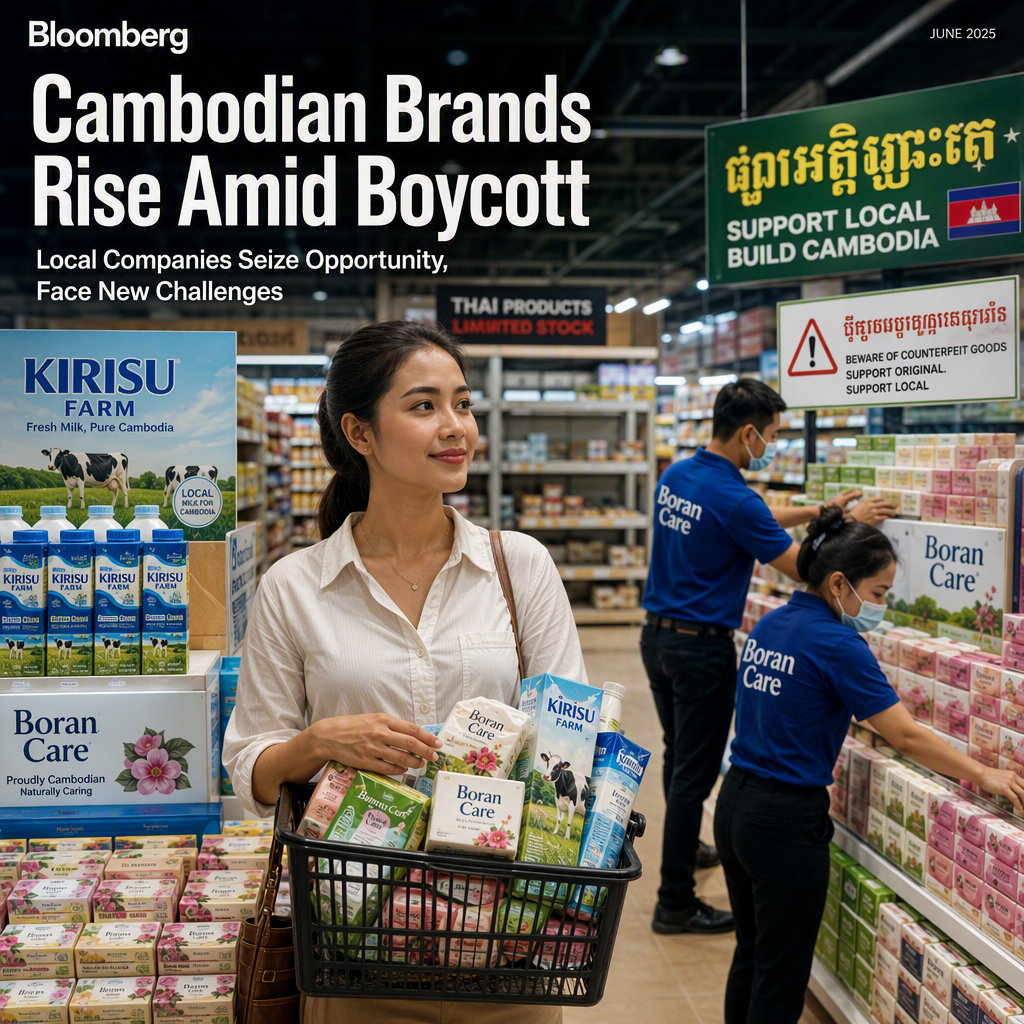
Cambodian consumer companies have experienced a notable boost in sales and market share following a widespread boycott of Thai goods, which began after border clashes between Cambodia and Thailand last year [1]. Sectors such as milk production and soap manufacturing have seen local brands ramp up production and marketing efforts to fill the gap left by boycotted Thai products [1]. For example, Boran Care, a Cambodian soap producer, reported a 30% rise in sales over the past year, attributing this growth to both the boycott and increased consumer awareness of domestic products [1].
Industry sources highlight that the surge in demand for local alternatives has also led to the proliferation of counterfeit products mimicking both Thai and Cambodian brands, prompting calls for stricter regulation and quality controls [1]. Kirisu Farm, a local company, stated, "We have seen a significant increase in sales since the boycott began. Consumers are looking for trusted domestic products, and we are working to meet that demand" [1].
Market observers caution that the sustainability of this trend depends on ongoing tensions between Cambodia and Thailand and the ability of Cambodian companies to maintain quality standards [1]. Analysts warn that the proliferation of counterfeit goods threatens consumer trust and the reputation of legitimate local brands [1].
Industry leaders emphasize the need for investment in quality control, branding, and logistics to solidify their position in the market. A spokesperson for a Phnom Penh-based manufacturing group stated, "The current climate gives us an opportunity, but we must ensure our products meet international standards to compete beyond the boycott period" [1].
CONCLUSION
The boycott of Thai goods has provided Cambodian consumer companies with a significant opportunity to expand their market share and sales. However, the long-term sustainability of this growth depends on maintaining product quality and addressing the proliferation of counterfeit goods. Continued investment in quality control and branding will be crucial for Cambodian companies to capitalize on this momentum beyond the current boycott period.