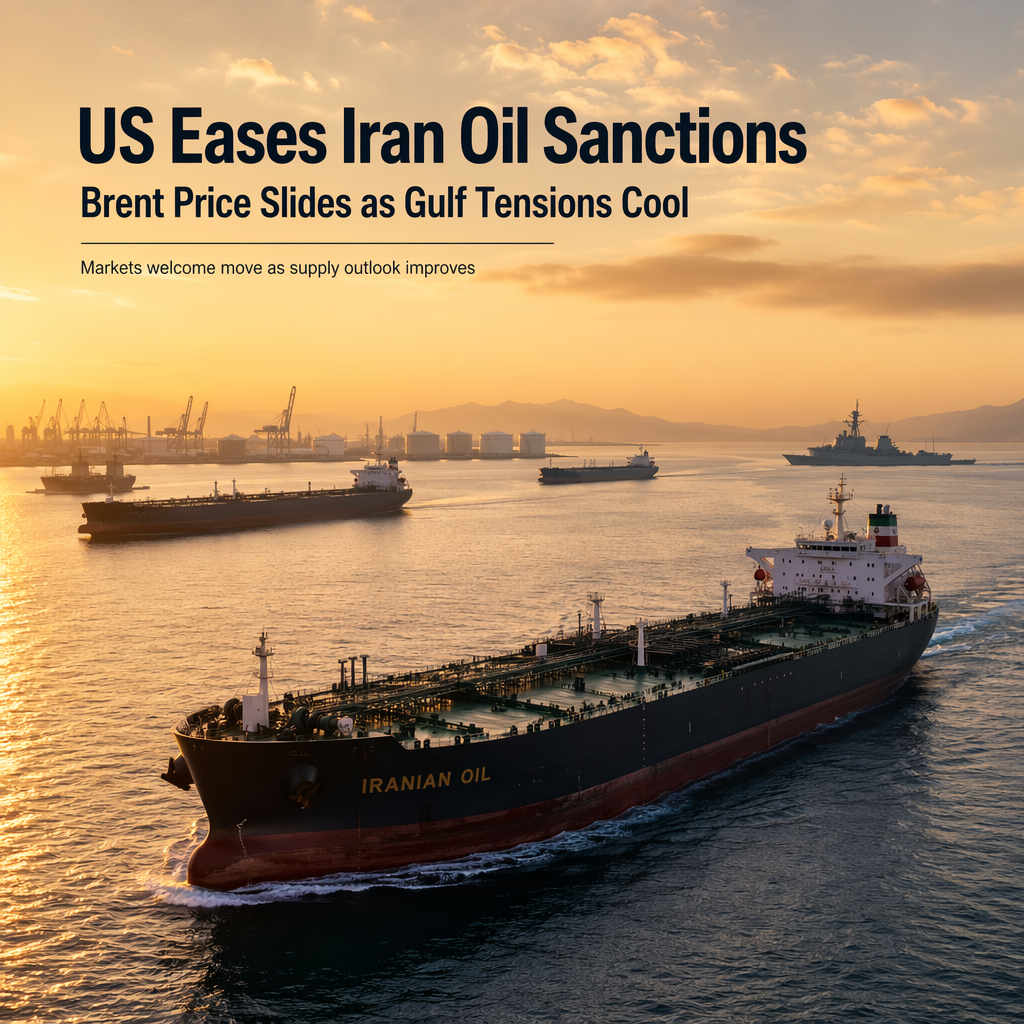
The United States has issued a sweeping rollback of sanctions on Iranian oil, granting a 60-day exemption that allows Iran to produce and sell crude oil, petrochemical, and petroleum products in U.S. dollars through August 21, 2026 [3]. This move, described as the most significant easing of American oil sanctions since 1979, is expected to unlock billions of dollars in revenue for Iran and unfreeze a floating inventory of approximately 67 million barrels of Iranian crude stranded in the Gulf, potentially delivering a financial windfall of $8 to $9 billion according to Miad Maleki, a former Treasury sanctions official [3]. Chinese state and independent refineries are anticipated to ramp up purchases of Iranian oil during this window [3].
The sanctions relief follows a memorandum of understanding signed last week between the U.S. and Iran, with talks in Switzerland yielding positive progress toward a final peace deal [3]. As a result, Iranian crude exports have increased, with 6.79 million barrels shipped out last week, the highest level in two months according to maritime intelligence firm Windward [3]. U.S. President Donald Trump stated that the oil profits are intended for Iran to purchase American agricultural goods, not to rebuild its military [3].
Market reaction has been swift: Brent crude prices have dropped below $80 per barrel as markets price in a high probability of normalized flows through the Strait of Hormuz, following incremental progress in U.S.-Iran talks over the weekend [1]. OCBC maintains its end-2026 Brent forecast at $80 per barrel, noting that operational frictions such as mine clearance, insurance reinstatement, and production restarts will take time, and precautionary stockpiling is expected to slow further downside in oil prices [1].
Societe Generale analysts report that prompt Brent and WTI prices have fallen by $25–30 per barrel since early May, as traders anticipate the restart of Hormuz flows and the return of around 12 million barrels per day of disrupted Middle East supply, including Iranian exports [2]. However, they note that the Brent curve remains elevated, reflecting a persistent risk premium and slow normalization of Gulf exports [2]. Full normalization of flows is expected to take several months or longer, with Societe Generale estimating approximately 45 days to return to pre-war flow levels, as tanker operators await mine clearance and resolution of maritime control and transit fee disputes [2]. Ongoing regional tensions, including Israeli strikes in Lebanon and delays to planned talks, continue to contribute to market uncertainty [2].
CONCLUSION
The U.S. rollback of Iran oil sanctions has triggered a sharp drop in Brent prices and is expected to deliver a significant financial boost to Iran, while also easing immediate supply concerns. However, analysts caution that operational hurdles and persistent regional tensions will likely slow the full normalization of oil flows and keep a risk premium in place. Markets are reacting positively to the progress, but uncertainty remains over the durability of the U.S.-Iran deal and the pace of Gulf export recovery.