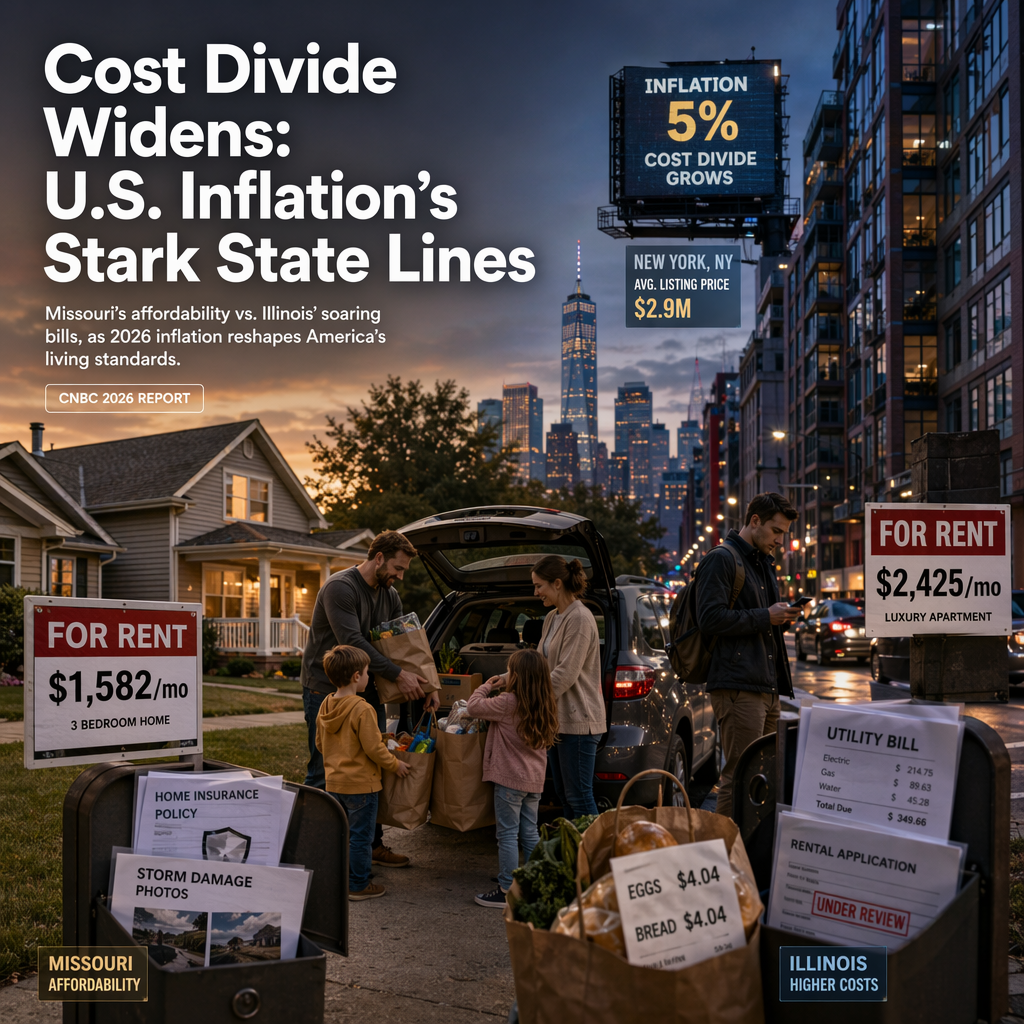
According to CNBC's 2026 Top States for Business study, the cost of living in the United States varies dramatically by state, with some residents facing significantly higher inflationary pressures than others [1][2]. The study, now in its 20th year, evaluates states based on an index of prices for a broad range of goods and services, housing affordability, and insurance costs, with Cost of Living accounting for 2% of each state's total competitiveness score [1][2].
Federal Reserve Chairman Kevin Warsh addressed the burden of persistently high prices in his first news conference as chairman on June 17, stating, 'Persistently high prices are a burden for the American people' [1]. At his Senate confirmation hearing on April 22, Warsh emphasized the regressive nature of inflation, calling it 'the most regressive tax that anyone in Washington could come up with' [2].
Missouri stands out as one of America's cheapest states in 2026, with an average rent for a three-bedroom home at $1,582, the fifth-lowest in the country as a percentage of median income, and an average home price in Springfield of $478,702 [1]. The Consumer Price Index for the Midwest Region, which includes Missouri and Illinois, rose 5% year-over-year in May 2026 [1][2]. However, insurance costs in Missouri are rising, with premiums projected to increase another 7% this year due to severe weather events, including a tornado in St. Louis that caused $1.6 billion in damage last year [1]. Missouri received a Cost of Living score of 34 out of 50 points (grade: B+) [1].
In contrast, Illinois is among the most expensive states, with nearly a third of residents spending more than 30% of their monthly income on housing [2]. The average rent for a three-bedroom home in Illinois is $2,425, more than 40% higher than in Ohio, and the average home price in Chicago is $642,053 [2]. The monthly energy bill averages $188.44, while a dozen eggs and a loaf of bread each cost $4.04 in the first quarter of 2026 [2]. Illinois received a Cost of Living score of 17 out of 50 points (grade: D+) [2]. The state government has allocated $100 million toward affordable housing programs and $50 million for down payment assistance in the 2027 fiscal year budget [2].
The New York City metro area is noted as the most expensive for renters, with the average home price in Manhattan reaching $2.9 million in the first quarter of 2026 [2].
CONCLUSION
The CNBC reports highlight a growing disparity in cost-of-living pressures across U.S. states in 2026, with states like Missouri remaining relatively affordable while states such as Illinois and New York face steep housing and living costs. Inflation remains a central concern for policymakers and residents, influencing both state competitiveness and household budgets.