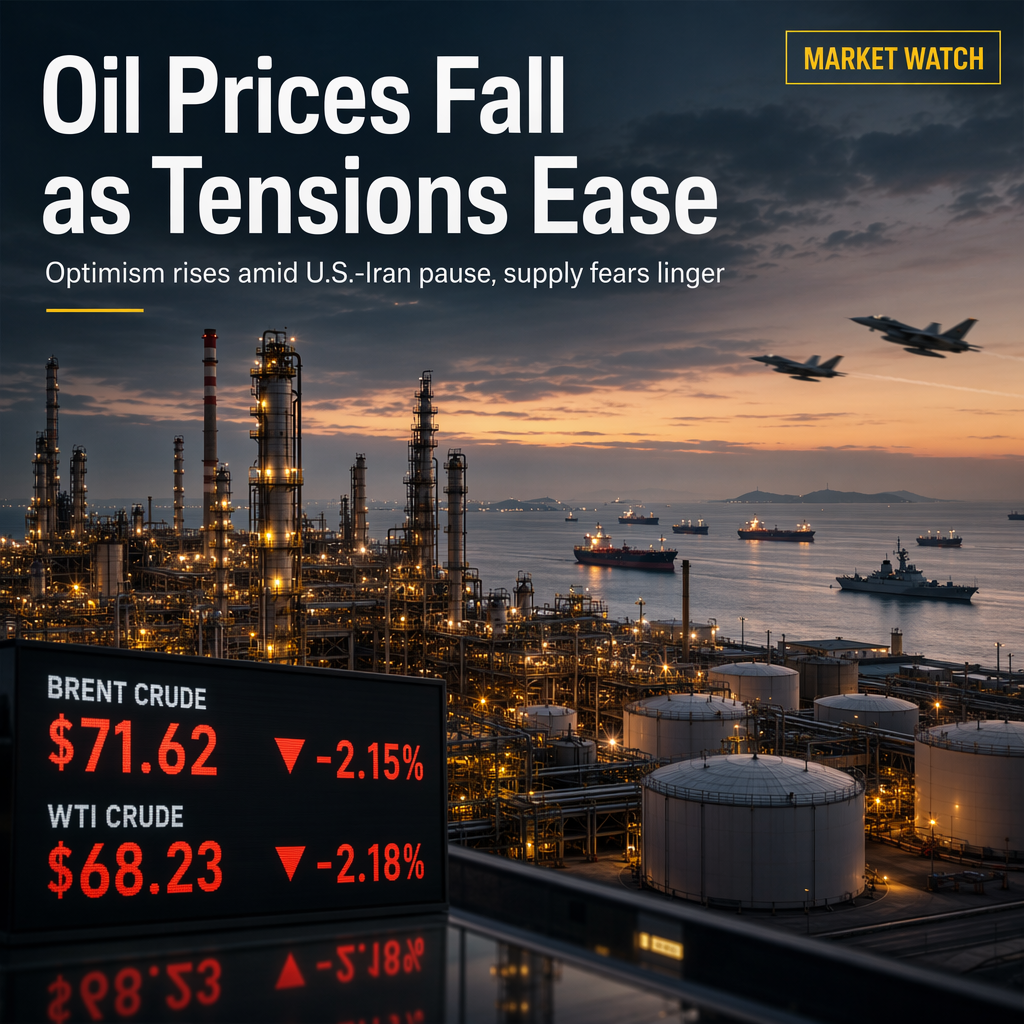
Oil prices fell sharply on Tuesday, with international benchmark Brent crude futures for September delivery dropping more than 2% to $86.52 a barrel, and U.S. West Texas Intermediate crude futures for September delivery declining 2.3% to $80.71 a barrel [1]. The decline followed a temporary pause in fighting between the U.S. and Iran, which has raised hopes for de-escalation in the ongoing Middle East conflict that has disrupted energy supplies [1].
Although Tehran has rejected reports of agreeing to a 10-day ceasefire with the U.S., the current pause in hostilities comes after reports of diminished U.S. munitions. President Donald Trump, who previously indicated he was considering a "massive attack" on Iran, later decided against such action due to concerns about arms stockpiles, according to The New York Times [1]. However, Trump subsequently dismissed suggestions of a shortage, stating the U.S. military had "plenty" of ordnance while speaking to reporters aboard Air Force One [1].
The Commonwealth Bank of Australia noted that the recent drop in oil prices reflects reduced concerns about an immediate escalation between the U.S. and Iran. The bank cautioned, however, that risks to global energy supplies remain elevated. It warned that while the pause in hostilities has weakened expectations of conflict expanding to attacks on civilian and energy infrastructure, ongoing disagreements over the critical Strait of Hormuz shipping lane could lead to renewed hostilities [1].
CONCLUSION
The pause in U.S.-Iran hostilities has led to a notable decline in oil prices, reflecting market optimism for de-escalation. However, analysts warn that supply risks remain high, especially given unresolved tensions over the Strait of Hormuz. The situation remains fluid, with potential for renewed volatility if hostilities resume.