
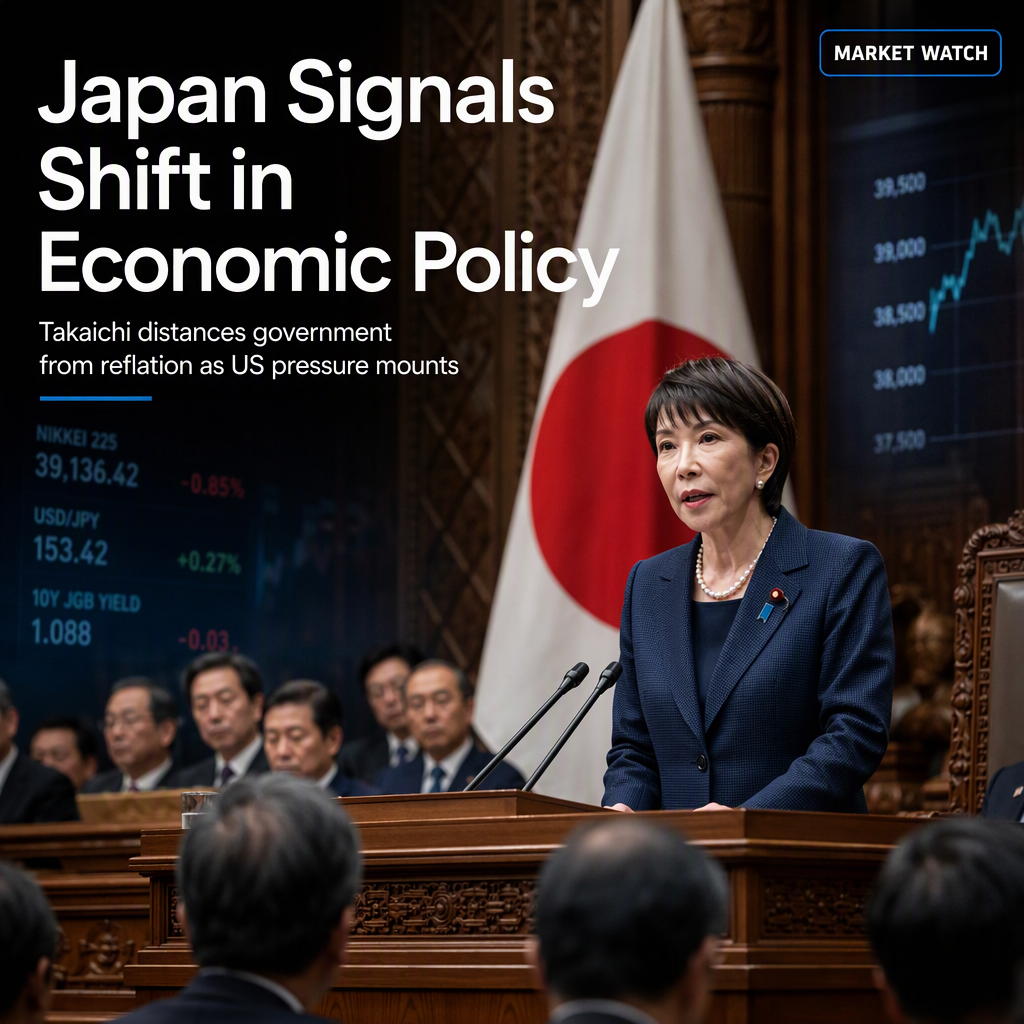
Japanese Prime Minister Sanae Takaichi has publicly distanced her administration from reflationary economic policies, signaling a shift in Japan's monetary stance in response to concerns from both market participants and the Trump administration in the United States [1]. During a parliamentary session on October 8, Takaichi stated, 'this is not a phase in which reflationary policies are necessary,' directly addressing apprehensions about Japan's approach to interest rate hikes and inflation management [1].
The move comes amid criticism from the Trump administration directed at dovish members of the Bank of Japan (BOJ) board, who have been perceived as slow to tighten monetary policy [1]. This has fueled speculation regarding future BOJ decisions and the government's overall stance on inflation and yield curve control [1]. Market analysts are closely monitoring for further signals from both the government and the BOJ about potential rate hikes and policy normalization [1].
Takaichi's rhetoric is widely interpreted as an effort to demonstrate fiscal discipline and align Japan's policies with global trends, particularly in response to US calls for more proactive measures to address inflation and maintain currency stability [1]. The market reaction to these developments has been mixed, with some investors expecting a gradual normalization of policy, while others remain cautious about the timing and pace of any changes [1].
No specific price levels, technical indicators, or chart analyses were provided in the article, but the overall sentiment reflects heightened scrutiny on Japan's economic policy direction and the BOJ's future actions [1].
CONCLUSION
Prime Minister Takaichi's statements mark a notable shift in Japan's economic policy rhetoric, aiming to reassure both domestic and international stakeholders. While the market response has been mixed, the focus remains on upcoming signals from the government and the BOJ regarding potential policy adjustments.