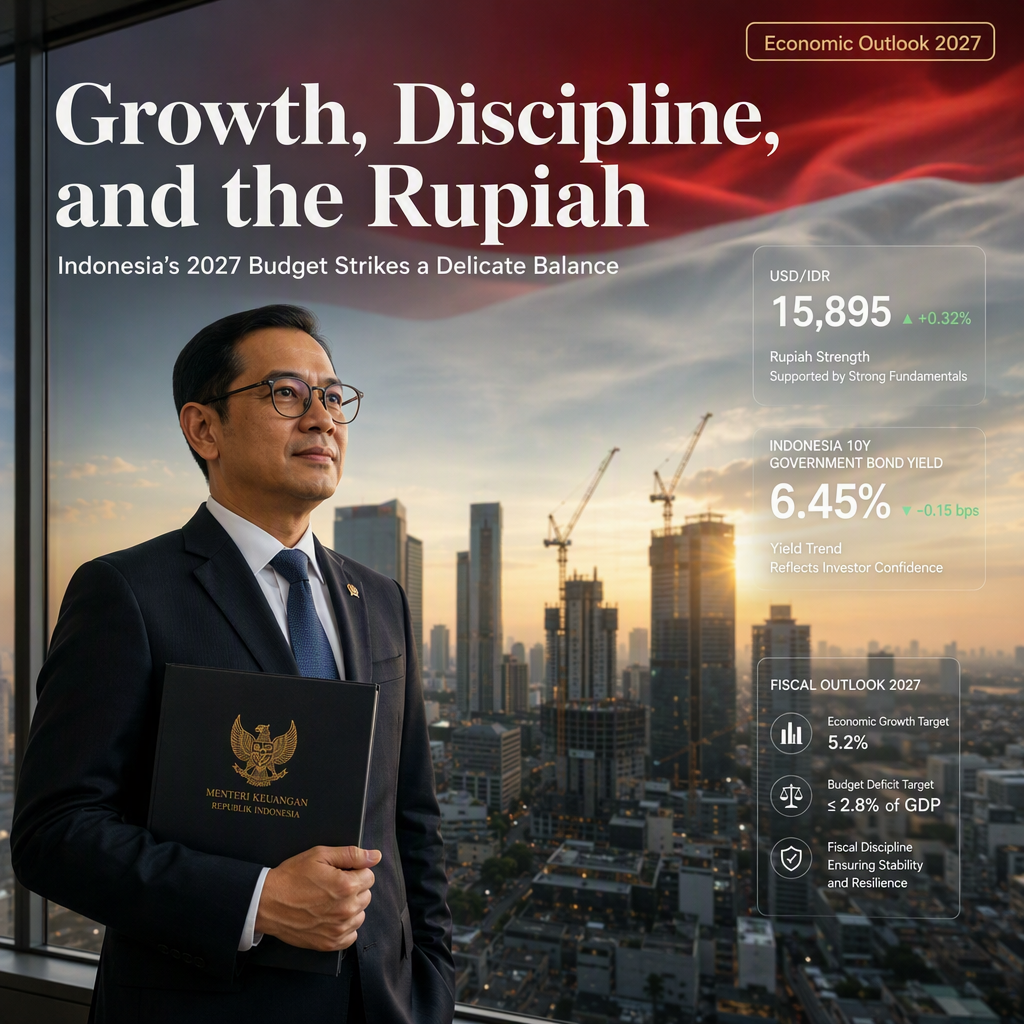
Indonesia’s 2027 State Budget, as reviewed by UOB economist Enrico Tanuwidjaja, emphasizes a calibrated balance between economic growth and fiscal discipline, which is seen as crucial for the stability of the Rupiah and local bonds [1]. The budget sets an economic growth target of 6.0%, underpinned by strategic public investment and prudent fiscal management, with the fiscal deficit projected to narrow to 2.40% of GDP [1].
Key assumptions in the budget include a Rupiah exchange rate of Rp17,500 per US dollar, reflecting ongoing global financial market volatility and the continued strength of the U.S. dollar [1]. The 10-year government bond (SBN) yield is assumed at 6.90%, based on expectations of stable domestic liquidity conditions and manageable sovereign risk premiums [1].
The report notes that prolonged high interest rates in advanced economies or sustained U.S. dollar strength could exert additional pressure on the Rupiah and increase government borrowing costs, highlighting the need for close coordination between fiscal authorities and Bank Indonesia [1]. Financing requirements are expected to be met through a disciplined mix of domestic and international sovereign bond issuance, which is intended to maintain market confidence and funding flexibility [1].
CONCLUSION
Indonesia’s 2027 State Budget aims to balance growth and fiscal discipline, with explicit targets for GDP growth, deficit, and the Rupiah exchange rate. While the outlook is supported by prudent policies, external risks such as global interest rates and dollar strength remain key factors to monitor.