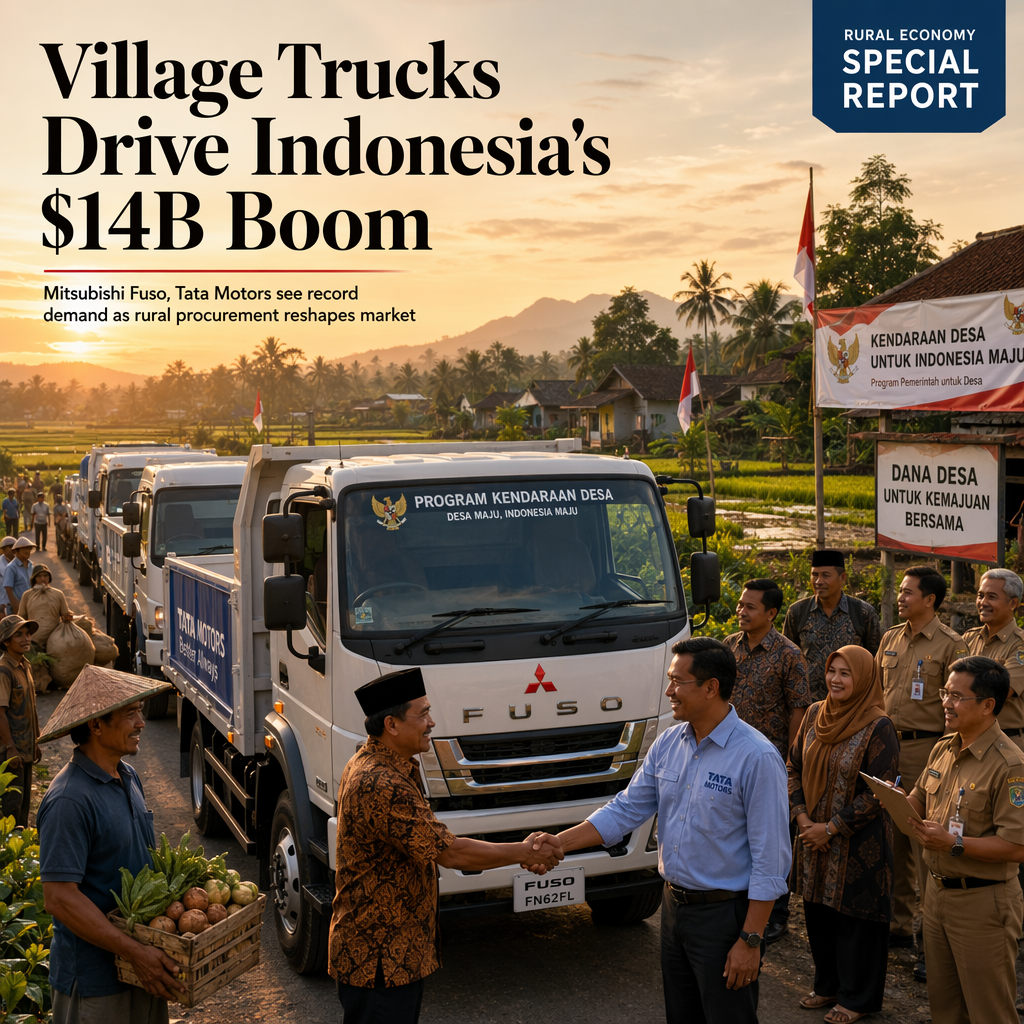
Indonesia's commercial vehicle market is experiencing a significant boost following a government plan to procure more than 100,000 vehicles for villages across the country, a key initiative under President-elect Prabowo Subianto's administration [1]. The proposed program, valued at $14 billion, aims to support village cooperatives, enhance rural logistics, and stimulate the commercial vehicle sector [1].
Mitsubishi Fuso, a leading player in Indonesia's commercial vehicle market, has reported a surge in orders since the announcement of the government program [1]. Tata Motors, another major manufacturer, is also increasing production to meet the anticipated demand from village-level buyers [1]. The scale of the procurement, with over 100,000 vehicles to be distributed, represents one of the largest government-driven boosts for Indonesia's truck and commercial vehicle market in recent years [1].
Industry analysts highlight that the initiative is expected to benefit not only vehicle manufacturers but also parts suppliers and logistics providers [1]. Local stakeholders, including village cooperatives and officials, have expressed strong support for the program, emphasizing its potential to improve market access and enhance the efficiency of agricultural supply chains [1]. The program is seen as a central component of Prabowo's broader economic agenda, which focuses on strengthening rural economies and addressing infrastructure gaps [1].
Market observers are closely monitoring for formal tender announcements and detailed procurement schedules, which are expected to provide further clarity on the volume and specifications of vehicles required [1]. As the program unfolds, Mitsubishi Fuso, Tata Motors, and other commercial vehicle brands are expected to compete for additional contracts, potentially reshaping the competitive landscape of Indonesia's automotive sector [1].
CONCLUSION
Indonesia's $14 billion vehicle procurement program is driving a surge in truck orders for Mitsubishi Fuso, Tata Motors, and other commercial vehicle makers. The initiative is poised to significantly impact the automotive sector, benefiting manufacturers, suppliers, and rural economies. Market participants are awaiting further details on tenders and procurement schedules, which will shape future competition and market dynamics.