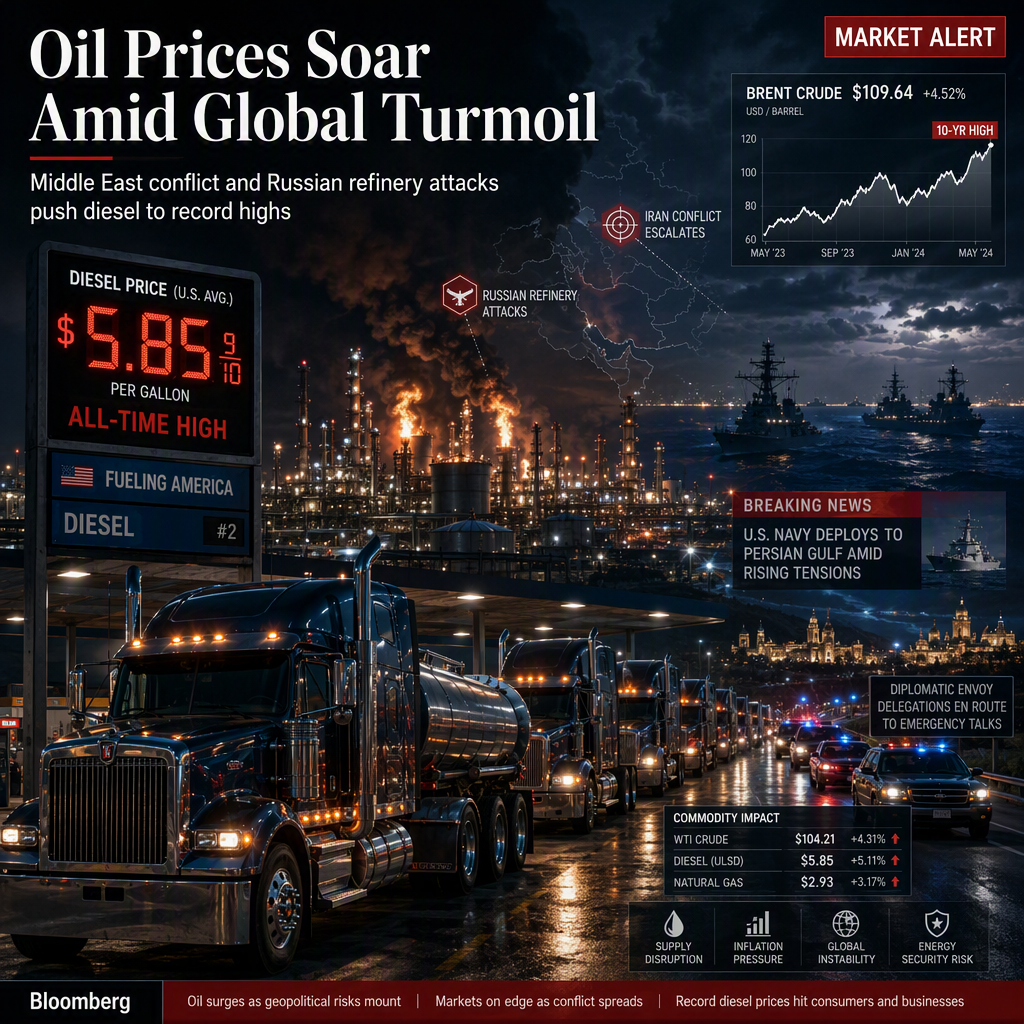
The ongoing conflict in the Middle East, particularly involving Iran, continues to intensify with no diplomatic resolution in sight, according to statements from U.S. Energy Secretary Chris Wright. Wright indicated that a nuclear agreement with Tehran is unlikely, and suggested that if Iran attempts to rebuild its nuclear capabilities, the U.S. may be forced to destroy them again. He stated, 'We are degrading their capacity to develop nuclear weapons and ultimately to deliver them if they develop them' [1]. These comments mark a shift from earlier assurances by the Trump administration, which had characterized the conflict as a 'little excursion' and promised to avoid a 'forever war.' The situation now appears to be evolving into a prolonged engagement [1].
On Saturday, U.S. forces targeted three Iranian crude oil carriers in response to the Islamic Revolutionary Guard Corps launching ballistic missiles toward two U.S. Navy warships, as confirmed by U.S. Central Command [1]. Simultaneously, Ukrainian attacks on Russian refineries have further strained global oil markets. Over the weekend, U.S. peace envoys Jared Kushner and Steve Witkoff traveled to Moscow and Kyiv to seek a resolution to the Russia-Ukraine conflict, but no immediate breakthrough was achieved. Meanwhile, Kyiv's strike on a Russian refinery added additional pressure to oil prices [1].
As a result of these geopolitical tensions, oil prices remain elevated, and U.S. diesel prices have reached a record high. Truckers are now paying an average of $5.85 per gallon nationwide, representing a nearly 60% increase compared to the same period last year, when diesel cost $3.71 per gallon. John Kilduff, partner at energy hedge fund Again Capital, emphasized the broad impact of these higher diesel prices, noting that all goods delivered by truck will be affected, regardless of consumer behavior [1].
The sustained rise in energy prices is also increasing pressure on the Federal Reserve, as the Trump administration intensifies its focus on Federal Reserve Chair Kevin Warsh. The article suggests that the combination of geopolitical instability and rising fuel costs is creating significant economic and policy challenges [1].
CONCLUSION
The escalation of the Iran conflict and Ukrainian attacks on Russian refineries have driven oil and diesel prices to new highs, impacting consumers and increasing economic pressure. With no diplomatic breakthroughs in sight and the U.S. administration signaling a tougher stance, markets are likely to remain volatile. The situation is also intensifying scrutiny on the Federal Reserve as policymakers grapple with the inflationary effects of rising energy costs.