
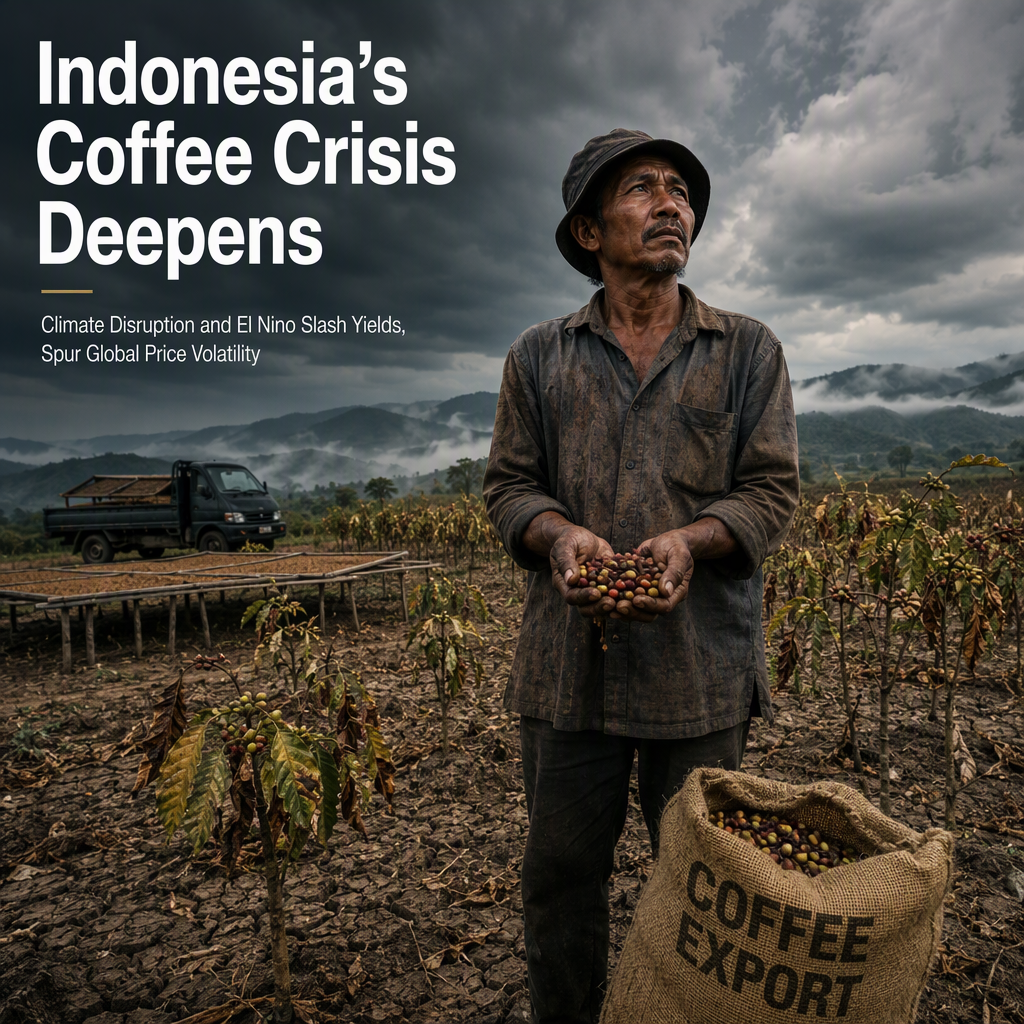
Indonesia, the world's fifth-largest coffee producer, is grappling with significant disruptions in its coffee trade due to the effects of climate change and the El Nino phenomenon, according to industry sources and local stakeholders [1]. Farmers in southern Sumatra report stunted coffee trees and reduced production, with extreme temperatures and unpredictable rainfall threatening both livelihoods and the supply chain [1]. Exporters warn that Indonesia's coffee output this year is expected to fall below historical averages, with some estimates indicating a drop of 10-20% compared to previous years [1]. This decline has led to tighter supply and rising costs, pushing up local prices and creating volatility in international markets [1].
Traders note that robusta coffee futures have shown upward price momentum, with resistance levels at $2,200 per metric ton and support at $1,950, reflecting increased uncertainty in the market [1]. The impact has cascaded down to cafes and retailers, resulting in price increases for consumers [1]. Market analysts caution that continued instability in climate patterns could prolong challenges for Indonesia's coffee sector, potentially shifting global sourcing dynamics and affecting supply to major buyers in Japan, the US, and Europe [1].
Technical analysis suggests ongoing volatility in coffee prices, with traders advised to monitor resistance levels and weather developments closely for trading signals [1]. Stakeholders across the supply chain are calling for greater investment in climate resilience and sustainable farming practices to safeguard the industry's future [1]. Overall sentiment remains cautious, with concerns about the sector's ability to adapt and compete globally amid worsening climate conditions [1].
CONCLUSION
Indonesia's coffee industry is facing a high-impact supply crunch as climate change and El Nino drive yields lower and prices higher. Market volatility is expected to persist, with analysts urging close monitoring of weather patterns and price resistance levels. The sector's future hinges on investment in climate resilience and sustainable practices.