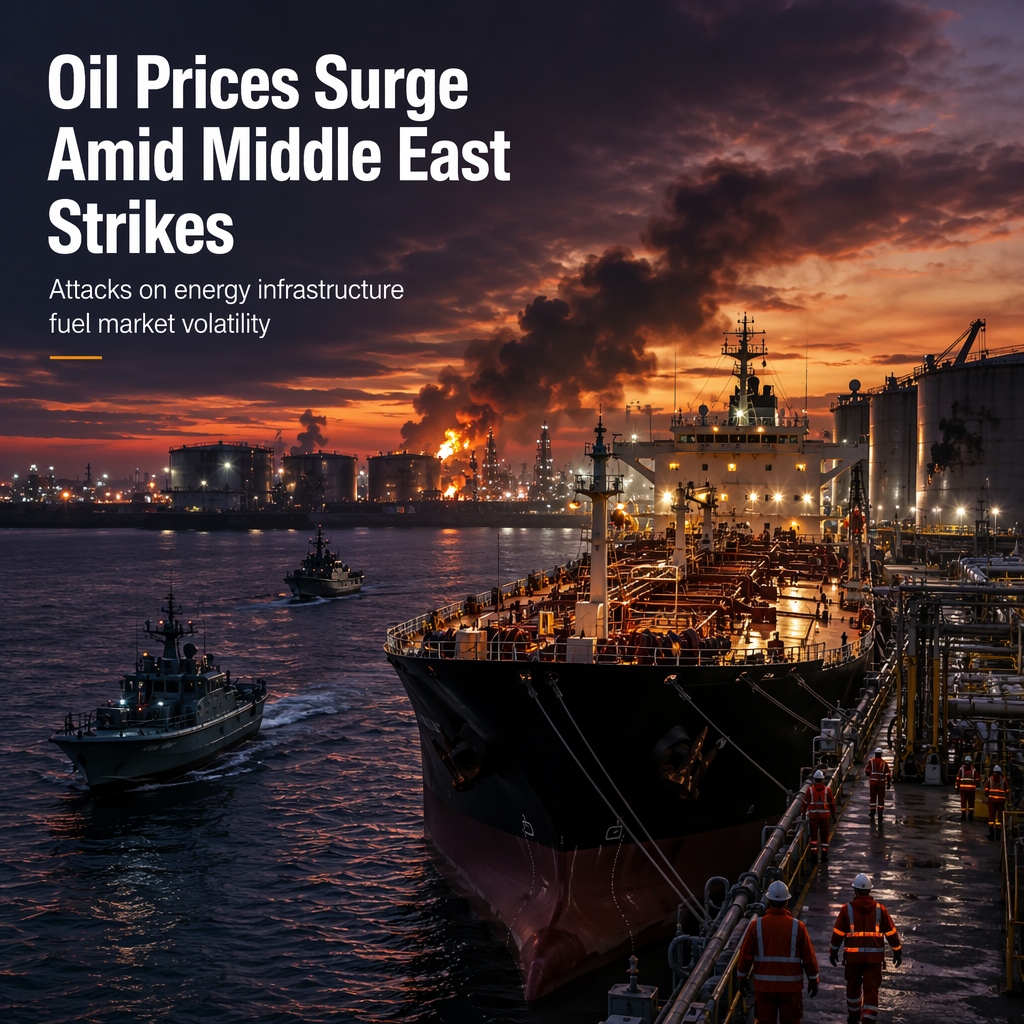
Oil prices rebounded sharply after several days of losses, with West Texas Intermediate (WTI) trading near $81.00 per barrel during European hours on Wednesday, and Brent rising more than 4% in early morning trading, according to ING analysts Warren Patterson and Ewa Manthey [1][2]. The rally was triggered by renewed hostilities in the Middle East, including a surprise Iranian attack intercepted by the US military targeting American troops, and drone strikes by Iran-backed militias in Iraq against Saudi Arabia’s Eastern Region oil facilities for a second consecutive day. Saudi Arabia also intercepted drones targeting its energy infrastructure [1][2]. The full extent of the damage remains unclear, but there are reports that the 400,000 b/d Jazan refinery in Saudi Arabia has shut following Houthi attacks over the weekend, which, if confirmed, would exacerbate tightness in the refined products market already strained by disruptions in the Persian Gulf and Russia [2].
Diplomatic efforts to ease maritime tensions failed as Iran rejected Oman’s proposal for shared control of the Strait of Hormuz, insisting on full control of the inbound shipping lane and part of the outbound route [1]. ING analysts highlighted that halted traffic through the Strait of Hormuz and ongoing attacks increase the risk of prolonged supply disruptions, particularly in middle distillates. This tightness is reflected in the ICE gasoil crack, which has broken above $70/bbl to record levels, and the prompt ICE gasoil timespread, which surged to a backwardation above $80/bbl [2].
Fundamental data further supported the price rally, as API reported a 3.3 million barrel decline in US crude oil inventories last week, underscoring ongoing supply tightness [1]. OPEC+ is expected to announce a supply increase of 188,000 b/d for September at its meeting on 2 August, marking the full unwinding of the 1.65 million b/d voluntary cuts announced in 2023. However, reports suggest the group will likely pause any further supply increases after September [2]. Despite these disruptions, ING analysts maintain a broadly well-supplied market outlook through 2027, though they note significant uncertainty around OPEC+ policy and potential pushback on output quotas, especially given the disruptions faced by several producers this year [2].
CONCLUSION
Escalating geopolitical tensions and attacks on energy infrastructure in the Middle East have driven oil prices higher, with both WTI and Brent rebounding after recent losses. While OPEC+ plans to increase supply in September, ongoing disruptions and policy uncertainties are expected to keep the market volatile, particularly in refined products and middle distillates.