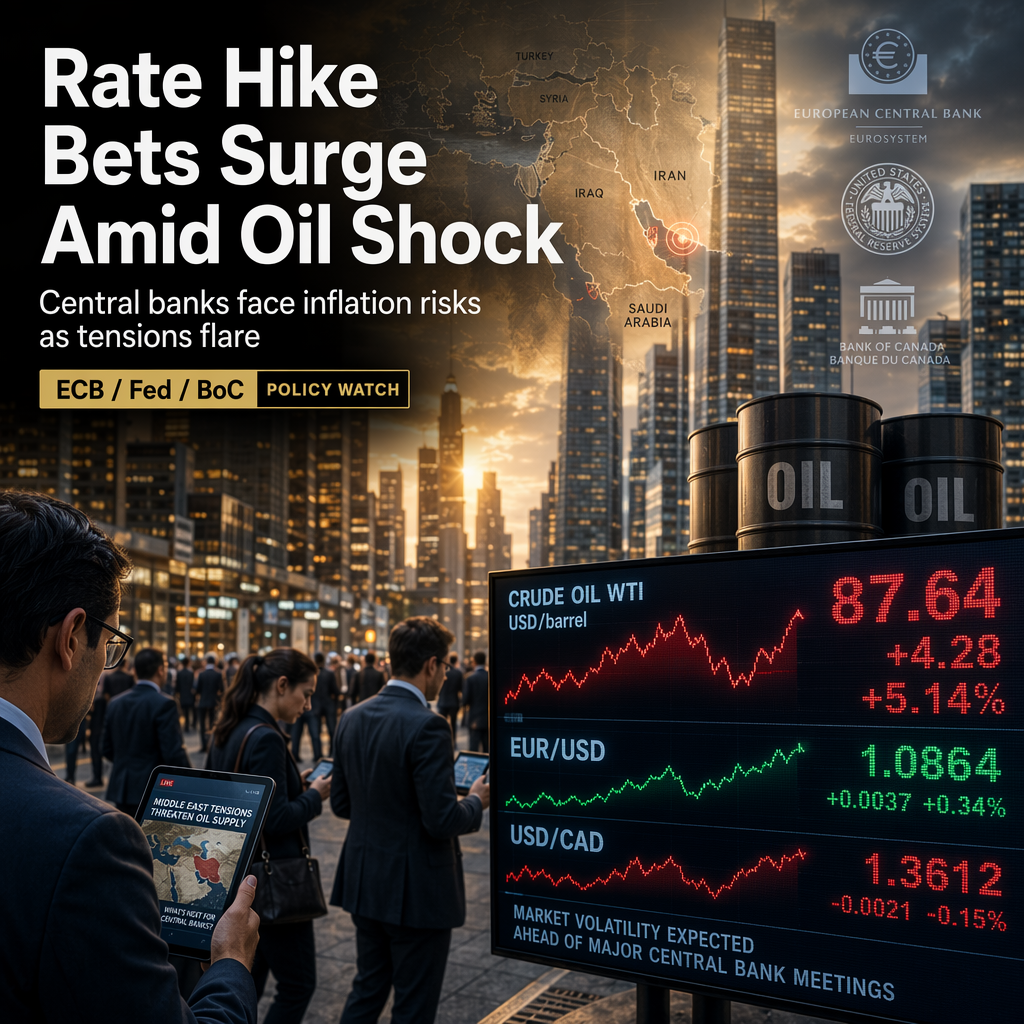
Recent developments in the Middle East, particularly renewed hostilities between the United States and Iran, have heightened market focus on energy prices and their impact on global inflation and central bank policy. Nordea’s Jan von Gerich stated that the European Central Bank (ECB) is likely to continue tightening monetary policy, with a September rate hike now seen as probable, especially as the July move appears unlikely following lower inflation and a drop in oil prices earlier in June. However, the recent spike in crude oil prices due to renewed Middle East tensions underscores ongoing uncertainties, and several ECB Governing Council members have commented that upside price risks remain [1].
The Euro has held firm, with EUR/USD trading around 1.1444, up 0.25% on the day, as traders assess both the geopolitical risks and the interest rate outlook. The US Dollar Index (DXY) trades near 100.90 after touching an intraday low of 100.79. Energy-driven inflation risks have resurfaced as oil prices rebound on security concerns around the Strait of Hormuz, which handles about 20% of global oil flows. As a result, markets anticipate another ECB rate hike later this year, and the CME FedWatch Tool shows a 63% probability of a Federal Reserve (Fed) rate hike at the September meeting. Minutes from both the ECB's and the Fed's June meetings indicate that policymakers remain concerned about upside inflation risks. Next week's inflation data from both sides of the Atlantic is expected to be closely watched for further policy clues [2].
Federal Reserve Bank of New York President John Williams reiterated that inflation remains 'far too high,' emphasizing that the Fed is actively debating various inflation scenarios as energy prices, artificial intelligence investment, and productivity trends shape the outlook. Williams noted that while markets expect oil prices to decline over the next six to twelve months, monetary policy remains focused on how energy prices feed through into inflation. He also highlighted that AI investment is currently adding to demand and cost pressures, but expects broader AI adoption to boost productivity over time [3].
In the currency markets, the Canadian Dollar (CAD) remains rangebound against the US Dollar (USD), trading around 1.4170, as weakness in the USD offsets the negative impact of lower oil prices on the CAD. Despite ongoing Middle East tensions and a recent rally in oil, traders are unwinding bullish oil positions, weighing on the CAD. However, expectations that the Bank of Canada (BoC) could resume tightening later this year are providing some support, with swap markets pricing a roughly 60% chance of a rate hike before year-end, up from around 40% earlier in the week. The BoC left its policy rate unchanged at 2.25% in June. Stronger-than-expected US labor market data, with Initial Jobless Claims declining to 215K, has provided some support to the USD, but broader market sentiment and geopolitical developments are keeping USD/CAD in a narrow range [4].
CONCLUSION
Geopolitical tensions and energy price volatility are reinforcing expectations for further central bank tightening in both Europe and North America. While the ECB and Fed remain focused on inflation risks, market participants are closely monitoring upcoming inflation data and policy signals. Currency markets are reflecting these uncertainties, with the Euro and Canadian Dollar showing resilience amid shifting rate hike expectations.