
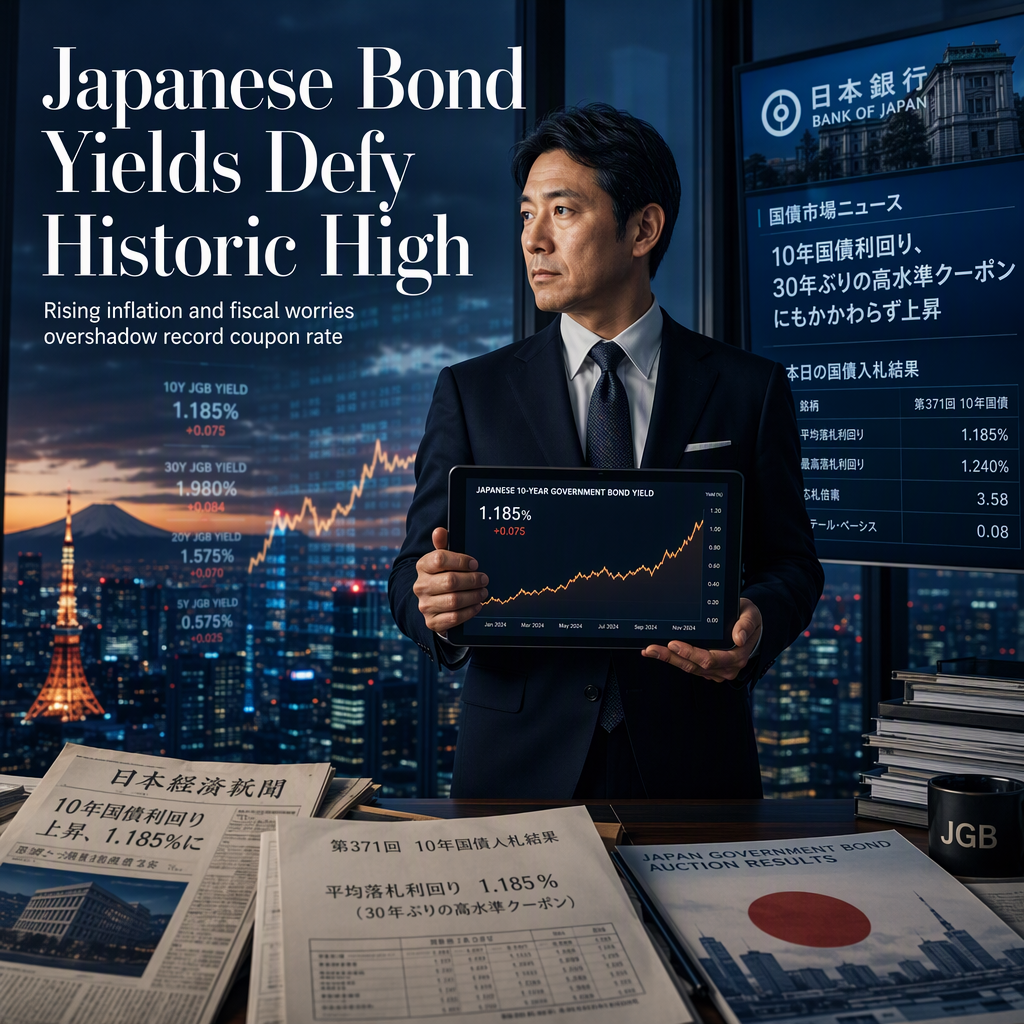
The yield on the benchmark Japanese government bond (JGB) rose on Tuesday, even as the coupon rate on new 10-year JGBs exceeded 3% for the first time in three decades [1]. This historic coupon rate did not prevent yields from climbing, as investors remained concerned about persistent inflation and Japan's fiscal outlook [1]. The latest bond auction was described as having gone smoothly, but market participants continue to express unease over inflationary pressures stemming from the ongoing conflict in the Middle East and worries about the country's long-term fiscal sustainability [1].
The upward movement in JGB yields reflects a broader global trend, with government debt concerns pushing yields higher in major markets such as the U.S. and Europe [1]. Technical analysis cited in the article indicates that key support levels for JGB yields have been breached, which could signal further increases if inflation and fiscal risks persist [1].
Market analysts noted that while the successful auction result offers some reassurance, it does not fully alleviate concerns about Japan's fiscal policy trajectory. A Tokyo-based bond strategist stated, "The smooth auction result provides some reassurance, but it does not eliminate concerns about the long-term sustainability of Japan's fiscal policy" [1].
Traders are now closely monitoring potential signals from the Bank of Japan regarding its bond purchase operations and policy outlook, as additional increases in yields could have significant implications for financial conditions and the broader Japanese economy [1].
CONCLUSION
Despite a well-received bond auction and a 30-year-high coupon rate, Japanese government bond yields continued to rise due to persistent inflation and fiscal concerns. The market remains cautious, with attention focused on the Bank of Japan's next moves as further yield increases could impact Japan's financial stability.