
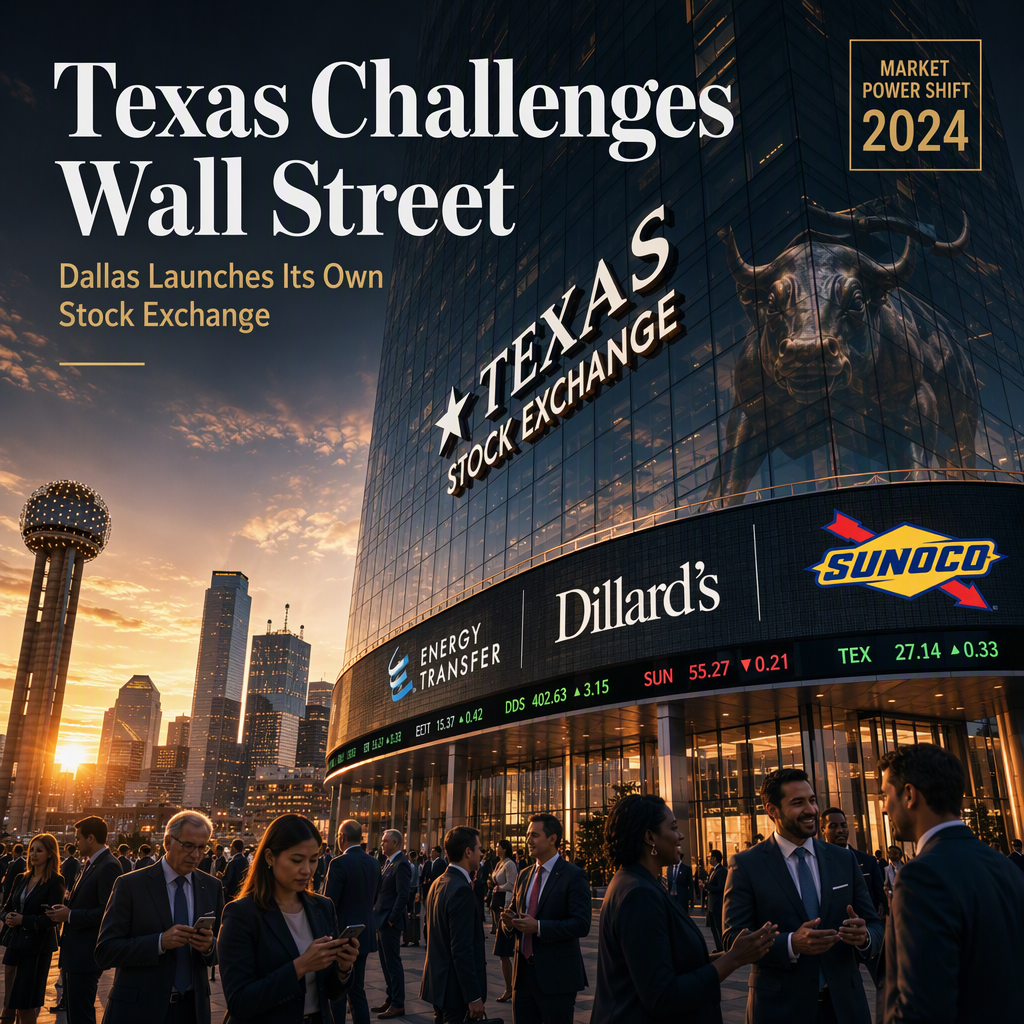
The Texas Stock Exchange, based in Dallas, has emerged as a new contender in the American financial landscape, aiming to challenge the long-standing dominance of the New York Stock Exchange and Nasdaq. This initiative is part of Texas's broader ambition to become a major financial powerhouse, with the exchange offering companies an alternative venue to list shares and raise capital [1]. Former Rep. Jeb Hensarling, a strategic advisor and member of the Texas Stock Exchange, emphasized that Texas is becoming the 'economic center of gravity in America,' citing pro-business policies and recent legislative changes that make Texas an attractive place not only to operate but also to headquarter and incorporate businesses [1].
The Texas Stock Exchange has already secured primary listings from notable companies such as Energy Transfer, Dillard's, Sunoco, and Texas Capital Bank [1]. This development coincides with a wave of corporate relocations and business investments in Texas, as major corporations have moved their headquarters to the state. Financial giants including Goldman Sachs, JPMorgan Chase, Charles Schwab, and Bank of America have also expanded their operations in Texas, reflecting a broader migration of businesses and capital away from traditional financial centers like New York toward states with lower taxes and lighter regulation [1].
Supporters of the Texas Stock Exchange argue that these moves signal a shift in the financial industry's center of gravity, with Dallas earning the nickname 'Y'all Street' as it seeks to become a larger player in American finance [1]. However, critics point out that New York remains the country's dominant financial hub by a wide margin, boasting the world's largest stock exchange, major investment banks, and deep capital markets [1].
While the Texas Stock Exchange is still in its early stages, its launch marks a significant step in Texas's ongoing efforts to attract capital and business, potentially reshaping the competitive landscape of American finance [1].
CONCLUSION
The launch of the Texas Stock Exchange signals a bold move by Texas to challenge Wall Street's dominance, attracting major listings and expanding financial operations in the state. While New York remains the leading financial hub, Texas's pro-business environment and growing concentration of financial firms suggest a shifting landscape that could have lasting market implications.