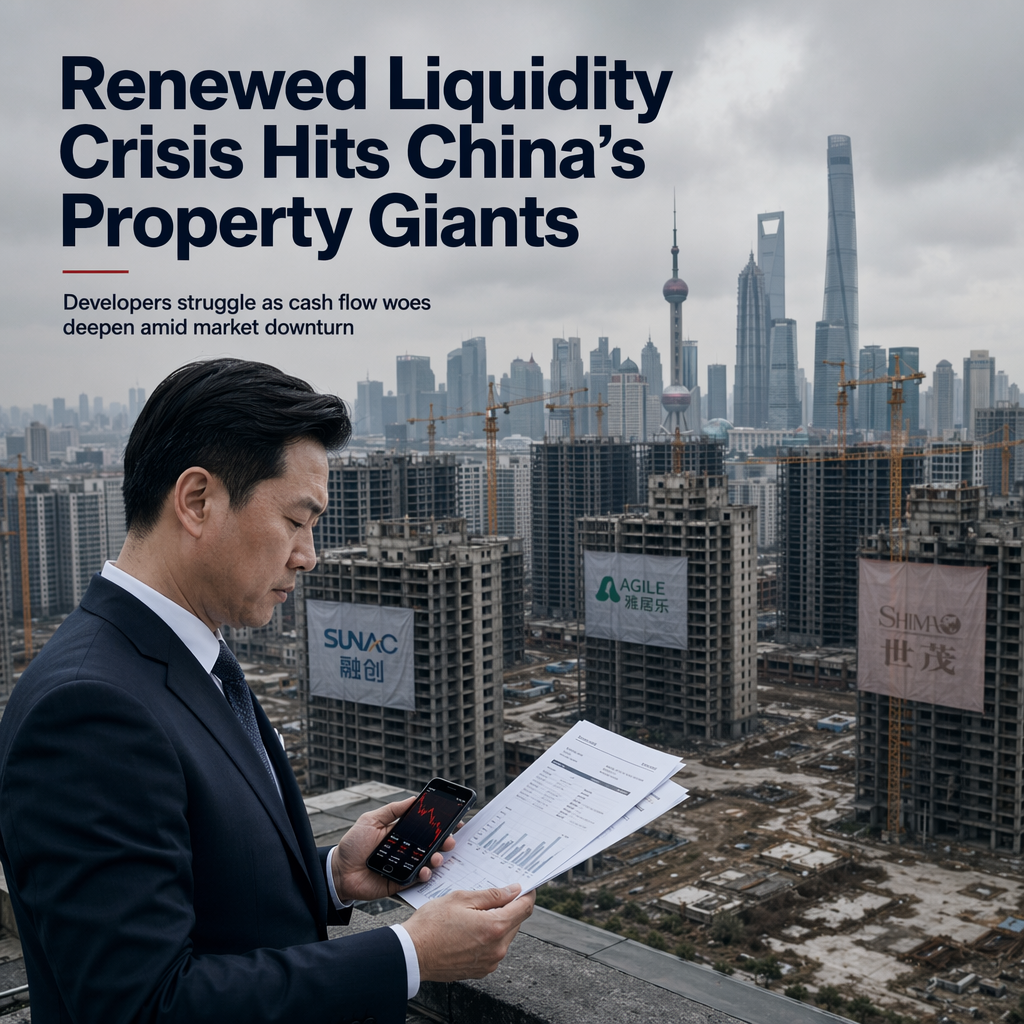
Chinese private property developers that previously restructured their debt are now experiencing a fresh liquidity squeeze as the country's property market downturn continues to strain their finances [1]. Despite a wave of debt restructuring deals initiated after the market crisis began in 2021, these efforts have not alleviated cash flow pressures, and many developers are once again struggling to meet their financial obligations due to ongoing weakness in property sales and tight financing conditions [1].
Industry analysts highlight that the persistent decline in property prices and sales volumes has significantly eroded developers' ability to generate cash, making it increasingly difficult to service existing debt and fund new projects [1]. This situation has raised concerns about the broader financial stability of the sector and the potential for spillover effects on China's economy [1]. A Shanghai-based real estate analyst stated, 'Despite efforts to shore up balance sheets through restructuring, cash flow remains a critical issue for many private developers. Unless the market stabilizes and policy support increases, liquidity pressures are likely to persist' [1].
Market participants are monitoring the sector closely for signs of further distress, as additional defaults could trigger renewed volatility in China's credit markets and negatively impact investor sentiment [1]. The outlook for the remainder of the year remains uncertain, with developers facing mounting repayment obligations and limited access to new financing [1].
CONCLUSION
China's private property developers are facing renewed liquidity challenges despite previous restructuring efforts, as weak sales and limited financing options persist. The sector's instability poses risks to broader financial markets, and unless market conditions improve or policy support increases, liquidity pressures are expected to continue.