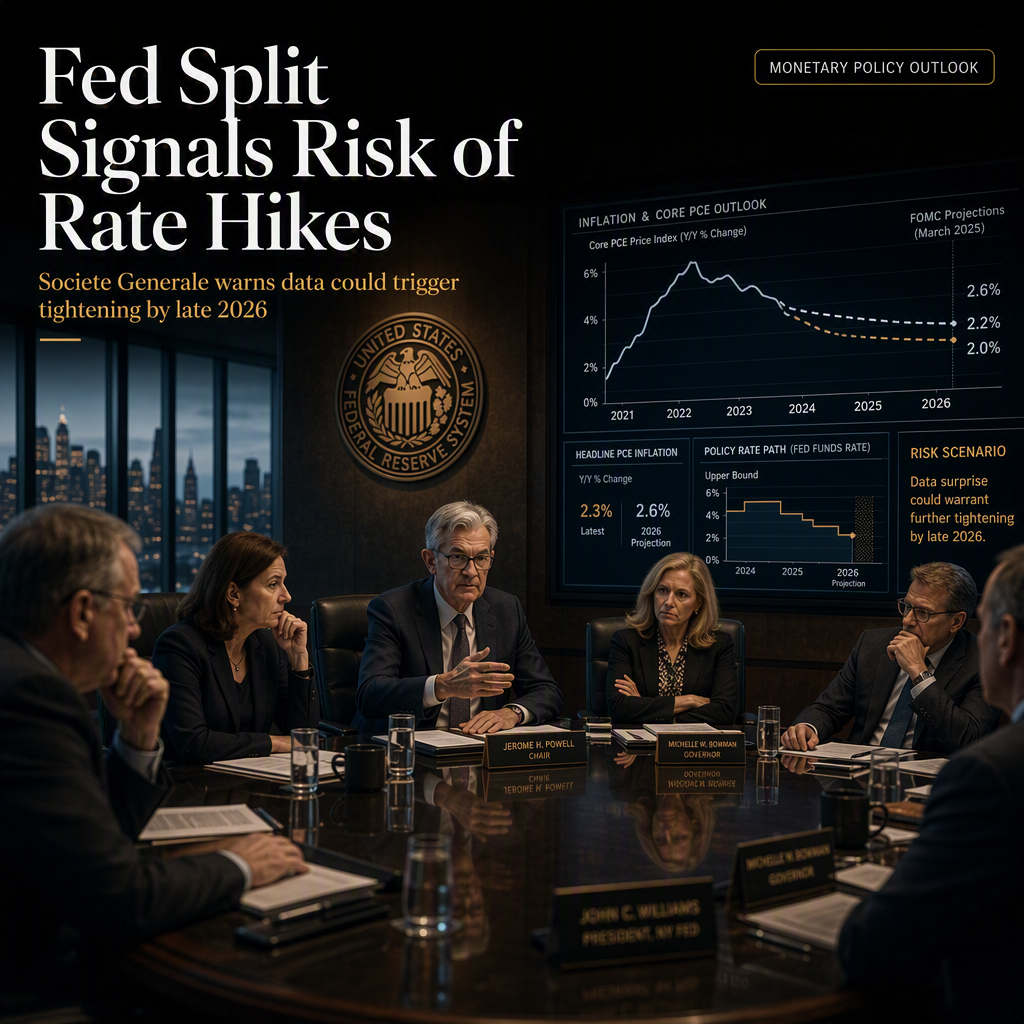
Societe Generale’s Jan Groen reports that the Federal Reserve is currently divided, with a larger 'keep-on-hold' camp preferring to wait for core PCE inflation data in the second half of 2026 before supporting any rate hikes [1]. The minutes from the July FOMC meeting reflect this division, echoing the sentiment from the June meeting minutes, with two camps showing varying degrees of hawkishness [1]. The majority is inclined to keep rates unchanged until inflation data justifies a shift, while a minority believes policy tightening may be necessary if inflation does not decline as expected [1].
Groen expects the Fed funds rate to remain unchanged throughout this year, but highlights a significant risk that rate hikes could begin as early as the December FOMC meeting, depending on the outcomes of core PCE inflation reports for August through October [1]. The FOMC minutes note that 'many participants assessed that policy tightening would likely be necessary if inflation did not decline,' and 'some participants commented that financial conditions might not currently be sufficiently restrictive to facilitate a return of inflation to 2 percent' [1].
The outlook for monetary policy beyond the July meeting is described as data-dependent, with the strength of core inflation in upcoming reports being the key determinant for any shift towards rate hikes [1]. Societe Generale indicates that any change in their forecast towards rate hikes will be based on the pace of core PCE inflation implied by the inflation reports for August through October [1].
CONCLUSION
The Federal Reserve remains divided on the path forward, with a notable risk of rate hikes starting as early as December if core inflation remains elevated. Market participants should closely monitor upcoming inflation data, as it will be pivotal in shaping the Fed's next moves.