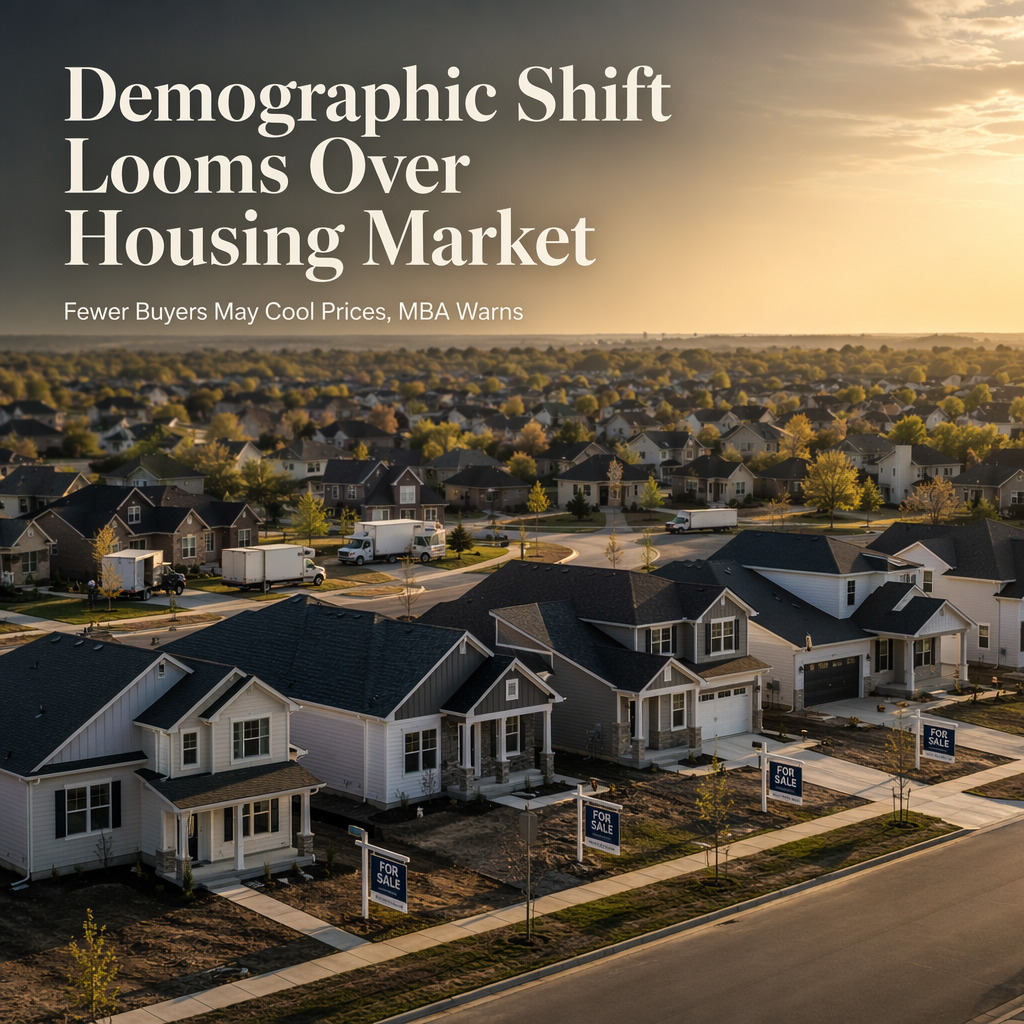
A new report from the Mortgage Bankers Association highlights a looming demographic shift in the U.S. housing market, warning that the sector may soon face a shortage of homebuyers rather than homes. The report points to slower population growth, lower birth rates, an aging population, and reduced immigration as key factors expected to decrease the number of people looking to buy or rent homes over the next decade, even as homebuilders continue to add new supply [1].
This anticipated shift marks a reversal from the past decade, during which millennials drove a surge in household formation and demand consistently outpaced supply, pushing home prices higher. The imbalance was further exacerbated during the pandemic by record-low mortgage rates, which unleashed another wave of buyers [1].
If these demographic trends materialize, some markets could see an oversupply of homes, leading to increased choices for buyers and making it more difficult for sellers to command higher prices. The report notes that the impact will be highly localized: states like Texas, Florida, and Arizona, where construction has accelerated, may experience softer prices if supply continues to grow, while regions in the Northeast and Midwest with constrained new construction could continue to see stronger price appreciation [1].
The report also addresses concerns about a potential 'silver tsunami' of Baby Boomer homes flooding the market, concluding that these properties are likely to be released gradually over many years, mitigating the risk of a sudden oversupply. Nevertheless, the shift could slow home-price gains, reduce the pace at which homeowners build equity, and provide buyers with more options [1].
CONCLUSION
The Mortgage Bankers Association's report signals a potential turning point for the U.S. housing market, with demographic changes poised to dampen demand. While the effects will vary by region, the overall market could see slower price growth and increased inventory, reshaping the landscape for both buyers and sellers.