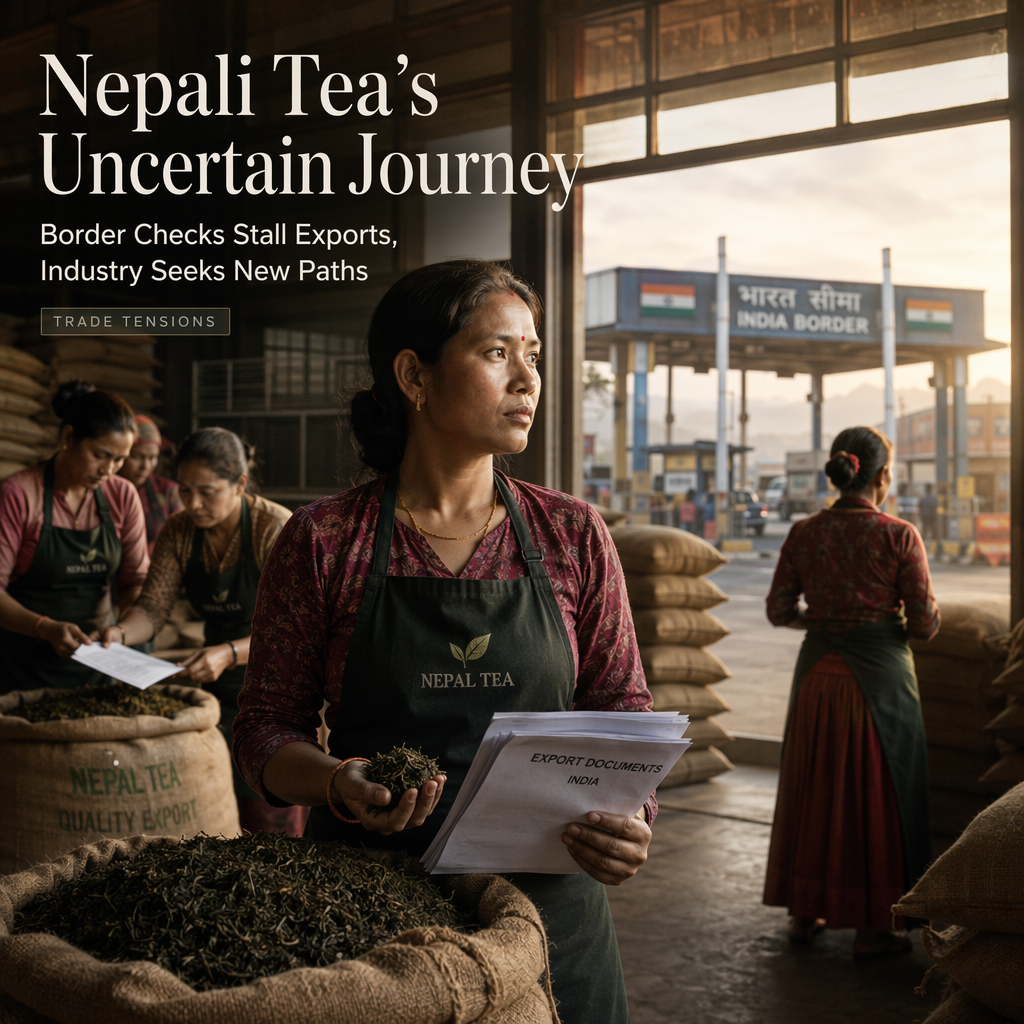
Nepal's tea industry, a significant contributor to the country's foreign exchange earnings and employment, recently faced weeks of disruption after Indian authorities imposed stricter quality checks at the border. These checks, introduced in May, mandated that all Nepali tea consignments be tested for pesticide residues and other quality parameters at Indian laboratories, a process that sometimes took weeks and led to delivery delays and mounting financial pressure for exporters [1].
India is the largest market for Nepali tea, importing nearly 90% of Nepal's total tea exports, according to the Nepal Tea and Coffee Development Board [1]. The delays caused by the new inspections resulted in cash flow problems for exporters and factories, which in turn struggled to pay local growers for fresh tea leaves. In response, some producers have begun exploring alternative markets in the Middle East and Europe, though Indian buyers traditionally offer the best prices and largest volumes [1].
Nepal exported 11,900 tons of tea in the last fiscal year, earning about $23 million, and the industry provides around 70,000 direct and indirect jobs, mostly to women [1]. While Indian authorities eased the testing requirement last week, allowing Nepali tea to cross with fewer checks, exporters and industry officials remain concerned that arbitrary enforcement could return. An official from the National Tea and Coffee Development Board warned that, without a bilateral understanding and harmonization of standards, such disruptions are likely to recur [1].
The situation has underscored the vulnerability of Nepali tea exporters to policy changes in India and highlighted the need for diversification and value addition. Some entrepreneurs are advocating for organic certification and branding to access premium markets abroad, but these initiatives require significant investment and long-term commitment [1].
CONCLUSION
The recent easing of Indian quality checks has provided temporary relief for Nepali tea exporters, but uncertainty remains due to the potential for future policy changes. The episode highlights the industry's dependence on the Indian market and the urgent need for diversification and standard harmonization to ensure stable export growth.