
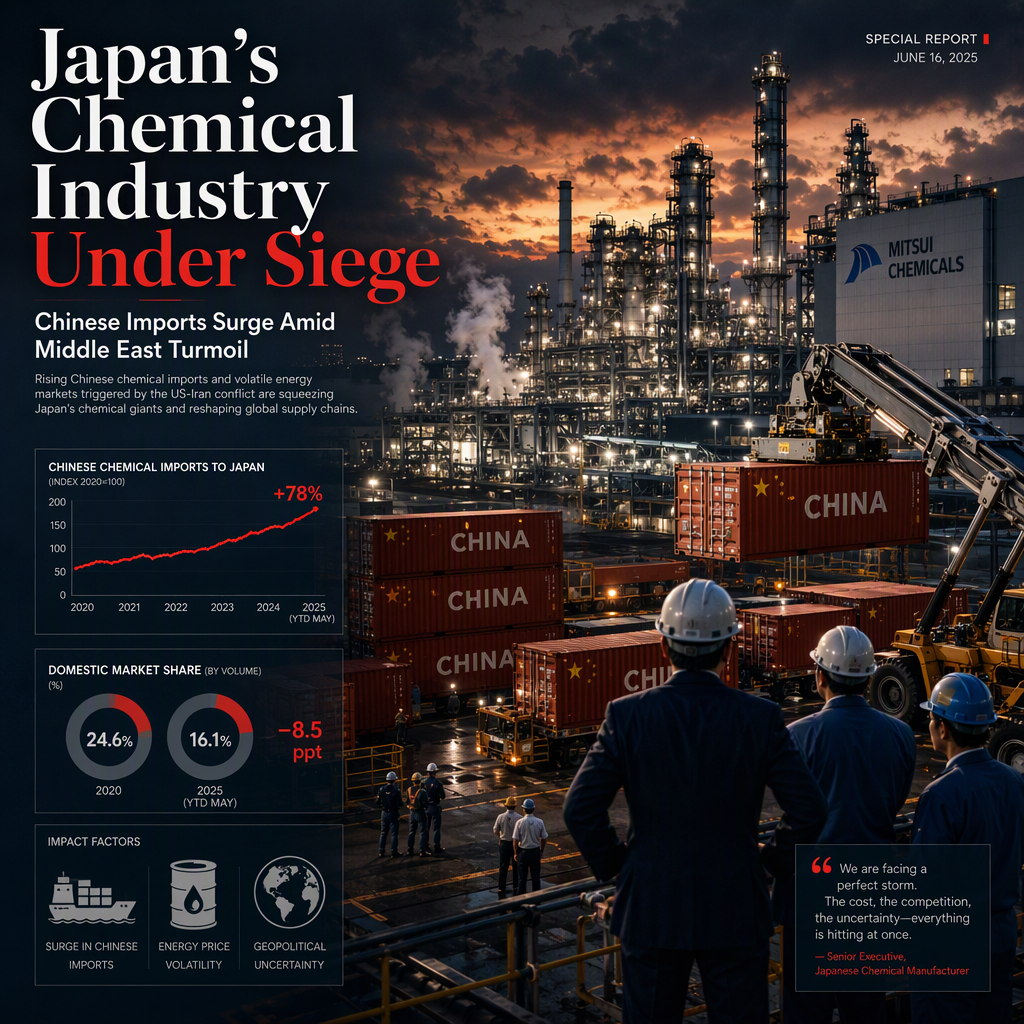
Japanese imports of Chinese plastic and chemical materials have surged by 52% since the onset of the US-Iran war, raising significant concerns among domestic suppliers and industry stakeholders [1]. This sharp increase is attributed to supply disruptions in the Middle East and aggressive pricing strategies by Chinese exporters, which have disrupted established supply chains and eroded the market share of Japanese chemical producers [1].
Companies such as Mitsui Chemicals group, which operates an ethylene plant in Takaishi, are closely monitoring the situation as the influx of cheaper Chinese products challenges their competitiveness [1]. The surge in imports has also resulted in Japan becoming a net importer of certain petrochemicals, reversing previous trends, partly due to a rise in naphtha prices [1].
A senior executive from a major Japanese chemical company described the situation as "unprecedented," noting that the flood of Chinese materials is forcing companies to reconsider their production and procurement strategies [1]. Market analysts warn that if the trend persists, domestic manufacturers may be compelled to cut output or shift their focus to higher-value-added products to maintain profitability [1]. There is also speculation that long-term reliance on Chinese imports could increase Japan's exposure to supply chain risks and geopolitical vulnerabilities [1].
In response, the Japanese government and industry groups are expected to review trade and industrial policies to support local producers and bolster the resilience of the nation's chemical industry amid ongoing global uncertainties [1].
CONCLUSION
The surge in Chinese chemical imports has created significant challenges for Japan's domestic industry, prompting concerns about competitiveness and supply chain security. Market analysts and industry leaders anticipate strategic shifts and policy reviews to address these pressures and safeguard the sector's future.