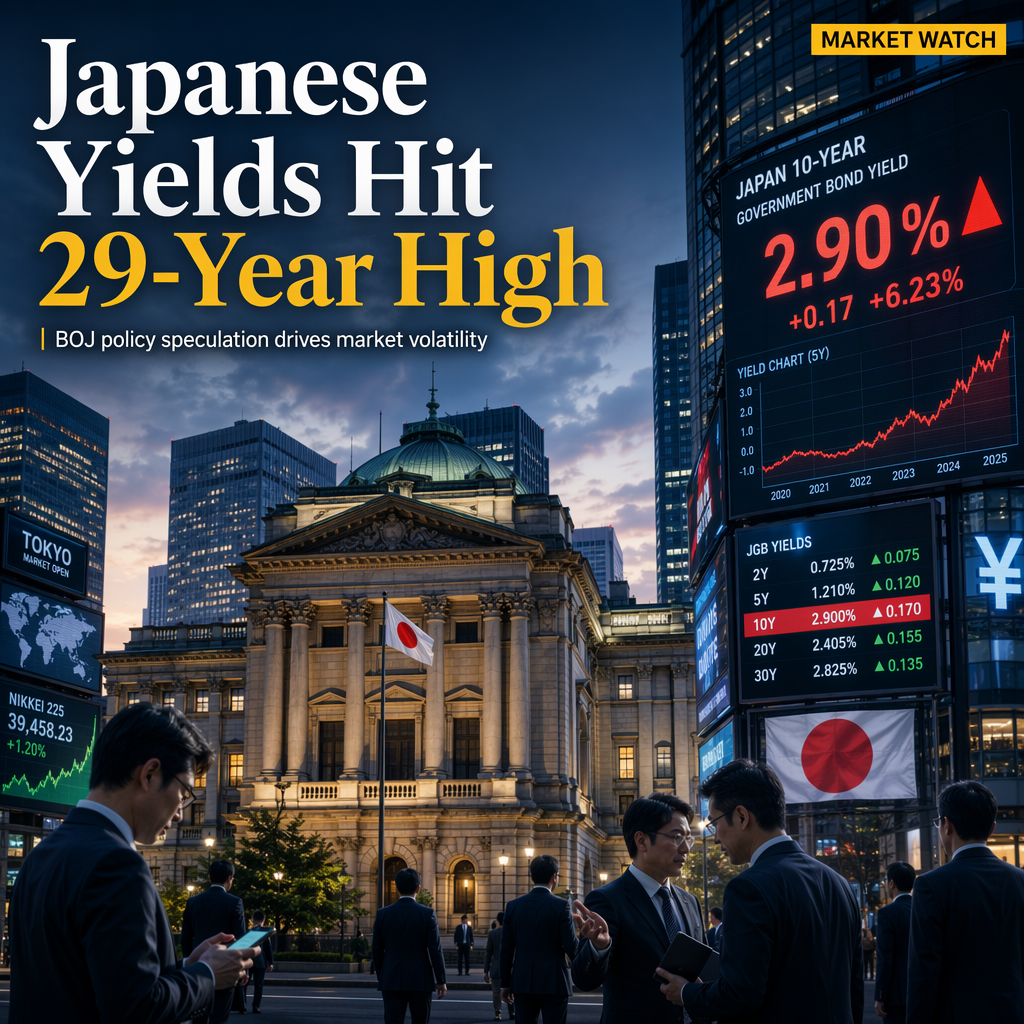
On July 9, Japanese long-term interest rates temporarily rose to 2.9%, marking the highest level in 29 years and 8 months since November 1996 [1]. Market participants attribute this surge to growing expectations that the Bank of Japan (BOJ) will further normalize its monetary policy [1]. Specifically, there is increased focus on the BOJ potentially reducing its government bond purchases and the timing of additional rate hikes following the removal of negative interest rates [1]. This outlook has led to a broader sentiment that interest rates will continue to rise, prompting intensified selling of government bonds [1].
Market observers highlight that the upcoming BOJ monetary policy meetings are drawing attention, particularly regarding the central bank's stance and statements about the timing of further rate increases [1]. The anticipation of policy changes is driving market volatility and influencing investor behavior in the Japanese bond market [1].
CONCLUSION
Japanese long-term yields have reached their highest level since 1996, driven by speculation about further BOJ policy normalization. The market is closely watching the BOJ's upcoming decisions, with expectations of reduced bond purchases and potential additional rate hikes fueling bond selling and higher yields.