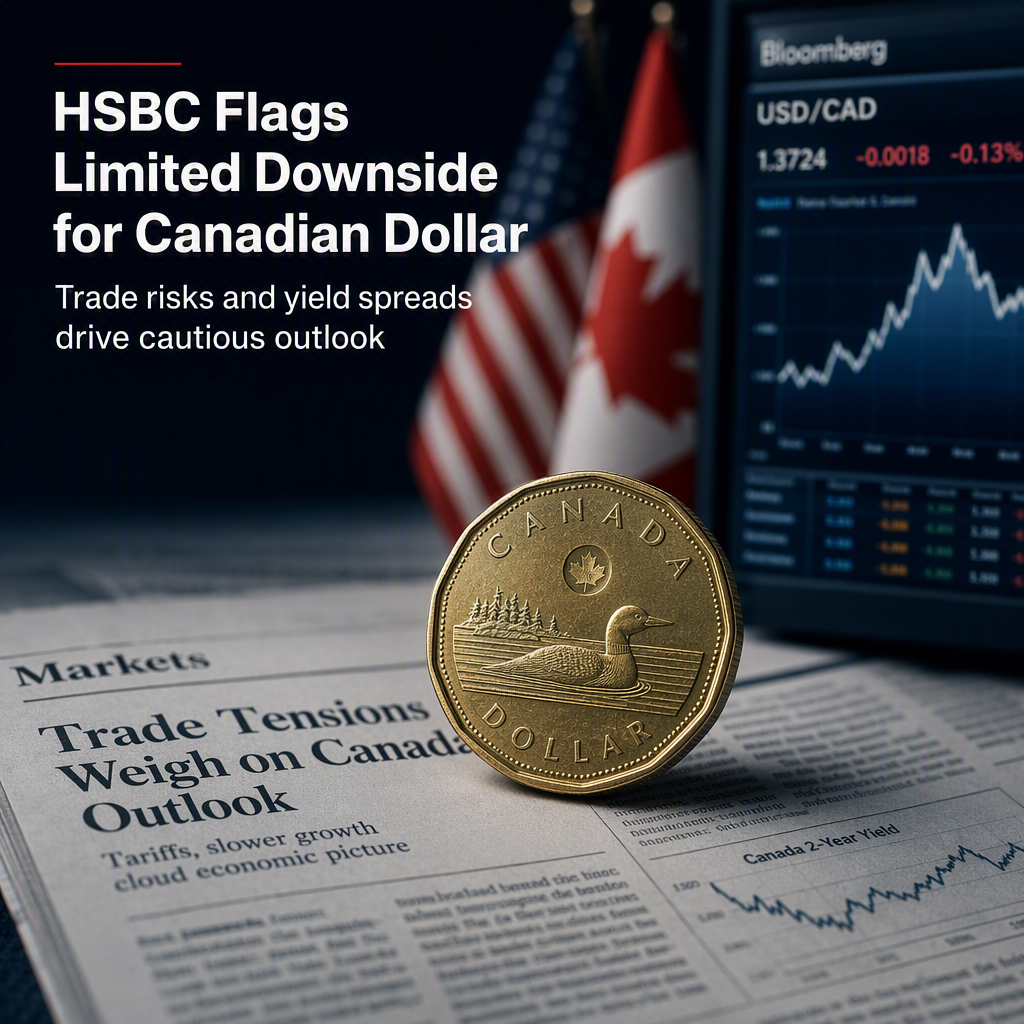
HSBC strategists have adopted a bearish stance on the Canadian Dollar (CAD), citing the recent breakdown in US–Canada trade talks as a key factor driving USD/CAD higher. The strategists note that while the trade dispute currently affects only 5% of Canada’s exports to the US, there is potential for the situation to escalate if tit-for-tat measures become more pronounced. However, they emphasize that these trade risks are largely priced in by the market, and the immediate impact on CAD is expected to be modest unless the dispute intensifies or becomes prolonged [1].
HSBC points out that there are no immediate plans to resume trade talks, and reports suggest the standoff could extend beyond the US mid-term elections in November. Despite this, the strategists argue that the more significant drivers for USD/CAD are the broader USD trend and the path of 2-year yield differentials. Both factors currently indicate a modest upside for USD/CAD, but further gains are likely to be limited unless the USD strengthens more broadly [1].
The analysis suggests that while the Canadian Dollar remains vulnerable to acute or prolonged trade escalations, the current risks are well understood and priced in. HSBC does not expect the trade dispute to be a persistent drag on CAD unless there is a significant escalation. Instead, they recommend focusing on broader market trends and yield differentials as the primary influences on USD/CAD movements [1].
CONCLUSION
HSBC maintains a bearish outlook for the Canadian Dollar, driven by trade risks and yield differentials, but expects only modest further downside unless broader USD strength emerges. The current trade dispute is seen as largely priced in, with limited immediate impact on CAD. Market participants should monitor broader USD trends and yield spreads for future direction.