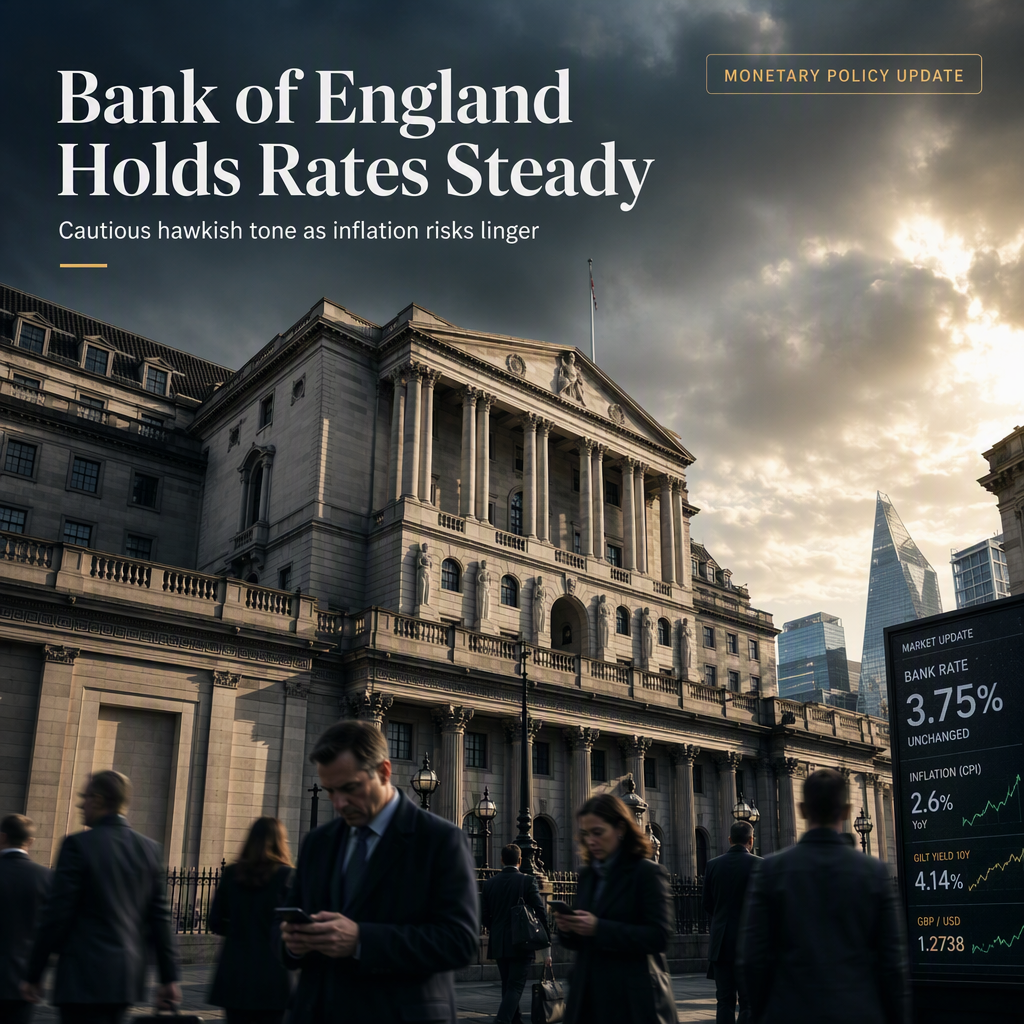
The Bank of England (BoE) decided to keep its Bank Rate unchanged at 3.75%, with a 6-3 split among committee members, according to TD Securities strategists. The July Monetary Policy Report presented a more benign outlook for inflation and growth compared to previous projections, but the BoE continues to see risks skewed to the upside, particularly regarding inflation persistence and energy prices [1].
TD Securities notes that the BoE's messaging in July was modestly more hawkish than in June, with the Committee becoming more explicit about the potential need for policy action before second-round inflation effects are fully evident. The BoE also broadened its concerns to include risks from AI-related supply constraints, tariffs, and food prices, in addition to energy [1].
Despite the improved central forecast, the Monetary Policy Committee (MPC) remains cautious due to ongoing uncertainties, such as the Middle East conflict and its potential to trigger an energy shock. The Committee believes that current financial tightening is sufficient for now, and TD Securities expects the Bank Rate to remain on hold through September, with an easing cycle anticipated to begin in the first half of 2027, barring a significant rise in energy or commodity prices [1].
The overall tone from the BoE suggests a slight shift towards a more hawkish stance, but the dominant message is one of patience, as the MPC awaits clearer evidence on inflation persistence before making further policy adjustments [1].
CONCLUSION
The Bank of England's decision to hold rates reflects a cautious but slightly more hawkish stance, with upside risks to inflation still a concern. Market participants are likely to interpret the BoE's approach as supportive of current financial conditions, with no immediate rate changes expected. The outlook remains data-dependent, particularly regarding energy prices and inflation trends.