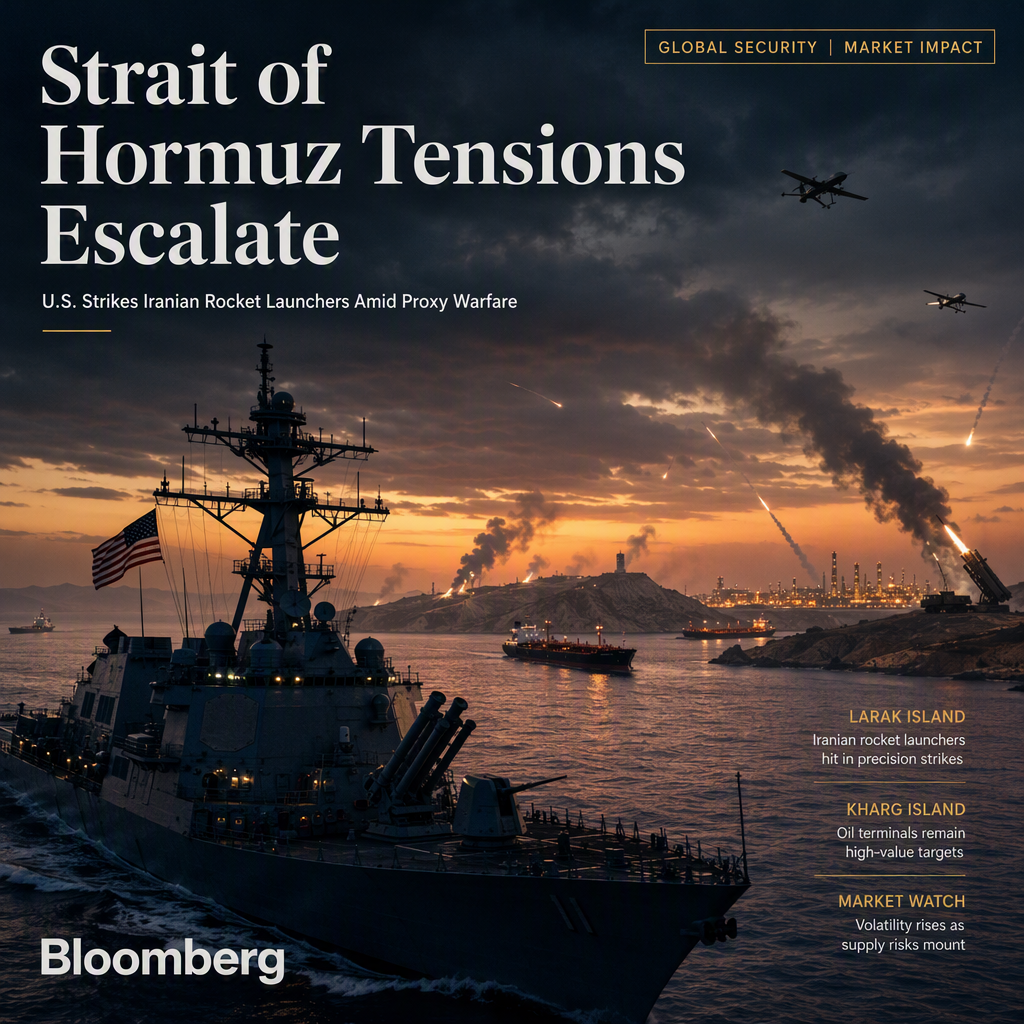
Over the weekend, tensions between the United States and Iran escalated significantly, highlighting Washington's growing frustration with the slow impact of sanctions on Tehran's leadership [1]. U.S. forces destroyed two Iranian rocket launchers on Larak Island as Iran was preparing to fire mine-carrying rockets into the Strait of Hormuz, marking the first publicly acknowledged U.S. attack since late July and ending a month-long lull in direct fighting [1]. In response, Iran fired eight missiles at the King Hussein and Al Azraq air bases in Jordan, all of which were intercepted by Jordanian air defenses with no casualties reported, according to the Jordanian government [1].
President Donald Trump subsequently threatened on social media to destroy Kharg Island, Iran's main oil export hub, stating he would blow it to "smithereens" [1]. Analysts, including maritime security expert Ian Ralby, suggest that the U.S. strike was likely an attempt to break a strategic deadlock rather than a fundamental shift in policy, as the sanctions campaign was not curtailing Iranian behavior as quickly as anticipated [1]. Treasury Secretary Scott Bessent indicated that new sanctions on Iran are expected weekly, with a particular focus on targeting banks and cutting Tehran-linked institutions out of the dollar system entirely [1].
Ralby noted that most of the conflict has been tactically focused, and the renewed Iranian military activity may have posed a sufficiently high threat to U.S. interests to prompt the strike [1]. However, he also emphasized that Trump's threat against Kharg Island is likely rhetorical, as the terminal has withstood numerous strikes since the war began, and an actual attack would risk catastrophic environmental harm and the destruction of cultural heritage [1].
Looking ahead, analysts believe that Iran is more likely to retaliate through proxies and increased pressure on shipping rather than direct confrontation with U.S. forces [1]. The ongoing situation suggests continued economic and military pressure, with the U.S. aiming to intensify sanctions and maintain the blockade in an effort to force changes in Iranian behavior [1].
CONCLUSION
The recent U.S. strike on Iranian rocket launchers and subsequent threats underscore Washington's impatience with the slow progress of sanctions. While the risk of further escalation remains, analysts expect the conflict to remain focused on tactical strikes, economic pressure, and proxy actions rather than direct large-scale attacks. Market participants should anticipate ongoing volatility in the region as both sides maintain pressure.