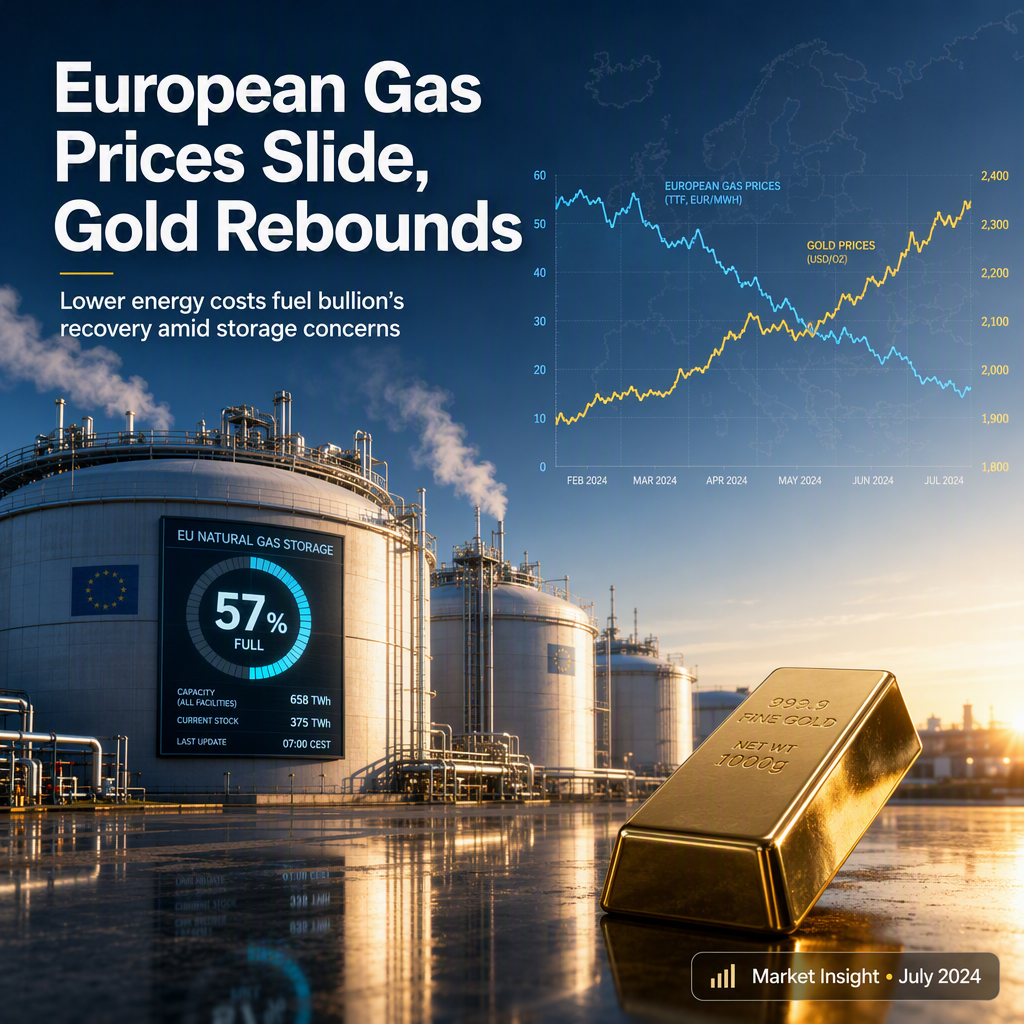
European gas prices declined, with the TTF benchmark settling 2.65% lower on the day, as the market digested trends in storage and demand, according to ING’s commodities team [1]. There are growing concerns in Europe regarding storage levels and slow injection rates, which could leave the region more vulnerable heading into the 2026/27 winter [1]. Storage is currently a little above 57% full, below the utilisation seen in 2021, but in absolute volume terms, it remains just above 2021 levels [1]. Additionally, EU gas demand is considerably lower now than it was in 2021, making the market tight but more comfortable than during the earlier crisis period [1].
The decline in energy prices, including natural gas and oil, has contributed to a rebound in gold prices. ING strategist Ewa Manthey notes that gold extended its recovery, posting its first monthly gain since February in July [2]. The metal found support from easing geopolitical tensions in the Middle East, with diplomatic efforts to improve shipping conditions through the Strait of Hormuz driving a sharp decline in oil prices [2]. Lower energy prices have eased inflation concerns, providing a more supportive backdrop for bullion [2].
Despite the positive momentum for gold, ongoing uncertainty over US monetary policy and expectations for interest rates to remain higher for longer are seen as limiting significant upside for bullion [2]. Markets continue to assess the outlook for US monetary policy following the recent Federal Reserve meeting [2]. ING suggests that any further decline in energy prices could improve the macro backdrop for gold, though rate expectations may continue to cap gains [2].
CONCLUSION
European gas prices have fallen amid concerns over storage and slow injections, but lower demand and higher absolute volumes provide some comfort compared to 2021. The resulting decline in energy prices has supported gold's recovery, though ongoing US monetary policy uncertainty may limit further upside. Market sentiment is cautiously optimistic, with energy price movements and rate expectations remaining key factors.