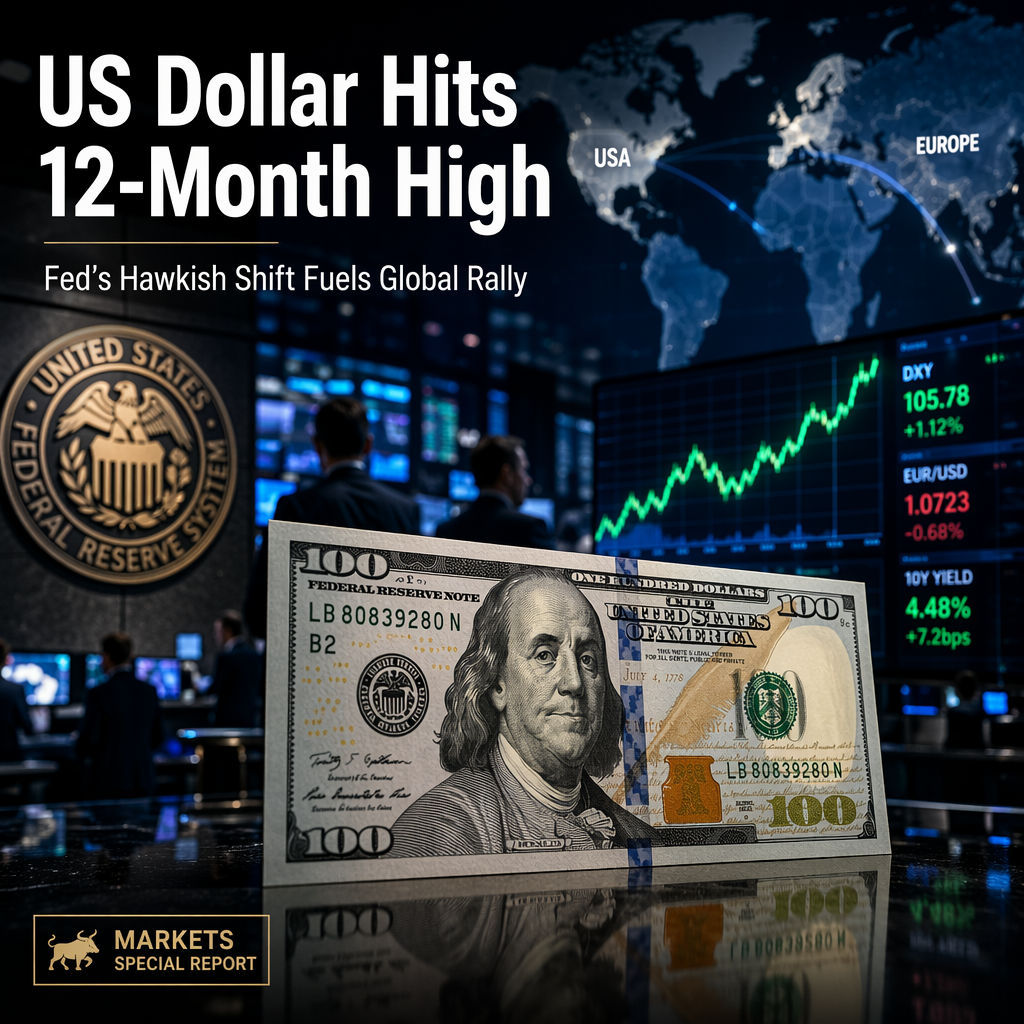
The US Dollar has recently tested 12-month highs, driven by a combination of persistent US inflation, resilient economic growth, and a less dovish stance from the Federal Open Market Committee (FOMC) under its new Chairman, according to Societe Generale’s Kit Juckes. Juckes describes the EUR/USD pair as a near-mirror of the Dollar Index, highlighting how the Dollar is recoupling with relative interest rates after a period of weakness during President Trump’s tenure [1].
Rabobank’s FX Strategy team notes that the Dollar’s recent strength has been supported by both safe haven demand and shifting expectations for Federal Reserve policy. The signing of a Memorandum of Understanding (MoU) between the US and Iran, which could lead to the reopening of the Strait of Hormuz, is expected to reduce safe haven flows into the USD. However, a more hawkish-than-expected stance from new Fed Chair Warsh at the latest policy meeting has underpinned the Dollar, with the DXY dollar index trading higher as of this morning [2].
Rabobank highlights that while positive developments in US–Iran relations may eventually weaken the USD by reducing safe haven demand, the immediate market reaction has been dominated by the Fed’s hawkish tone. Market pricing currently suggests scope for almost 40 basis points of tightening over the next six months, despite Rabobank’s central view that rates will remain steady this year [2]. Societe Generale’s economists similarly expect Fed rates to be on hold throughout the year, but acknowledge that high and sticky inflation, along with a booming equity market, could influence future policy decisions [1].
Looking ahead, Rabobank cautions that the USD will be vulnerable if rate hike forecasts are pared back, and expresses doubt that the EUR will be able to regain strong upward momentum in the near term [2].
CONCLUSION
The US Dollar’s rally to 12-month highs has been fueled by a hawkish shift from the Fed and persistent inflation, outweighing the potential dampening effect of easing safe haven flows due to improved US–Iran relations. Both Societe Generale and Rabobank expect steady Fed rates this year, but market pricing indicates possible further tightening. The market remains sensitive to shifts in rate expectations and geopolitical developments.