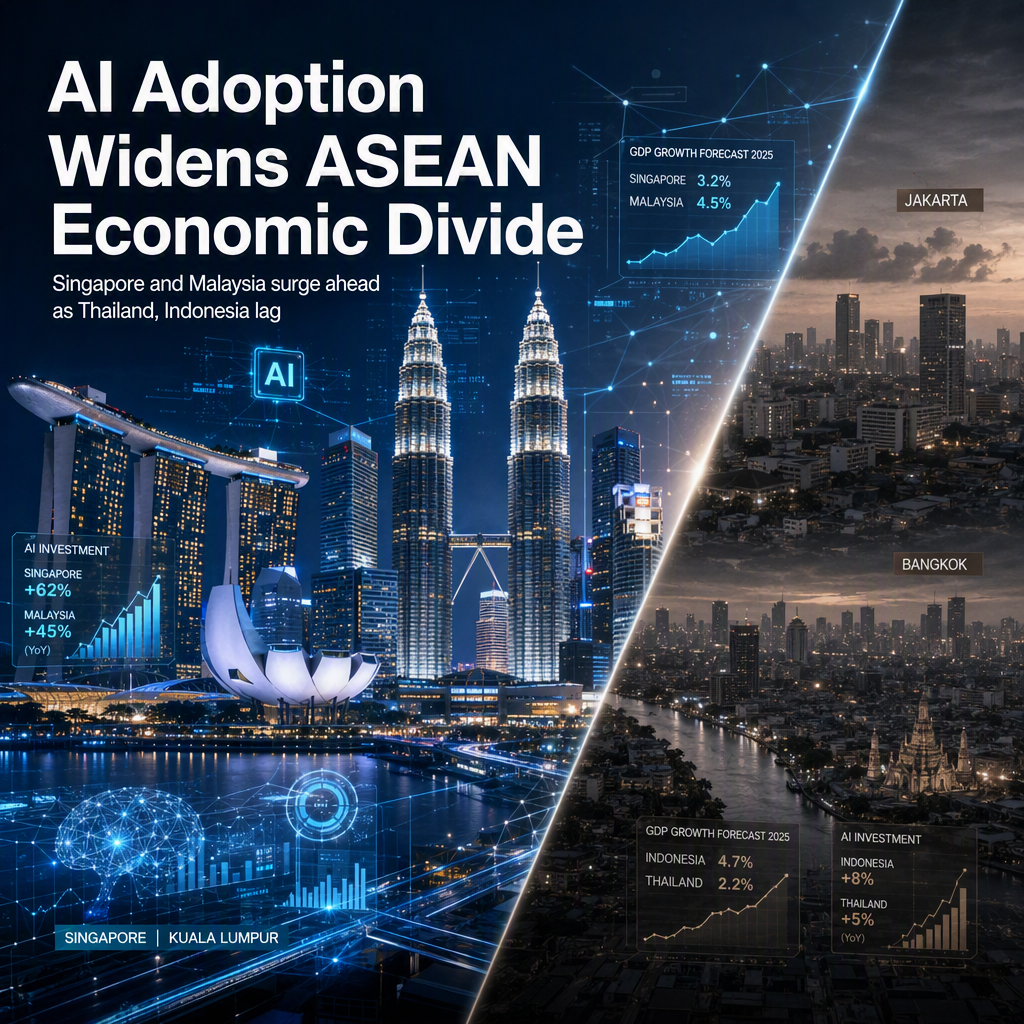
A report released by DBS, Bain and Vriens & Partners warns that the adoption of artificial intelligence (AI) is likely to result in uneven economic growth across ASEAN economies, potentially widening performance gaps among member nations [1]. The report specifically highlights Singapore and Malaysia as countries poised to benefit from increased technology investments, particularly in AI, which could lead to stronger economic growth in these markets [1]. Conversely, Thailand and Indonesia are expected to face greater internal risks and may experience slower progress due to less readiness to capitalize on AI-driven opportunities [1].
The findings underscore concerns that the uneven pace of digital and AI adoption could deepen existing disparities in economic performance and technological advancement within the region [1]. The report suggests that these trends will continue to shape the financial and economic landscape of Southeast Asia in the coming years [1].
While the article does not provide specific financial data or quantitative analysis from the report, it indicates an optimistic market sentiment for Singapore and Malaysia, contrasted with a more cautious outlook for Thailand and Indonesia as the AI era unfolds [1].
CONCLUSION
The DBS, Bain and Vriens & Partners report signals that AI adoption may amplify economic disparities within ASEAN, favoring Singapore and Malaysia while posing challenges for Thailand and Indonesia. Investors and policymakers should monitor these developments as technology-driven growth reshapes the region's economic landscape.